WARTIME STOCKING IS ABOUT CONTINUITY, NOT FILLING EVERY CUPBOARD WITH MORE TINS.
If you believe wartime deliveries might become unreliable, is it sensible to buy six months of everything now? Not necessarily. A cupboard filled with the wrong products can waste money, crowd out essential medicines and still fail when electricity, water or the ability to prepare food disappears. The better question is which non-replaceable household functions are at risk, how much buffer is practical, and what should trigger a change of plan.
This guide explains what to stock before wartime supply disruptions with a deliberately limited and testable approach. It covers food, water, medical products, fuel dependencies, infant needs, payment outages and supply-chain substitutions. It is not a call to panic-buy. For the wider mechanics of delayed deliveries, see our supply-chain disruption guide; here we examine the additional pressures that conflict can place on essential access.
Why wartime supplies fail in different ways
A delivery can fail because a road is closed, a warehouse is damaged, staff cannot reach work, electricity is interrupted, imports become expensive, or a digital ordering system stops functioning. These do not require the whole country to run out of goods.
WHO's September 2026 reporting from Ukraine described the destruction of three warehouses used for humanitarian health supplies in three months. In one instance, the loss included material intended to support an estimated 225,000 people. That shows why a local distribution centre can matter enormously to people relying on it even when goods exist elsewhere.
Preparing for this risk means identifying key providers and practical alternatives, not assuming every supply line will collapse identically.
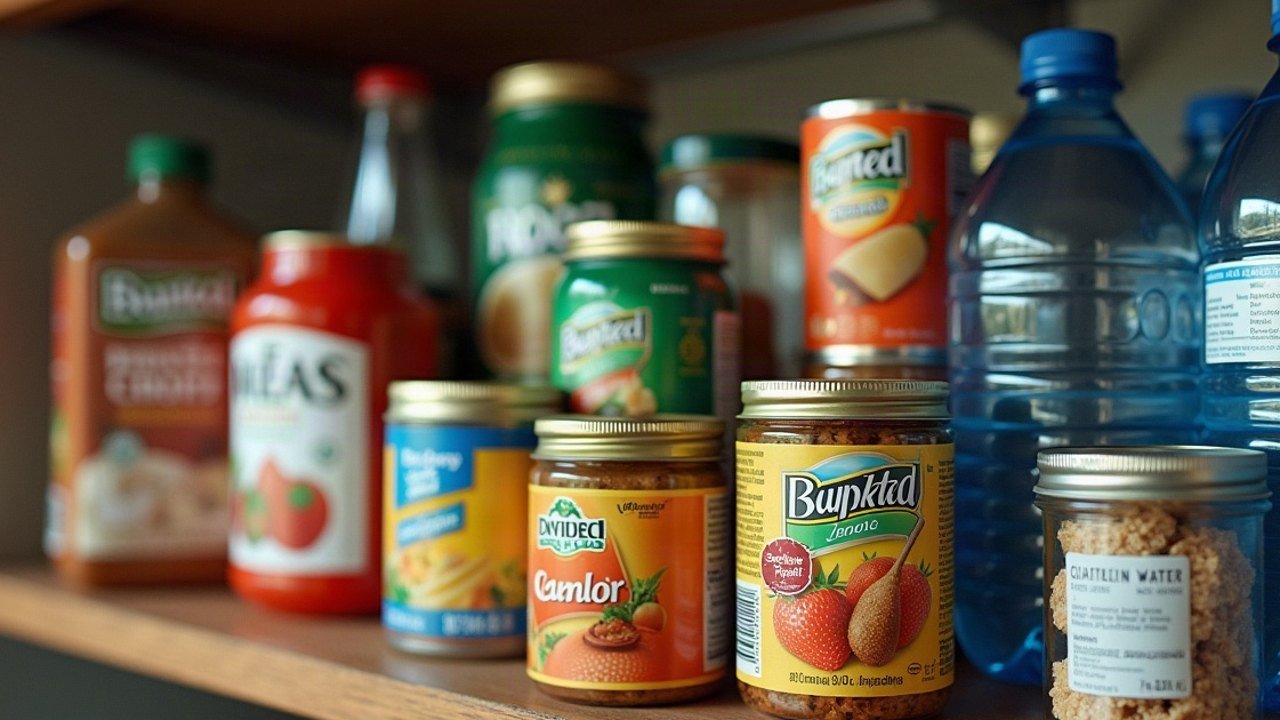
Split the list into three classes
| Class | Examples | Planning approach |
|---|---|---|
| Cannot change safely without professional direction | Prescription medicines, some clinical nutritional products, critical device supplies | Obtain authorised continuity plans and provider contacts |
| Can substitute after checking suitability | Ordinary shelf-stable meals, hygiene items, clothing layers, household batteries | Keep a small rotating range of accepted alternatives |
| Optional or easily postponed | Luxury food, spare gadgets, non-essential subscriptions | Preserve funds and space for essential needs |
Families sometimes spend heavily on the third class while the first has no plan. That is the opposite of risk-led preparation.
Set a sensible minimum before increasing reserves
For ordinary UK disruptions, the British Red Cross October 2026 guidance recommends an initial 72-hour household reserve. That is a manageable first step, not a promise that wartime disruption ends in three days. Increase a reserve only when real household needs, available space, safety and finances justify it.
A starter stock should allow the household to manage a short gap in shopping or utilities: known-safe drinking water, familiar ready-to-eat food, essential personal care, lighting, charging and paper information. Add special provisions for infants, disabilities and animals; don't assume a generic box covers those needs.
Our three-day kit guide handles the detailed arithmetic. Here the decision is how stock fits into a broader continuity plan.
Water is usually the heaviest essential
A drinking-water planning reference of about 2.5–3 litres per person per day means that three people at 3 litres each over three days need 27 litres, approximately 27kg. That doesn't cover all cooking, cleaning or specialised health requirements. It cannot simply be loaded into one departure backpack.
Use suitable sealed food-safe containers, store them low enough to lift safely, and check that the space can take the weight. If local public-health authorities issue a water restriction, follow its specifics. Boiling and camping filters do not solve every chemical contamination problem.
See the interrupted-water supply guide for different scenarios, and the limits of water filters and tablets.
Food: buy person-meals, not random packets
Five people eating three meals per day for three days require 45 person-meals. But a single can of beans may be a side dish, not a complete meal. Check serving sizes, allergies, age suitability, dietary restrictions, safe preparation and whether an opener is available.
Choose familiar foods that can be rotated into normal meals. Dry rice and pasta remain useful pantry ingredients but require safe water and suitable cooking fuel; they are poor standalone answers to a scenario without power or gas. Use appropriately packaged ready-to-eat options as part of the plan.
Keep a modest replacement margin for necessary goods rather than hoarding perishables that will spoil. The no-cook meal guide contains balanced examples without relying on an indoor stove.
Prescriptions, infant feeding and specialist diets need proper routes
Don't buy unauthorised medicines, ration doses or substitute formulations on the strength of war headlines. Record the pharmacy, prescriber, existing repeat order process and relevant approved emergency route. If supplies are delayed, obtain professional guidance from the pharmacy or care provider.
For formula-fed infants, the safe way to prepare powdered formula depends on clean equipment, safe water and sufficiently hot preparation; sealed bottled water alone is not sterile. The Food Standards Agency's November 2026 guidance recommends ready-to-feed liquid formula where access to safe water is limited. Follow the infant's specific clinical requirements.
Pet food, veterinary medicines and appropriate carriers also have different storage and transport needs. Our child-and-pet kit article treats them separately from adult supplies.
Power and refrigeration can defeat a stocked pantry
Some food and medicines are safe only within specified temperatures or after particular preparation. A full fridge becomes a liability if power disappears and contents are not handled safely. A home freezer is not a guaranteed long-term reserve in an unstable power environment.
Check official food safety advice before relying on refrigerated or frozen contents after an outage. Do not taste potentially spoiled food to determine safety. For clinically refrigerated medicine, contact appropriate providers about an approved cold-chain contingency.
WHO's 2026 Ukraine risk assessment documents how electricity failures affect medical cold chains, drinking water and food storage. Supplies are only useful if their supporting conditions still exist.
Don't solve fuel shortages with dangerous indoor combustion
Cooking, heating and transport may all depend on different fuels. Purchasing a camping stove or a generator without considering proper outdoor operation, safe storage, fire rules and carbon monoxide can create a new emergency. Never use outdoor barbecues, petrol generators or camp stoves indoors or in enclosed areas.
Keep a practical no-cook food option and weather-appropriate clothing. For vehicle dependence, consider alternative transport, who can drive, essential care and whether a journey is actually safe. Storing large quantities of petrol or other fuels at home is not a suitable generic preparedness instruction; legal storage and major hazards apply.
Keep a modest payments and communication fallback
If a retailer's payment terminals or online ordering fail, a card decline doesn't automatically mean bank funds are lost. Verify affected services before retrying payments or providing account details. Where safe and affordable, access to modest cash for necessities may help during temporary card outages, but large stored sums raise theft and loss risks.
Keep supplier, GP, pharmacy and trusted household contacts in an offline form. A working battery radio is useful for information if home broadband fails; test it rather than merely buying one. See the emergency radio guide.
The reorder threshold method
For an ordinary non-medical product, estimate daily use, realistic replacement lead time and a safety margin. If a household uses one shelf-stable carton every two days and delivery normally takes six days, it uses three cartons while waiting. A margin might bring its reorder point to five cartons, depending on actual conditions.
That is illustrative arithmetic, not a rule to buy 50 cartons. For prescribed medicines and specialist medical supplies, obtain professional continuity guidance rather than applying a consumer stocking formula.
Write an inventory showing item, quantity, normal use, expiry/rotation, supplier and safe substitute. Keep the list short enough to maintain.
What does wartime supply priority look like in practice?
| Unmet function | Better first action | Usually poor first action |
|---|---|---|
| Life-sustaining care dependent on electricity | Confirm clinically approved backup and escalation | Buy an unverified generic power station |
| No safe stored drinking water | Calculate and store accessible food-safe supply | Buy gadgets that don't address contamination |
| No food that works without heat | Build a safe familiar no-cook meal rotation | Store only dry ingredients needing a stove |
| Dependence on one online shop | Identify legitimate alternate suppliers and offline contact | Assume a rumour predicts nationwide collapse |
| Unknown travel arrangements | Plan safe destination and access needs | Fill a heavy pack with weeks of water |
Why panic buying can make a shortage worse
A local delivery delay can empty shelves more rapidly when households buy far beyond normal demand. Media images of empty shelves can then prompt further unusual purchases. This does not mean all shortages are caused by consumers; disrupted roads, factories and warehouses are genuine risks too.
Use an affordable rotating reserve, avoid buying products needed urgently by others without a real use, and seek reliable supplier updates. Where available, community coordination and legitimate support services may protect access more effectively than individual excess stockpiling.
Test your supplies before declaring them ready
- Count the household's safe no-cook person-meals and the actual drinking-water amount.
- Check access to essential medicine, care and authorised contingency information.
- Prepare one ordinary ready-to-eat meal without mains-powered equipment.
- Verify the intended opener, light and phone charging cables work.
- Check where food and water are stored and whether everybody can reach them safely.
- Find a legitimate alternative for one common non-medical item if its supplier is delayed.
- Write the next review date and correct the most consequential gap.
Do not simulate by turning off essential utilities, testing medical devices unsafely or deliberately buying up a scarce supply.
Worked comparison: two households with the same budget
Household A has several tins of safe food, working lights and an accessible water reserve but relies on one specialist medical item whose reorder route is unclear. Household B has no known-safe stored water and most meals need electricity. Giving both households the same 30-item shopping list would waste resources. A should first establish the authorised care continuity plan; B should close the safe-water and no-cook food gaps before buying specialist gadgets.
Write the missing function beside each proposed purchase and confirm how the product will be used. If the reason cannot be expressed in one specific sentence, defer the purchase and review whether a free action—such as updating contacts or checking the cupboard—would solve the problem.
Frequently asked questions
How much should I stock before a possible war?
Begin with practical household continuity, often a three-day basic reserve for ordinary disruptions, then adjust for actual needs, finances, space and medical dependencies. There is no universal wartime stockpile.
Should I stockpile prescription medication?
Don't change prescribing or doses yourself. Discuss supply continuity and appropriate legal arrangements with a pharmacist or clinician.
What matters more than buying more tinned food?
Known-safe water, essential care, usable food preparation, independent information and a realistic household plan can matter more than extra packets.
Will shops definitely close if war begins?
No. Services and supply chains can be affected differently. A specific local disruption does not prove total national loss of retail or food production.