THREE DAYS OF SUPPLIES ONLY HELP IF YOU CAN FIND THEM, USE THEM AND MATCH THEM TO REAL NEEDS.
A three-day emergency kit is useful only if it matches what your household would actually lose. A cupboard full of candles is no answer to a critical medication problem. Twenty tins of food are not useful if the only tin opener is electric. And a backpack-sized kit cannot reasonably hold all the drinking water a family needs at home for three days.
This is a method for building a 72-hour emergency home kit from ordinary household needs: identify dependencies, calculate quantities, assign storage locations and test whether the arrangement works. It is not the same as a portable bug-out bag, which has a different weight and purpose.
Start by deciding what the kit must cover
Three days is a planning window, not a promise that services will return after exactly 72 hours. The British Red Cross October 2026 guidance identifies power, water, transport and communications as practical household dependencies. Begin with a short audit rather than shopping.
| If this stops working | What becomes difficult? | Your kit or plan must provide |
|---|---|---|
| Mains electricity | Lighting, charging, some heating and medical equipment | Safe torch, usable batteries, provider-approved contingency for critical devices |
| Mains drinking water | Drinks, medicine, hygiene and sometimes toilet use | Stored safe water, access arrangements and separate sanitation decisions |
| Cooking and refrigeration | Meal preparation and preservation | Foods edible safely without heating, suitable serving tools |
| Broadband or mobile data | Contacts, alerts, maps, online accounts | Paper numbers, suitable battery radio, agreed check-in procedure |
| Local shops or card payments | Restocking and routine purchases | Essential goods already available, permitted alternatives, modest cash if suitable |
| Leaving home | Access to bulky storage and household utilities | A separate departure plan and portable essentials bag |
Write a priority against each row: essential, helpful or not relevant. For someone using powered care equipment, the power contingency belongs ahead of an extra food tin. For another household, safe water may be the primary gap. This is how the same checklist becomes a genuinely useful kit rather than a generic shopping list.
Separate supplies into three zones
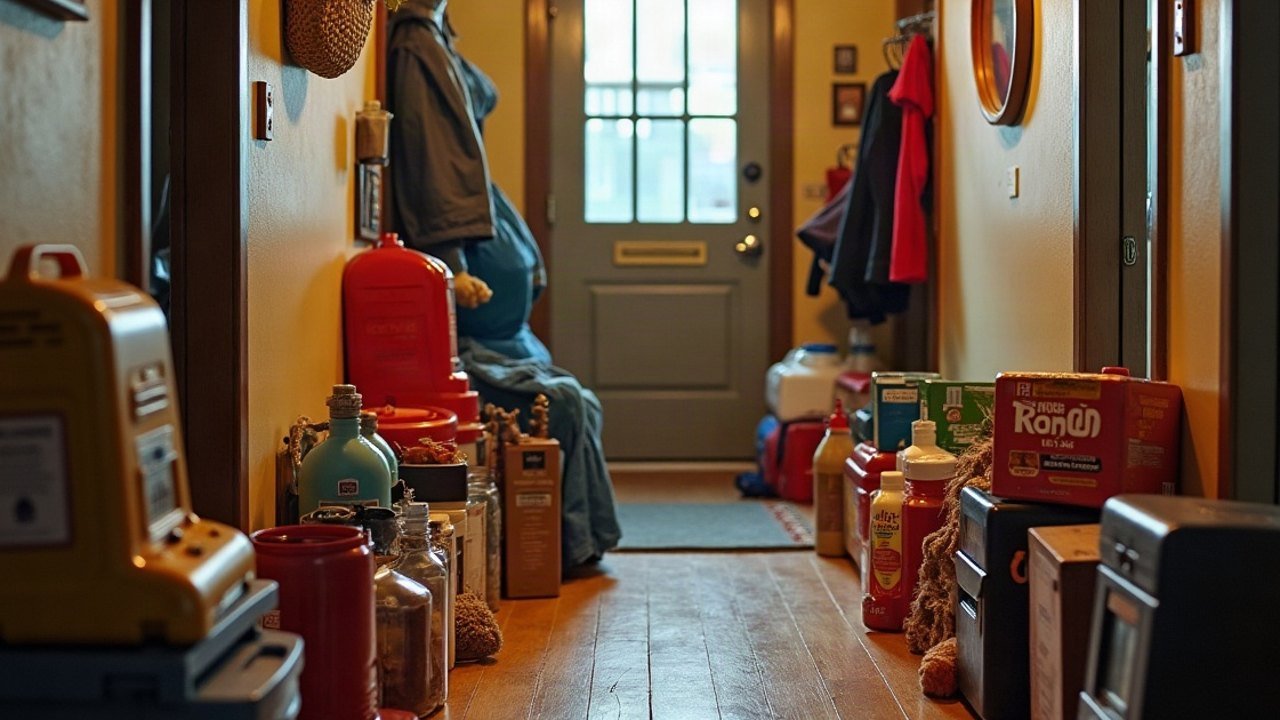
Zone A: immediate-use items. Store a torch, working light, contact sheet and suitable power bank where people can reach them in darkness. Zone B: bulky home reserves. Put water, ordinary shelf-stable food, blankets and spare consumables on suitable shelves. Zone C: departure items. Keep a portable set of essentials and protected documents where it can be collected without hunting through the whole house.
These zones can be adjacent if space permits, but they solve different problems. Water is heavy: storing all of it in a grab bag may make the bag impossible to lift. The Ready Scotland emergency-kit guidance likewise distinguishes home reserves and waterproof items that might be taken away.
Use labelled containers, keep them away from dampness and heat, and make the essential locations known to everyone who might use them. A pile in an inaccessible loft is not suitable for a household member with limited mobility.
Calculate drinking water from people and days
The current British Red Cross guidance gives a UK planning reference of approximately 2.5–3 litres of drinking water per person per day. At 3 litres, two people for three days require 18 litres. Three people require 27 litres. Five people require 45 litres. These are drinking-water starting figures, not totals for all washing, cooking or medical needs.
| Household size | Drinking water at 3L/person/day | Approximate water weight |
|---|---|---|
| 1 person × 3 days | 9L | 9kg plus containers |
| 2 people × 3 days | 18L | 18kg plus containers |
| 3 people × 3 days | 27L | 27kg plus containers |
| 5 people × 3 days | 45L | 45kg plus containers |
For basic washing and food preparation, total requirements can be substantially greater. Do not mistake a drinking-water calculation for a complete sanitation solution. Specific needs also vary with temperature, illness, age, infant feeding, physical activity and relevant medical advice.
Use food-safe containers, track dates and make sure they can be moved and opened. A smaller number of accessible containers may be more useful than one enormous vessel. See how to calculate emergency water and how to store it safely for the full storage method.
Count edible meals rather than packets
Count person-meals and check whether food can be eaten with the utilities actually available. Three people eating three meals daily for three days need 27 person-meals. That does not mean 27 identical products: a shared meal might use several ingredients, while one large tin may supply multiple portions.
Write a simple nine-meal sequence and identify where protein, energy and fruit or vegetables will come from. Check allergies, swallowing needs and food that children will realistically eat. Check packaging instructions: some products require thorough cooking even if sold in tins or packets. An unopened product is not automatically safe to eat cold.
Keep a manual tin opener if needed, usable utensils and a hygienic way to handle opened packages. Without refrigeration, don't assume leftovers can be safely kept until tomorrow. For a worked shopping and menu method see the three-day no-cook food guide; this article concentrates on integrating those food supplies into the whole household kit.
Make a medication continuity plan, not a random medicine stockpile
Record the pharmacy, prescriber, current medicine names and dosing information in a protected, accessible place. Check how prescriptions are normally ordered and whether any medicine requires refrigeration, power or specialist equipment. Discuss appropriate contingency quantities with a GP, pharmacist or care provider rather than altering prescribed doses or building an unsafe reserve.
The NHS emergency-prescription guidance explains the limited options when a repeat medicine has genuinely run out, including NHS 111 and pharmacists. Those services might themselves be difficult to reach during a widespread disruption; an advance plan avoids relying exclusively on an emergency refill.
Include glasses, hearing-device batteries, suitable mobility equipment or other essentials if someone in the household uses them. Medical devices needing a power supply require an individual contingency from the clinical team and equipment provider. A consumer power bank is not a substitute for a medically approved solution.
Lighting, power and accurate information
Provide at least one reliable battery torch or lantern, then check whether the intended batteries are actually available and can be changed safely. Avoid using candles as the default lighting solution where battery lights will do. The British Red Cross kit guidance recommends a torch, spare batteries, charging support and ways to remain informed.
For power banks, test the actual charging cable and output compatibility. A phone displaying a charging symbol does not prove the bank can deliver several useful charges. Measure the bank's behaviour with your phone before storing it and keep it on a suitable maintenance schedule.
A battery or wind-up broadcast radio can provide updates when the home router fails; it cannot make a private phone call. Write down known local stations and test reception. Our FM and DAB emergency radio guide explains realistic receiver choices and batteries.
Hygiene, toilets and basic first aid
Pack hand hygiene supplies, waste bags, toilet tissue, period products and any household-specific sanitation essentials. Keep safe water for handwashing where possible, especially when preparing food or managing illness. Hand sanitiser is useful for many everyday circumstances but does not solve every sanitation hazard or replace correct cleaning when hands are visibly dirty.
Maintain a basic first-aid kit with sterile dressings, suitable plasters, disposable gloves and items you know how to use. Check expiry dates and practise appropriate first-aid skills rather than filling the box with unfamiliar equipment. The kit cannot substitute for urgent medical assessment when someone has a serious injury or illness.
If the water supply stops, toilets may behave differently depending on the building and sewerage arrangements. Do not assume every flush remains safe or every drain is functional. Use the sanitation-during-water-outage guide to assess the actual failure.
Turn the list into a budget-first acquisition order
Before buying anything, walk through the house and mark what you already own: torch, usable containers, familiar cupboard foods, blankets, chargers, documents and a suitable first-aid kit. Then rank missing items by consequence of absence, affordability and accessibility.
| Priority | Typical decision | Proof of readiness |
|---|---|---|
| 1 — safety and continuity | Medicine arrangement, essential drinking water, appropriate light | Accessible and known to household |
| 2 — daily functionality | No-cook meals, hygiene, communications | Products usable without the missing service |
| 3 — convenience | Extra comfort items, duplicate chargers or containers | Add only after more serious gaps are solved |
Don't force a household facing immediate financial hardship to buy expensive specialist packs. Better to close one important, proven gap than purchase a branded “survival box” full of things that do not match your circumstances.
Run a controlled 72-hour tabletop test
Without turning off electricity, shutting off water or creating a real emergency, imagine the kitchen lights are out and shops are inaccessible. Ask one adult to find the first usable torch and another to locate the next day's food and the contact plan. Check the food preparation requirements, open a safe sample package and test an ordinary charging cable.
Write down actual failures: dead batteries, missing opener, unlabelled water, unsuitable food, inaccessible storage or a phone number that is out of date. Correct them one at a time. For genuinely critical medical and building systems, use professional contingency advice; do not test by disconnecting essential services.
Finish by noting when you last checked each section. Food rotation, medicines and batteries change over time even when no emergency occurs.
When the home kit isn't the right tool
A house fire, dangerous flood, gas leak or official evacuation instruction may require leaving immediately. Do not delay escape to collect water containers or finish packing. A heavy three-day home reserve is not a portable evacuation load.
For departure planning, read the family go-bag system and the evacuation decision guide. Those articles explain different responsibilities rather than asking you to transfer the entire home kit to a rucksack.
Frequently asked questions
How much water belongs in a 72-hour emergency kit?
A UK starting reference is approximately 2.5–3 litres of drinking water per person per day. Cooking, washing, infant feeding and individual medical needs require separate consideration.
Must everything fit into one bag?
No. Keep accessible immediate items, bulky home supplies and portable departure essentials in clearly labelled locations. The total water alone can weigh tens of kilograms.
Do I need specialised survival food?
Usually not for a basic home plan. Familiar shelf-stable foods that are safe to eat without normal utilities can meet many needs. Read cooking instructions and individual dietary requirements.
How often should I check the kit?
Use a review interval you can sustain and update when medicines, contacts, household members or equipment change. Test opening, charging and finding items rather than only checking expiry labels.