THREE LITRES FOR DRINKING IS NOT THE SAME AS THREE LITRES FOR EVERY USE.
How much emergency drinking water would three people actually need if the taps stopped running? What changes if there is a baby, a pet, hot weather or no water for washing? The answer depends partly on the purpose of the water. A supply adequate for drinking alone is not automatically enough for cooking, basic hygiene or managing particular medical needs.
This guide gives a practical way to calculate emergency water quantities by person and by day without pretending one number covers every household. It is for readers who want the option of keeping water available if the normal supply fails. It does not assume a water outage is imminent or tell everyone they must buy large amounts.
For a UK starting point, the British Red Cross's October 2026 guidance allows approximately 2.5–3 litres of drinking water per person per day when considering a three-day disruption. It notes that adding basic cooking, washing and hygiene can raise the total to around 10 litres per person per day. Those are planning figures, not fixed individual medical prescriptions.
Drinking water and total household water are different budgets
When someone says 'three litres each', ask whether they mean only what is consumed or all the water needed for the day. People may need water for drinking, making food, brushing teeth, washing hands and caring for dependants. The same supply should not be counted twice—for example, a litre needed to make formula is not an additional litre available for general washing.
| Type of use | Starting reference | Important qualification |
|---|---|---|
| Drinking only | Approximately 2.5–3L per person/day (UK Red Cross) | Hot weather, illness or exertion may change individual needs |
| Drinking plus basic cooking and hygiene | Up to approximately 10L per person/day as a wider planning example | Depends on sanitation, food choices and available services |
| Infant formula preparation | Follow product instructions and NHS/clinical advice | Requires appropriately safe water and preparation method |
| Medical treatment or equipment | Personalised requirement from care provider | Quality as well as volume can be critical |
| Pets | Separate species- and size-appropriate allowance | Veterinary needs and weather vary |
| Toilet flushing or cleaning | Depends on plumbing and available safe non-drinking sources | May require more than drinking allowance; some toilets rely on powered pumps |
The safe response to an actual local water notice is to check what the supplier has restricted. A loss of pressure, a boil-water notice and a 'do not use' instruction are not interchangeable situations. See our home water-storage guide for keeping a separate, known-safe supply.
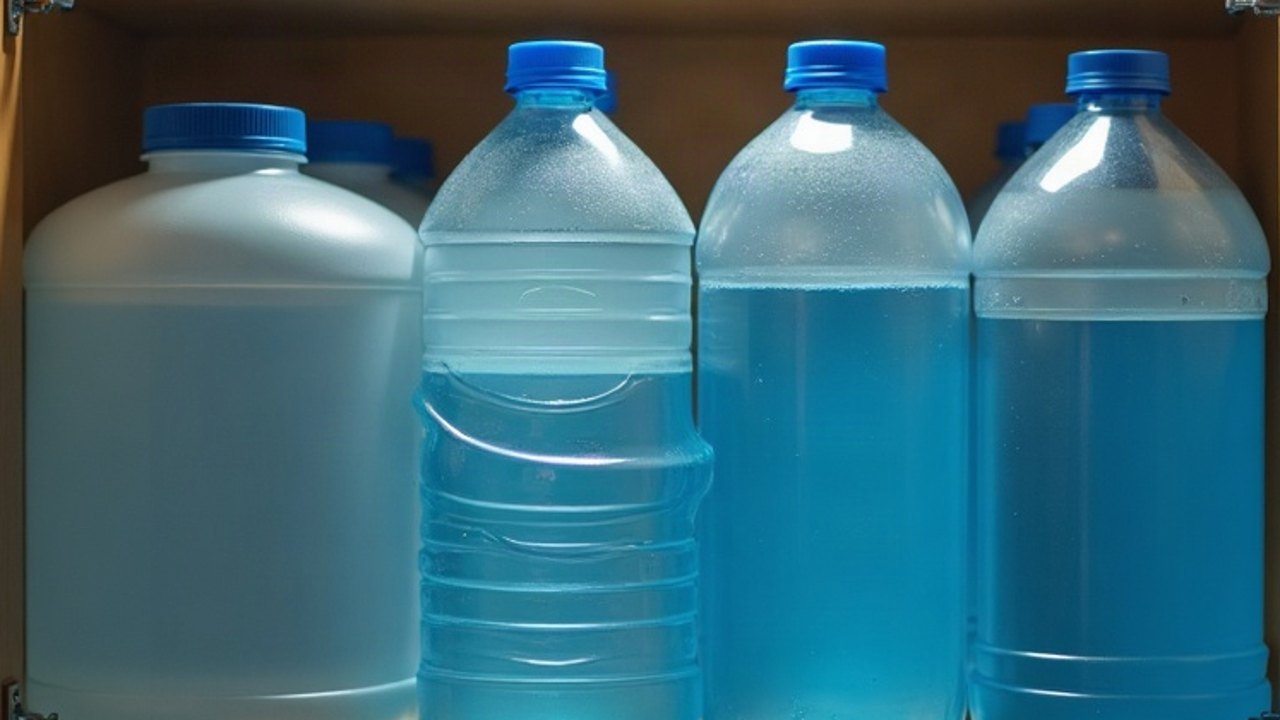
Simple emergency water calculator: people × days × daily allowance
The basic volume calculation is number of people × number of days × litres per person per day. For drinking-only planning using 3L per person/day, a household of three over three days would have 3 × 3 × 3 = 27 litres. Seven days for the same three people would be 3 × 7 × 3 = 63 litres.
Using 10L per person/day as an illustration for drinking plus limited cooking and hygiene, the three-person, three-day figure becomes 3 × 3 × 10 = 90 litres. This is a different planning scope, not evidence that 27 litres of drinking water is always inadequate for drinking. Storage size and realistic availability also matter.
| People | Three days at 3L/day | Seven days at 3L/day | Three days at 10L/day |
|---|---|---|---|
| 1 | 9L | 21L | 30L |
| 2 | 18L | 42L | 60L |
| 3 | 27L | 63L | 90L |
| 4 | 36L | 84L | 120L |
| 5 | 45L | 105L | 150L |
All figures in the table are examples, based on clearly stated daily allowances. They do not account for pets or specialised needs. If you use a different allowance, calculate with that instead of assuming the table is a universal requirement.
How much space and weight does stored water take?
Water is bulky. One litre of water has a mass of approximately one kilogram under ordinary household conditions, before adding the container. A 27-litre supply is therefore approximately 27kg of water; a 90-litre supply is about 90kg. Storage decisions need to consider lifting capability, shelving strength and access.
Rather than using one huge container that is difficult to carry, smaller sealed food-safe containers may be more manageable. A person with limited mobility may need a particular container design and support arrangement. Containers should not be stacked in a way that can topple, block an exit or damage a floor.
Our emergency water storage and rotation guide covers container selection, cool storage and safe handling. An abstract litre calculation is useful only if the water can be stored, reached and poured when needed.
What if the emergency lasts longer than three days?
Multiply the allowance by the number of days you want to examine, but treat the result as an estimate rather than a forecast. A seven-day water interruption may have different causes, available assistance and sanitation arrangements from a one-day local failure. You may not need to store the entire theoretical volume if another reliable supply route exists, but that route should be verified.
The British Red Cross's household guidance presents three days as a manageable initial planning period; it does not require every reader to stockpile for every possible scenario. If you want to explore an extended blackout, see our seven-day room-by-room plan for the wider consequences beyond drinking water.
If you have limited space or funds, assess the quantity you could usefully store and what support would be available. A smaller protected supply may be preferable to unstable or unsanitary storage. Not every household can or needs to hold a week's complete water requirement indoors.
Hot weather, illness and extra physical activity
Daily fluid needs vary with temperature, sweating, body size and medical circumstances. An outdoor worker during a heatwave may need more fluid than someone indoors in a cool room. Illness involving vomiting or diarrhoea can also change hydration needs and may require oral rehydration treatment rather than plain water alone.
For dehydration warning signs and individual advice, consult the NHS dehydration guidance. It describes symptoms and when to seek medical advice; a general article should not replace clinical instructions for infants, older adults or someone with a condition affecting fluid balance.
Do not assume more water is always medically appropriate. Certain conditions require carefully managed fluid intake. A household plan should keep those clinician-directed instructions separate from generic per-person allowances.
Babies and formula: water safety matters as much as litres
Infant feeding needs careful treatment in an outage. Powdered infant formula is not sterile, and preparation instructions may require water at a particular temperature to reduce bacterial risk. A water supply that is merely 'filtered' or chemically treated by a tablet is not necessarily suitable for infant formula preparation.
The NHS guide to preparing powdered formula gives the recommended preparation method. If electricity, gas or safe water is unavailable, seek advice from the NHS or an appropriate healthcare professional about safe feeding arrangements rather than inventing a substitute method. Ready-to-feed sterile formula, where suitable and available, is a distinct product from powdered formula.
Make space in the household plan for cleaning bottles and feeding equipment where relevant, but avoid using potentially contaminated water or assuming tablets disinfect feeding equipment safely without following the product's instructions.
Animals and household care needs
Pets need their own water allowance and safe drinking source. A small cat, a large dog and a collection of specialist animals will have different requirements. Veterinary advice is relevant where an animal has a health condition or needs controlled humidity or aquatic water quality.
For households providing care to another person, also consider personal hygiene, cleaning of essential equipment and whether electrically powered water pumps are part of that care. Those needs can be far more significant than the volume needed for drinking. Contact equipment and care providers to understand approved alternatives.
Tap water outage versus water contamination: three cases
Case one: no pressure, water quality otherwise unaffected. The issue may be a local pump or supply interruption. If you have sealed stored drinking water, you can use that while checking the water supplier's updates. Do not assume the taps are contaminated or safe without information.
Case two: boil-water notice. Follow the supplier's notice for what it covers, including drinking, food preparation or brushing teeth. Water treatment recommendations depend on the problem; a chemical tablet is not automatically a substitute for the instructions issued by the water authority.
Case three: suspected fuel, pesticide, chemical or radioactive contamination. Do not presume boiling, household filters or purification tablets will make it safe. The US CDC's emergency water guidance expressly warns that those methods cannot reliably remove such contaminants. Use a known-safe alternative source and seek local health-authority advice.
For an explanation of tablet limits and contact times, read our water-purification tablets guide.
How to budget water without wasting it
Label separately the water intended for drinking and the water intended for other uses. If tap water remains safe and available, there may be no reason to open a sealed emergency container. Where other water sources are used for toilet flushing or outdoor cleaning, keep them clearly separate from drinking-water containers to avoid accidental ingestion.
When an interruption occurs, record the starting stored volume, how much you used and whether fresh known-safe water has become available. Avoid turning a planning allowance into strict personal rationing, especially for children or someone unwell. If drinking water is genuinely inadequate, seek assistance or move to a suitable safe location rather than attempting to cope through dehydration.
A realistic three-person calculation exercise
- Write down the number of people and the period you want to examine.
- Choose whether you are calculating drinking only or a broader household volume.
- Use an appropriate daily reference: e.g. 3L for drinking-only planning, or a different value that fits individual needs.
- Multiply by people and days: 3 people × 3 days × 3L = 27L drinking water in the example.
- Add separate allowances for pets, infant feeding and clinically advised requirements where relevant.
- Consider container weight and your actual storage space.
- Identify an independent safe resupply or assistance route if storing the full volume is impractical.
The resulting number is a planning estimate, not a medical prescription, emergency order or claim that everyone should store this quantity. It gives a concrete way to decide whether a household's existing supplies meet its own chosen scenario.
Frequently asked questions
How much emergency drinking water should I store per person?
A UK planning starting point from the British Red Cross is approximately 2.5–3 litres of drinking water per person per day. Actual needs vary, and cooking or hygiene requires separate consideration.
How much water does a family of four need for three days?
At an illustrative three litres of drinking water each per day, four people would need 36 litres for three days. Including basic cooking and hygiene can increase that substantially.
Is three litres per day enough for washing?
No single amount fits all uses. Three litres is a drinking-water planning reference; the British Red Cross discusses around 10 litres per person per day when some cooking, washing and basic hygiene are included.
Can I use purification tablets instead of storing any water?
Tablets depend on having a suitable source and work only against specified microbial hazards under correct conditions. They cannot reliably make fuel-, chemical- or radiation-contaminated water safe.