IF THE LIGHTS STAY OFF FOR DAYS, EACH ROOM RAISES A DIFFERENT PROBLEM.
Day three without mains electricity looks very different from hour three. The refrigerator may no longer protect perishables, rechargeable devices need careful rationing, and questions about water, heating, sanitation and the people who depend on you become more important. If an outage continued for a week, could your home remain a suitable place to stay—and how would you make that decision each day?
This is a room-by-room guide to living without electricity for seven days, designed for readers who want to examine that possibility. It is not a prediction of a week-long blackout and not advice to remain in an unsafe property for seven days. There are circumstances in which leaving early for suitable accommodation, obtaining medical assistance or following an emergency-services instruction is safer than trying to 'last' at home.
Drawing on the British Red Cross's October 2026 household-disruption guidance, this article extends the planning questions beyond the commonly discussed three days. It adds a daily assessment process and room-specific decisions rather than simply tripling an emergency shopping list.
First decision: does staying at home still make sense?
A week without electricity could happen in different conditions. In a mild, well-insulated home with running water, safe food and a functioning local support network, the challenges differ from those in a freezing property with a medically vulnerable resident or unreliable water supply. An article cannot assign a universal safe duration to either situation.
Each day, check five conditions: health, indoor temperature, safe drinking water, sanitation and communications. If one is failing and you cannot resolve it safely, reconsider remaining at home. Do not wait for a fixed number of days merely because this guide has a seven-day title.
| Condition | What to check | When to seek another option |
|---|---|---|
| People and medical needs | Current health, access to medicines, necessary powered equipment | Someone becomes unwell or approved care support cannot continue |
| Indoor warmth or cooling | Actual temperature trend, clothing, bedding and weather | The building can no longer remain safely occupied |
| Safe water | Known source, available quantity and official supply notices | Water is unsafe or insufficient with no reliable substitute |
| Sanitation | Usable toilets, wastewater handling and hand hygiene | Waste or sewage creates an unmanaged health hazard |
| Contact and safe exit | Reliable information, access, transport and support contacts | Isolation compounds another serious problem and safe help is available elsewhere |
For low indoor temperatures, symptoms of hypothermia and the choice of a warmer location, see our winter power-outage stay-or-leave guide. Suspected hypothermia or dangerous carbon monoxide exposure requires urgent medical help, not a household improvisation.
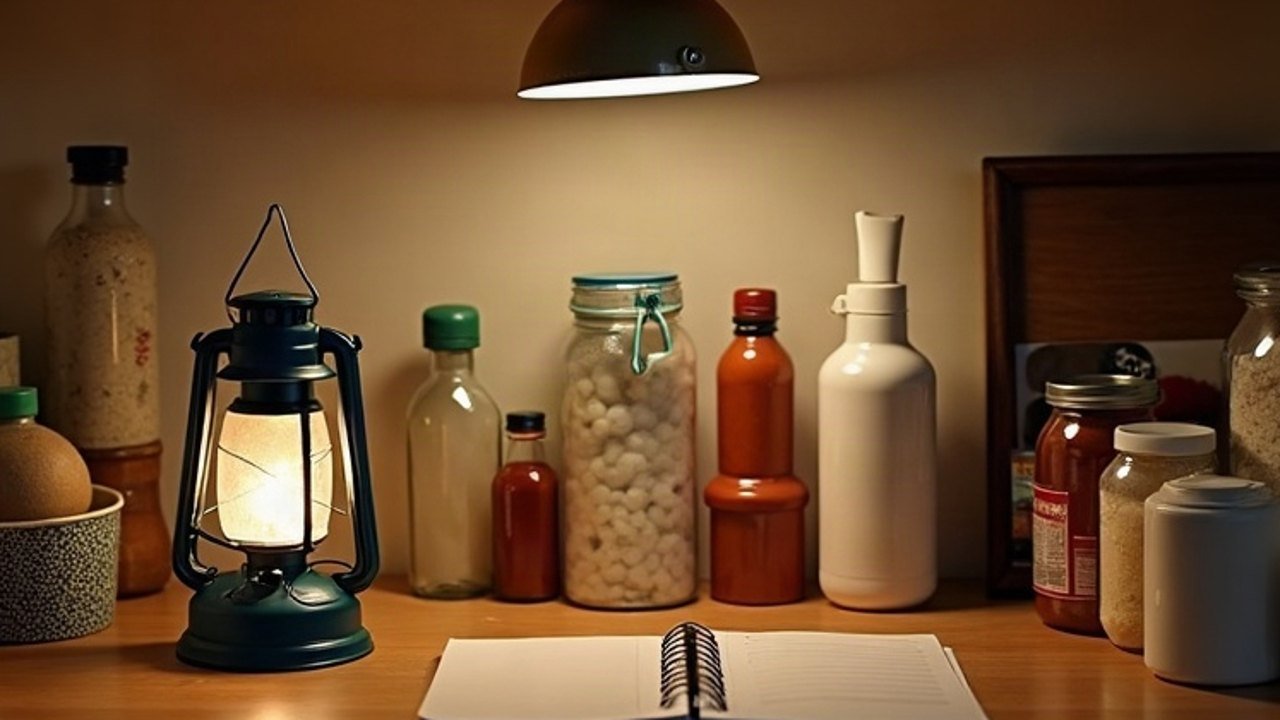
Kitchen: the first day is a food-safety decision
When electricity goes off, stop opening the refrigerator and freezer unnecessarily. The Food Standards Agency's consumer power-cut guidance estimates that a fridge may stay sufficiently cold for roughly four hours when closed; a full freezer can remain frozen up to 48 hours, or around 24 hours if half full. These are estimates subject to the appliance, room temperature and door openings.
Use a thermometer to help assess temperatures if available. If refrigeration has been lost for an extended period, discard perishable foods that do not meet applicable food-safety guidance. Do not rely on smell, appearance or a power station's advertising claim to decide whether a meal is safe. People more susceptible to food poisoning should take particular care.
As the days continue, the kitchen shifts from refrigerated food to shelf-stable meals that can be eaten safely without mains cooking. Ordinary tinned or packaged foods may be suitable where their labels allow it; other foods require preparation. Check allergens, children's needs and the availability of a manual can opener.
Never bring a camping stove, charcoal grill, portable generator or car engine into a home, garage or enclosed space to cook. The NHS warns that carbon monoxide is colourless and odourless. Outdoor cooking, where permitted and genuinely safe, is a separate activity that requires following equipment instructions, local conditions and fire-safety precautions.
Bathroom and toilet: electricity may affect more than lighting
Some properties use gravity-fed drainage and ordinary mains water that continue working during a local power cut. Others rely on electric pumps for the water supply, sewer lifting or building pressure. A high-rise flat, a private well or a pumped toilet may behave differently from a ground-floor home.
If the toilet no longer flushes, find out whether water or waste pumping is the underlying issue before repeatedly trying. An unpowered sewage pump can create a backing-up risk even if you pour extra water into the bowl. Ask building management or the water service for suitable instructions; do not assume adding water always solves the problem.
Preserve hand hygiene using soap and safe water where available, or a suitable sanitiser for situations where washing is not possible. Sanitiser does not remove visible dirt as effectively as washing and is not a substitute for correctly managing sewage contamination. If you need a temporary toilet arrangement, seek local waste-management or emergency guidance rather than dumping waste into drains, gardens or public spaces.
For drinking or cleaning, distinguish a lack of water pressure from a notice that water is unsafe. Do not guess which treatment is appropriate. Boiling can reduce many infectious organisms but does not reliably remove fuel, heavy metals or other chemical contaminants. Follow the water supplier's specific instructions.
Living room: make it a functioning day space
One suitable room can reduce the effort of moving between dark or cold areas. Choose a space with a clear exit, good daylight where available and safe places for battery lighting. In cold weather, close curtains at night and unused internal doors while keeping ventilation required for gas and other fuel-burning appliances.
Use familiar blankets, warm clothes and dry layers rather than improvised heating. Never run an oven or hob to heat the room; never use a generator or barbecue indoors or in an attached garage. The Met Office's cold-weather guidance advises using warm layers and keeping rooms appropriately heated without introducing fuel-burning hazards.
In summer, a home may become dangerously hot rather than cold, particularly in upper-floor flats. Use shade, ventilation appropriate to outdoor conditions and reliable local heat-health advice. Consider a safer, cooler location for people at particular risk. A battery-powered fan may help comfort but does not make every indoor temperature safe.
Bedrooms: plan for sleep, access and vulnerability
After multiple days, fatigue can affect judgement. Make sleeping areas safe in low light: clear paths to doors and toilets, provide accessible torches and avoid loose trailing cords. A small battery lantern or torch generally presents less fire risk than a candle near bedding.
Consider whether a child, older person or somebody with limited mobility needs to sleep nearer a carer or an exit. Do not move someone in a way that compromises medical equipment, accessibility, fire escape or agreed care arrangements. Keep necessary medicines, glasses and contact details readily available without leaving sensitive documents exposed.
Cold bedrooms need monitoring. If someone develops signs such as confusion, slurred speech, unusually slow breathing or extreme drowsiness, consult the NHS hypothermia guidance and seek emergency help where appropriate. No 'seven-day challenge' should take precedence over their health.
Hallway, stairs and exits: a route you can use in darkness
The hallway is a safety system as much as a passage. Identify obstacles, steep stairs, doors with electrical locks and windows or routes used for escape. Check that everybody can reach and operate exits without mains power. For powered access systems, use the manufacturer or building manager's approved manual method rather than forcing a mechanism.
Keep a dependable torch at an easily reachable point. Do not leave candles burning unattended or run extension cords across stairways. If the building has communal lifts or doors, learn whether they have independent power or are disabled in an outage. People with mobility difficulties may need an individual evacuation or assistance plan.
If the outage stems from a storm or flood, outside conditions may be hazardous. Do not leave simply because the electricity is off; compare the actual risks of staying and travelling. Where authorities give evacuation instructions, follow those instructions.
Utility area and consumer unit: do not improvise electrical repairs
A power cut can reveal a separate property fault such as a tripped protective device, but the consumer unit is not a DIY repair project. Only operate ordinary accessible switches if the area is dry, undamaged and you know the procedure. If breakers repeatedly trip or there are scorch marks, unusual sounds or damaged wiring, contact a qualified electrician.
When power returns, some devices may restart unexpectedly. Switch off heaters, irons and cooking appliances during the outage. You may leave one light switched on as an indicator if it is safe to do so. Unplug sensitive equipment where appropriate, following manufacturer instructions.
Electrical Safety First warns against overloaded extensions, chained adaptors and damaged cables. A portable power station must not be connected through a wall socket to energise fixed home wiring. A professionally installed backup system is different from an improvised lead.
Home office and charging station: spend energy deliberately
Keep essential communication devices together and manage charging as an energy budget. A phone, router and laptop have different power needs, and network infrastructure outside the home may still fail even if you power your own router. Reduce non-essential screen use and reserve a charging option for contacting people or accessing services.
If you have a portable battery, estimate how many watt-hours it can supply to your chosen devices rather than just looking at its percentage display. Our solar generator runtime guide gives worked calculations, including conversion losses and the importance of actual wattage. Do not assume sunlight will recharge a battery fully every day.
Put key contact numbers and relevant account-recovery instructions somewhere secure and available offline. Do not keep every password in an unprotected sheet. A household affected by a cyber incident may also be unable to access online banking, cloud documents or support accounts; see the digital service continuity guide for that distinct scenario.
Water storage area: estimate use from real people
Water can become a major constraint during a prolonged disruption, even if the original problem was electricity. The British Red Cross suggests around 2.5–3 litres of drinking water per person per day for an initial three-day plan. For seven days, a two-person household using the upper example allowance would need 2 × 3 × 7 = 42 litres of drinking water alone.
That calculation does not cover all cooking, hygiene, sanitation, pet and special medical needs. It is a planning example, not an instruction that every household must store an exact quantity. Water is heavy and storage space is limited; stable, food-safe containers are important. Follow local guidance about supply interruptions and water safety.
If your water supply remains functioning and safe, there may be no reason to draw down stored water. Conversely, if the local supplier issues a do-not-use notice, do not assume bottled-looking or filtered tap water is automatically safe.
Food cupboard: build ordinary meals around what remains usable
Plan meals by what can be prepared safely rather than by a numbered collection of 'survival rations'. A cupboard of ordinary food can be valuable if it includes usable portions, clear storage dates and items meeting the household's dietary needs. Some foods can be eaten cold; others cannot. Avoid making claims that an emergency meal kit is automatically necessary.
Rotate groceries through normal use rather than buying food that stays unopened for years. Keep a can opener and basic utensils that do not rely on electricity. Where young children or people with medical nutrition requirements are involved, consider their specific needs instead of relying on the rest of the household's meal plan.
At each daily check, record what safe food remains and whether local shops are accessible and accepting payment. A blackout may also affect refrigeration, transport, card terminals and water; do not assume shops will be open simply because they are nearby.
A seven-day timeline with a decision every morning
| Time | Reassessment question | Possible consequence |
|---|---|---|
| Day 1 | Who and what immediately needs electricity? | Protect care equipment, lighting, refrigeration and communication |
| Day 2 | Can food remain safe and is the home still suitable? | Reassess chilled food, temperature and reliable updates |
| Day 3 | Can everyone access drinking water, medicines and functioning toilets? | Seek supply assistance or safer accommodation if needs cannot be met |
| Day 4 | What has become unavailable beyond the house? | Check shopping, transport, health services and communication dependencies |
| Day 5 | Are fatigue, isolation, heat or cold changing the risk? | Review support contacts and whether remaining is still sensible |
| Day 6 | Does the household have a verified plan for another day? | Do not assume supplies or health will hold indefinitely |
| Day 7 | Is safe service restoration expected, or is outside help necessary? | Make a fresh decision based on conditions—not the desire to complete seven days |
The dates are prompts, not an instruction to wait until the specified day to act. A freezer may become unsafe earlier, an infant may need immediate warmth, or water may remain fully operational throughout. Reassess actual conditions continuously and respond sooner whenever needed.
How to receive information without spending all your phone battery
Find the distribution network operator's latest verified update using the lowest-energy practical channel available. In England, Scotland and Wales, the free 105 number connects to the local network operator. Elsewhere use the local provider's official method. If communications work intermittently, record the confirmed information and time of issue rather than constantly refreshing feeds.
A battery radio can help with local broadcasts, provided you know which stations actually carry local information. Friends and neighbours can share observations, but forwarded social posts may be outdated or incorrect. Our false emergency alert verification guide explains how to distinguish an authenticated warning from a screenshot or automated summary.
When you receive a restoration estimate, treat it as provisional. A changing estimate is not a reason to ignore food, warmth or medical needs. During an extended disruption, essential decisions should not depend solely on when a mobile app says electricity might return.
How to help another household without creating more risk
Checking on a neighbour can be valuable if conditions allow, especially someone who has trouble using stairs or a phone. Offer to share verified information, help contact their care provider or assist with ordinary supplies. Do not enter damaged buildings, drive through floodwater or improvise electrical connections to provide assistance.
Different homes may have different supplies or risks. A home with power does not necessarily have spare capacity for critical medical equipment, and an improvised extension lead over a pavement could create a serious hazard. Ask before sharing personal information or moving someone's medication.
What could cause a week-long electricity failure?
Long interruptions may arise from extensive storm damage, damaged infrastructure, difficult restoration conditions or, in some scenarios, wider system disruption. A prolonged event by itself does not establish its cause. Read our power-grid dependency map for how generation, transmission, distribution and other services can interact.
Some readers are especially concerned about hypothetical AI-related threats to infrastructure. There is no definitive basis for claiming that such an event will happen or that it cannot. This article is intentionally about what a household might do if its electricity were unavailable for a week, independent of any unverified explanation.
When electricity returns after a long outage
Take care when restarting appliances. Check for water damage, unusual smells, damaged cables and tripped protective devices. Seek a qualified electrician where there is reason to suspect electrical damage. Restart heating, pumps or specialised equipment according to the manufacturer and service-provider instructions.
Review refrigeration temperatures and food-safety guidance before using affected perishables. If the water supply was interrupted or a water-quality notice issued, wait for appropriate official instructions before drinking or using it. Check whether medicines remained within their specified storage conditions with the pharmacist or care provider.
Once the household is safe, review which room or service caused the greatest difficulty. A missing torch, a blocked stairway or inaccessible provider contact may be an easier problem to fix than a major energy-storage purchase. Let the experience guide later decisions rather than trying to buy every item suggested online.
Frequently asked questions
Can you live at home for seven days without electricity?
Possibly, depending on temperature, health needs, water, sanitation, food, communication and suitable support. There is no universal safe duration; leave or seek help earlier if essential conditions cannot be maintained.
How much drinking water would two people need for a week?
Using a planning example of three litres per person per day, two people would require 42 litres for drinking over seven days. That does not cover all hygiene, food preparation, pets or medical needs.
What should I do with refrigerated food after days without electricity?
Follow the Food Standards Agency's temperature-based guidance and discard perishable food that can no longer be considered safe. A fridge or freezer's insulation does not keep food safe indefinitely.
Can I heat my home with a camping stove during an outage?
No. Camping stoves, barbecues, generators and other unsuitable fuel-burning equipment must not be used indoors or in enclosed spaces. Carbon monoxide and fire hazards can be fatal.