WHEN AN EMERGENCY MESSAGE ARRIVES, CHECK THE CHANNEL AND THE HAZARD.
A message flashes across your phone: 'Evacuate immediately.' Your neighbour forwards a screenshot. A social-media video appears to show an official explaining that the danger has spread. The information is urgent—but which part is genuine? In a fast-moving emergency, a fabricated warning, an outdated notice or an AI-generated summary can influence decisions before anybody has checked the source.
This is not just hypothetical. In January 2026, an AI-powered app in Colorado reportedly misinterpreted radio traffic from a training exercise and sent notifications about a fire that was not taking place, according to local reporting published in March 2026. That example concerns a third-party app interpreting information—not a compromised government emergency broadcast system. The distinction matters.
If you are worried about information manipulation during a future AI-related crisis, you can build a straightforward verification method today. The goal is not to disbelieve every alert. It is to recognise the difference between an authenticated warning, a forwarded claim and a report that has yet to be confirmed, while protecting yourself from hazards you can actually observe.
Why emergency misinformation is unusually dangerous
Emergencies reduce the time people have to investigate. A rumour about a fire, chemical incident, infrastructure failure or evacuation can lead to dangerous movement, overwhelmed roads, unnecessary exposure or delays in taking protective action. False reassurance can be just as harmful: a fabricated 'all clear' may persuade people to leave shelter while the threat remains.
Generative AI can create plausible writing, audio, images and video quickly. It can also summarise genuine information incorrectly when sources are incomplete, as an automated alerting app may do. These are different failures: deliberate deception, accidental error and unverified repetition. A reader should respond to the evidence, not assume the same cause in every incident.
Our deepfake verification guide explains how to investigate the origin of a suspicious video. Here we focus on decisions made under time pressure.
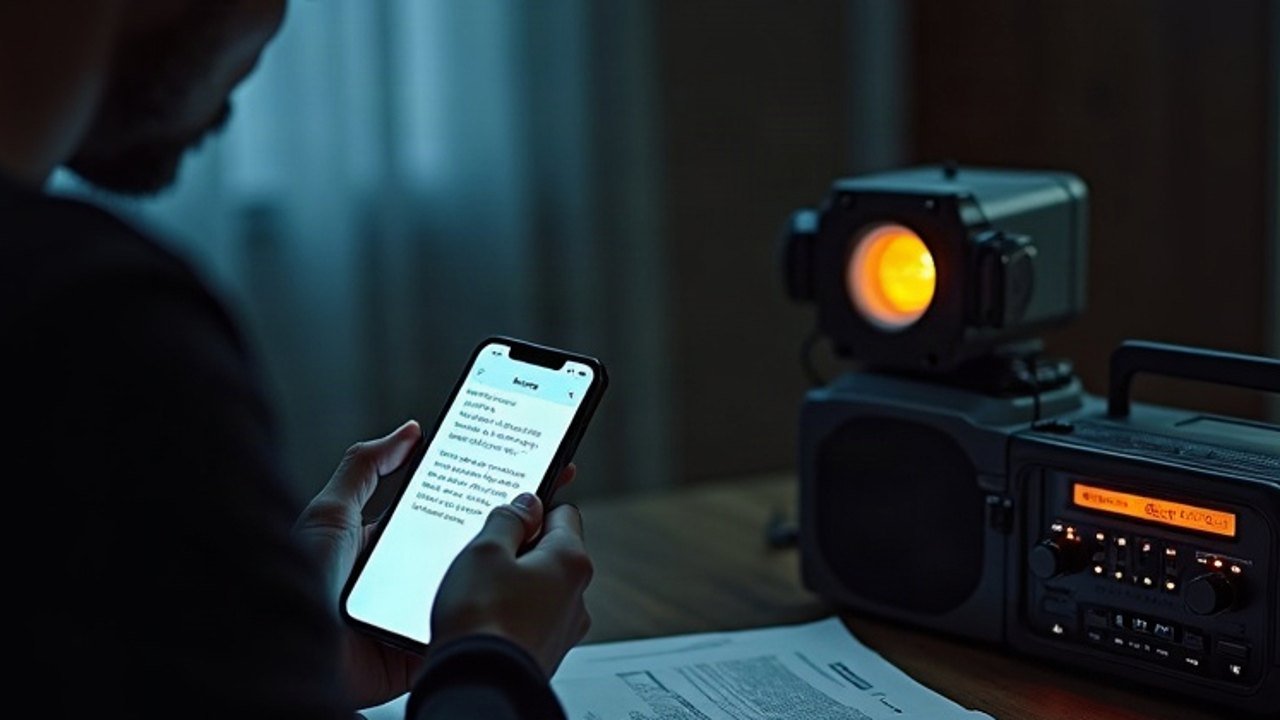
First classify the channel, not how convincing the message looks
A message that looks official is not necessarily an official alert. A genuine cell-broadcast warning, an ordinary SMS, a screenshot of a warning and a social-media repost may appear similar after somebody forwards them, but they have different provenance.
| What you receive | What it establishes | What to do |
|---|---|---|
| Direct alert delivered by your country's official warning system | A message through a designated alerting channel; read its stated area and instructions | Follow official protective instructions and check subsequent updates |
| Text or email claiming to be an emergency service | Only that somebody sent a message | Verify independently; do not enter details through an unexpected link |
| Screenshot of a warning forwarded by a friend | A screenshot exists; it may be old, edited or from elsewhere | Look for a current matching notice through the responsible authority |
| AI-generated summary or community alert app | A third-party system interpreted some source material | Check the underlying source and any correction notices |
| Live stream or talking-head video | Video was published; identity, date and authenticity may still be unverified | Trace the original posting and corroborate claims |
| Danger you can directly observe | There may be an immediate local hazard even before an alert arrives | Take proportionate life-safety action; call emergency services as appropriate |
Do not use lack of a website update as a reason to ignore immediate physical danger or a genuine urgent alert. Public information systems can lag in a rapidly developing emergency. Balance independent verification with immediate safety.
Official emergency alerts: the channel varies by country
In the UK, the Emergency Alerts service sends alerts to compatible devices in affected areas. The official site explains that its service does not ask recipients for personal details or send them emails, and that alert details can be checked through GOV.UK. Its technical explanation describes cell broadcasting over supported mobile networks without requiring users to sign up or turn on location sharing.
In the United States, public warnings can be distributed through multiple channels, including Wireless Emergency Alerts (WEA), the Emergency Alert System and NOAA Weather Radio, alongside local alerting services. The Congressional Research Service's Integrated Public Alert and Warning System (IPAWS) explains the role of these mechanisms.
Other countries have their own systems and alerting authorities. Find your country's official guidance before relying on an icon, sound or menu label from an overseas screenshot. A copied screenshot of a real alert is not the same as receiving a direct broadcast yourself.
A rapid verification sequence when a warning appears
- Read the exact claim. Identify the hazard, place, time, source and requested action. 'Danger everywhere' without a location or issuing authority provides little operational information.
- Check whether it arrived through an official channel. Do not downgrade a genuine local emergency alert simply because it appeared suddenly.
- Notice immediate surroundings. If you can see smoke, floodwater, falling debris or another direct hazard, move to safety as the circumstances require and seek emergency help.
- Open a known source yourself. Use a bookmarked or manually entered emergency-service, local-authority or official alerting website. Avoid unfamiliar links bundled with the alarming message.
- Compare a second independent channel. Local radio, verified emergency-service communications or an established broadcaster may confirm the area and action. Multiple reposts of one screenshot do not count as independent evidence.
- Watch for updates and corrections. Verify whether the warning is current, superseded, cancelled or limited to a different location.
This process should be proportionate. If a verified alert says to shelter immediately, act on it. Do not spend ten minutes investigating image artifacts while the hazard is at the door. Reserve lengthy forensic checking for disputed claims and non-immediate decisions.
Case study: an AI app misreads an exercise
In the Colorado case reported in March 2026, a third-party emergency notification app used AI to interpret dispatch traffic. It reportedly misread a simulated fire training exercise as an actual incident, prompting notifications about a blaze that had not occurred. The lesson is precise: an automated interpretation can turn authentic source material into a false conclusion.
The responsible question is not whether every AI alert is false. Ask whether a system is quoting a verified official instruction, listening to raw radio traffic, inferring events from social media or generating its own summary. Errors can enter at the interpretation stage even when the original source was real.
If an app offers a link to a source dispatch log or official incident update, use it to establish what has actually been confirmed. If the app has issued a correction, do not continue circulating the original screenshot without that context.
Case study: a genuine system can issue a mistaken alert
In January 2025, Los Angeles County residents received broad evacuation-related alerts that officials later acknowledged were issued in error during the wildfire emergency, as documented by LAist's reporting. That incident should not be relabelled an AI attack without evidence. It illustrates a different difficulty: even an authentic alert can be mistaken or superseded.
When this happens, the safest approach is to follow the most current verified instructions and assess any immediately observable hazard. The absence of a perfect information source makes a combination of direct alerts, local emergency communications and trusted broadcast updates especially valuable.
Six warning signs in a forwarded emergency message
- No attributable origin: the message names 'authorities' but not the agency, area or time.
- Old imagery presented as new: a real photograph or video is reused for a different date or location.
- Pressure to send money or credentials: the warning asks for a payment, login code or identity scan as a condition of remaining safe.
- Instructions that conflict with confirmed advice: a repost says to ignore a current official evacuation or all-clear notice without evidence.
- One source masquerading as many: hundreds of accounts repeat the identical screenshot but no independent channel confirms it.
- Claims of secret certainty: the post confidently names the cause or blames a particular group before any credible investigation has been completed.
These are reasons to check, not automatic proof that a message is fake. A genuine eyewitness can post a hurried, incomplete account. What matters is independent confirmation and the actual conditions in the affected area.
How to verify a suspicious video or voice message
First locate the earliest credible publication you can find. Check the recording date, the place shown and whether the named organisation has issued a matching statement. A clip may be genuine but taken from a previous event. Reverse-image searches and careful attention to landmarks can help with non-urgent verification.
Do not rely solely on an AI-detector score or visual tells such as hands, teeth or lip movements. Generated media is changing, editing can create similar artifacts and compression can make authentic footage appear suspicious. Our image and video forensics article provides a fuller source-tracing method.
If a familiar person calls with an urgent claim, end the call and contact them through a known number or trusted alternate person. For household arrangements, see the family impersonation plan.
What to do when the internet is down or accounts are unreliable
You may not have reliable mobile data or access to official websites during a serious outage. Identify the local broadcast radio frequencies and emergency contact methods that work in your area while normal services are operating. Keep a battery-powered radio or suitable alternative if this is useful to your circumstances, and learn how to operate it.
Write down which local authority, weather service, emergency provider and broadcaster normally issues relevant notices. Store that list where you can find it offline. For people with hearing, vision or language-access needs, identify suitable accessible alerting channels in advance. This is a practical communications option, not an assertion that a crisis is coming.
Remember that radio can relay errors too. Compare sources when possible; when instructions conflict, seek the latest notice from the authority responsible for the incident and prioritise direct life safety.
Do not amplify an unverified warning
Before forwarding an alarming post, ask whether your audience needs it and whether you can include a verified source, date, location and current status. If you find a correction, attach it to the original conversation. A well-intentioned forward can cause harm if it sends people toward a blocked route or away from a safe shelter.
A useful short message to relatives is factual: 'I saw this claim, but I have not verified it. Please check the local emergency service's current information before sharing.' If there is direct, observed danger, report that clearly with the location rather than inventing a cause.
How this connects to future AI loss-of-control concerns
Future AI systems might be capable of producing or distributing persuasive information at greater scale, including during emergencies. Exactly how such systems will develop and whether a larger loss-of-control event will occur remains uncertain. People concerned about that direction can still benefit from a concrete question: which independent information channels would I trust if one source became unreliable?
Our AI emergency scenario guide considers how communications, accounts and essential services might be affected. It does not require readers to believe any one forecast. Its purpose, like this article, is to explain options if you judge them relevant.
A ten-minute verification drill
Choose an old, resolved local emergency notice from an official archive. Without creating or sharing a frightening fake warning, see whether you can find: the original issuing agency, the affected area, the action requested, its time and the final cancellation or update. Then identify one independent local channel that reported the same event.
The exercise reveals whether you know where current information lives and whether you can distinguish a direct announcement from a repost. Record the two sources and their web addresses in your offline contact sheet. Do not use a live emergency as a practice scenario or interfere with emergency services.
Frequently asked questions
Can AI generate a fake emergency warning?
Yes. Text, audio and visuals can be generated to resemble an announcement. A generated screenshot or message does not automatically have access to an official cell-broadcast system, however; check the delivery channel and issuing authority.
What if an official alert turns out to be wrong?
That can occur. Follow the latest verified correction and assess local hazards; a previous mistaken alert does not establish that the next urgent warning is false.
Should I wait for two sources before evacuating?
Do not delay necessary action when you have a genuine urgent instruction or an immediate danger. Independent cross-checking is useful when messages are forwarded, unclear or contradictory, not a reason to ignore life-safety directions.
How can I check a UK emergency alert?
Use the official GOV.UK Emergency Alerts site and relevant local emergency-service updates. The service does not ask you to send personal details by email.