WATER YOU CANNOT SAFELY STORE, POUR OR ROTATE IS NOT A USEFUL FALLBACK.
Twenty litres of water in a cupboard sounds simple until the container leaks, the lid is hard to clean or somebody cannot lift it. Water storage for an interruption is not only about volume. A useful household supply must remain safe, accessible, clearly labelled and manageable in the space you actually have.
This guide explains how to store emergency drinking water at home, including food-safe containers, cleaning, rotation, space and carrying weight. It is for people who want this option if their normal water service becomes unavailable; it does not suggest that a water outage is inevitable or that everyone should fill a garage with bottles.
The US Centers for Disease Control and Prevention's June 2025 guidance distinguishes commercially bottled water from home-filled containers. It recommends observing the date on commercially packaged water and replacing home-filled stored water about every six months. Container condition and safe handling remain important whatever schedule you choose.
Choose a container meant for drinking water
Container material, lid design and cleanliness can affect the stored water. A food-grade water storage container should be made for contact with drinking water, close securely and be durable enough for normal handling. Narrow openings can reduce the chance of contamination when pouring, while wider openings can make cleaning easier; consider which design you can manage.
Never reuse a container that previously held bleach, pesticides, fuel, solvents or other toxic chemicals. Chemical residues can remain even after washing. The CDC's safe-water storage guidance makes that warning explicit. A discarded detergent bottle is not converted into a safe drinking-water vessel simply by rinsing it.
| Container option | Potential advantage | Consider before using |
|---|---|---|
| Unopened commercial bottled water | Factory-sealed and easy to rotate through normal consumption | Storage conditions, packaging damage, date and plastic waste |
| Purpose-made food-grade jerrycan | Reusable, often available in manageable sizes | Cleaning, sealing, pouring weight and approved drinking-water use |
| Small food-safe bottles | Easier to carry and share between people | More caps and individual items to check |
| Large rigid food-safe container | Can store a substantial quantity in one place | Heavy when full; difficult to move and clean; shelf/floor loads |
| Collapsible drinking-water bag | Compact when empty | Check puncture resistance, sealing, cleaning and intended use |
If a container is unfamiliar, check the manufacturer's statement of food-contact suitability rather than assuming a coloured plastic or 'outdoor' label makes it appropriate for potable water.
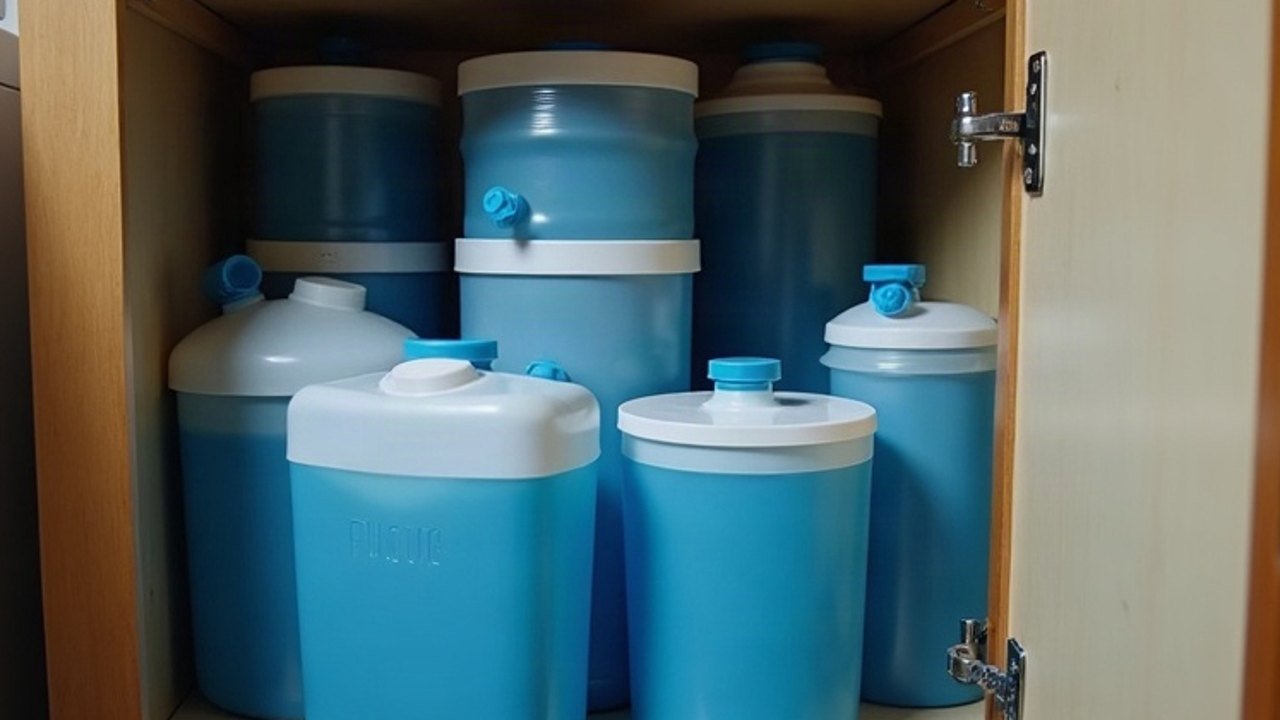
Water weight: choose what you can lift safely
A litre of water weighs roughly one kilogram in ordinary household conditions. A full 20-litre container therefore contains about 20kg of water, before accounting for the container itself. Somebody with restricted mobility, back pain or no safe lifting route may prefer smaller units.
As an illustration, four containers of five litres each hold the same 20 litres as one large container but may be easier to carry individually. On the other hand, more caps and containers mean more items to inspect and clean. Choose the trade-off that works for your household rather than buying the largest container available.
Store heavy containers low, on stable surfaces that can support the load. Do not stack full bottles above children, obstruct exits, balance them on unsuitable shelves or place them where a leak could reach electrical equipment. A cupboard with a stable floor and easy access may be more practical than a high loft or an outdoor shed that becomes inaccessible in winter.
Where should emergency water be stored?
Choose a cool, clean location away from direct sunlight, fuel, pesticides, solvents or other chemicals. Keep containers protected from dirt, pets, insects and physical damage. The CDC's guidance recommends storing water in a cool place and away from direct sunlight and toxic substances.
Extreme temperatures and repeated sunlight exposure can damage packaging over time. Water stored in a garage might be subject to freezing, heat or nearby petrol and paint. Consider whether a person could safely retrieve it during a power cut, especially when stairs or electric access doors are involved.
If only a small cupboard is available, allocate that space to a realistic supply rather than blocking access with more containers than you can manage. For the quantity calculation, see how much emergency water to store per person.
Commercially bottled versus home-filled water
Unopened, commercially packaged drinking water is a straightforward option because it was prepared and sealed under a controlled process. Keep the packaging intact and follow storage and best-before information. If a bottle leaks, looks damaged or has been stored beside contamination, do not rely on its seal or original purchase date alone.
Home-filled water can also be useful when properly handled. It requires a clean, safe water source and a clean, suitable container. The process is not the same as pouring tap water into an unwashed bottle and forgetting about it for years. Record when you filled it, use a proper lid and keep it protected from later contamination.
The CDC recommends replacing home-filled stored water every six months. This is a practical maintenance recommendation; it does not mean every sealed bottle becomes poisonous on a particular calendar date. Conditions, packaging and contamination history all matter.
How to clean a reusable drinking-water container
Before filling a reusable container, confirm it was intended for drinking water and has not held toxic substances. Wash it with soap and clean water, paying attention to the lid and any spout or tap, then rinse thoroughly. Sanitising may be appropriate using a method approved by the container manufacturer and a verified public-health source.
The CDC's container-cleaning method uses a specified dilution of plain unscented household bleach to sanitise the empty container, followed by proper contact time and handling. Because bleach strengths and consumer products vary, do not guess a concentration or use scented, thickened or mixed cleaning products. Follow the current source instructions precisely if using that method.
- Inspect the container for cracks, odour, damaged seals or material deterioration.
- Wash and rinse the container, lid and spout using clean water and suitable soap.
- If sanitising, follow a current authoritative or manufacturer-specific procedure for the cleaning product's verified concentration.
- Use a known-safe water source to fill the clean container, avoiding contact with dirty hands or surfaces.
- Close it tightly and label it as drinking water with the fill date.
- Store it cool and protected, then record when to inspect or rotate it.
Do not mix cleaning chemicals or treat a bottle labelled 'not for drinking water' as safe because it has been sanitised. If you have no access to safe filling water, choose an unopened commercially bottled supply instead of storing questionable water for later.
Label your supplies so somebody else can use them
Every stored container should be recognisable as drinking water rather than grey water, cleaning water or a bottle of unknown liquid. A simple durable label can identify the intended use, the fill date, the person who filled it and a suggested inspection or rotation date. If your household stores non-potable water separately, make that distinction especially clear.
Do not place labels over a manufacturer's safety or expiry information. For commercial bottles, retain the original packaging details. If several people use the storage area, put a short instruction note nearby: where safe drinking water is kept, what containers are unopened and who to ask if there is a concern.
A label does not prove microbiological safety. It merely reduces confusion. If you suspect a container has leaked, been tampered with, held chemicals or become dirty internally, do not rely on the date alone.
How often should you rotate water?
For home-filled water, the CDC's emergency-supply recommendation is to replace it approximately every six months. For unopened commercial water, follow the marked dates and storage instructions, and check for damage. In either case, inspect periodically rather than relying exclusively on a calendar reminder.
Rotation can be simple. If you use bottled water normally, bring an older undamaged bottle into household use and replace it during an ordinary shop. For reusable containers, safely empty, clean and refill using the correct procedure. If there is a local water-quality warning at the time, do not refill from the affected source unless it has been cleared for the intended use.
Store a paper or digital inventory of the containers and dates. Keep it short enough that you will actually maintain it. Buying more containers is not a substitute for checking that the existing ones are clean, sealed and usable.
What if you have very little storage space?
A flat or shared home may have no suitable place for a large reservoir. Start by measuring the space you actually have and the weight it can safely hold. A couple of small sealed containers may be more useful than a large container you cannot access or move.
The British Red Cross's October 2026 advice encourages practical household planning that respects limited space and budget. You can consider where safe resupply or assistance might be available as well as what you store. Don't rely on an unverified promise from a nearby shop or community facility.
Another way to reduce space demands is to distinguish drinking water from water used for non-drinking purposes, but keep the two supplies in clearly separated and correctly labelled containers. You should never substitute untreated non-potable water for drinking because stored drinking water is limited.
Do you need water-purification tablets with stored water?
A clean, sealed supply of known-safe drinking water generally does not require additional disinfectant tablets before use. Tablets can be useful for microbiological treatment of an appropriate alternative source when a product is used correctly, but they do not reliably remove fuel, pesticides, heavy metals or radioactive contaminants.
The CDC's emergency water treatment guide distinguishes physical, microbial and chemical contamination. If a supplier has issued a do-not-use notice or you suspect industrial or flood-related chemical pollution, follow the competent authority's instructions and use a known-safe source. See our guide to water-purification tablets and contact times for a detailed comparison.
A bottle that has been opened and handled repeatedly can become contaminated even if the water was originally safe. Use clean pouring methods and avoid dipping cups, fingers or unwashed utensils into stored water.
What if the water service fails while you're away?
Think about access. If drinking water is stored behind an electrically powered door, in a basement prone to flooding or in a locked room whose key is only on your smartphone, it may be inaccessible when needed. Choose a location that remains reasonably available during the type of disruption you're considering.
For people with mobility needs or carers helping others, discuss whether smaller containers, accessible taps or assistance arrangements are necessary. A technically adequate volume has little value if nobody present can safely lift or pour it.
A 15-minute storage audit
| Check | Acceptable condition | Action if not met |
|---|---|---|
| Container purpose | Food-grade and intended for drinking water | Replace inappropriate or previously chemical-used containers |
| Seal and cleanliness | No leaks, dirt, odour or damaged tap | Clean, sanitise as appropriate or replace |
| Source | Commercially sealed or filled from known-safe supply | Do not rely on uncertain water |
| Label | Purpose and date visible | Label drinking water and record fill date |
| Location | Cool, away from chemicals and physical hazards | Move to safer accessible storage |
| Access | Someone can safely lift, carry and pour | Divide into manageable smaller containers |
| Maintenance | Rotation and inspection planned | Follow applicable six-month/home-filled or commercial-date practice |
This audit works for any quantity. If an item fails, fix that specific issue rather than buying an entire replacement kit without knowing why. Small, reliably maintained supplies are more practical than larger supplies whose safety is uncertain.
Frequently asked questions
How long does emergency water last in storage?
The CDC recommends replacing home-filled stored water about every six months. For commercially bottled water, follow the marked date, packaging instructions and condition of the container.
Can I store drinking water in an old detergent bottle?
No. Do not use containers previously used for toxic substances such as bleach, pesticides, fuel or cleaning chemicals, even after washing. Choose drinking-water-safe containers.
Where is the best place to keep emergency drinking water?
A cool, clean and accessible location away from direct sunlight, toxic chemicals, leaks and falling hazards. Take into account container weight and anybody who may need to carry it.
Should I add purification tablets to every storage bottle?
Not routinely to a known-safe sealed drinking-water supply. Tablets are for specific treatment situations and must be used according to the product instructions; they are not a remedy for chemical contamination or an unsafe container.