COUNT REAL MEALS, NOT RANDOM TINS—THEN CHECK THAT EVERYTHING CAN BE EATEN SAFELY.
Imagine you need to feed two adults for 72 hours, the power is off, and neither the hob nor the refrigerator can be relied upon. What does an actual food list look like—not a photograph of random tins, but nine usable meals per person with drinks, a working tin opener and no unsafe cooking assumptions? You can assemble one from ordinary supermarket food, provided you check the labels, portions and individual needs.
This is a three-day emergency food list designed to work without electricity or cooking. It includes a sample nine-meal menu, a shopping worksheet, realistic storage and serving precautions, and adjustments for children, allergies and limited budgets.
The British Red Cross's October 2026 guidance recommends familiar long-life or ready-to-eat food sufficient to cover meals for three days and points out that emergency supplies need not be expensive. The USDA's emergency pantry advice adds an important practical principle: choose smaller containers that can be finished after opening when refrigeration is unavailable.
Start with meals and people, not with a shopping quantity
For a simple three-day plan, identify the number of people and the meals they normally eat. Two adults eating breakfast, lunch and dinner need 2 × 3 × 3 = 18 meal portions across 72 hours, before snacks or additional individual needs. That number doesn't tell you how much nutrition is in a portion; it only stops you buying six tins and calling them three days of meals.
Look at the serving size and nutritional information on every product. A packet labelled “two servings” may not provide two satisfying main meals for two people. A child, an older adult and someone doing strenuous physical work may require quite different portions. People with medically restricted diets should follow clinical or dietitian guidance rather than a general menu.
For a longer period that needs more varied meals and rotation, read our seven-day emergency food plan. Here we are deliberately solving a shorter problem: safe, ready-to-eat meals in the absence of power.
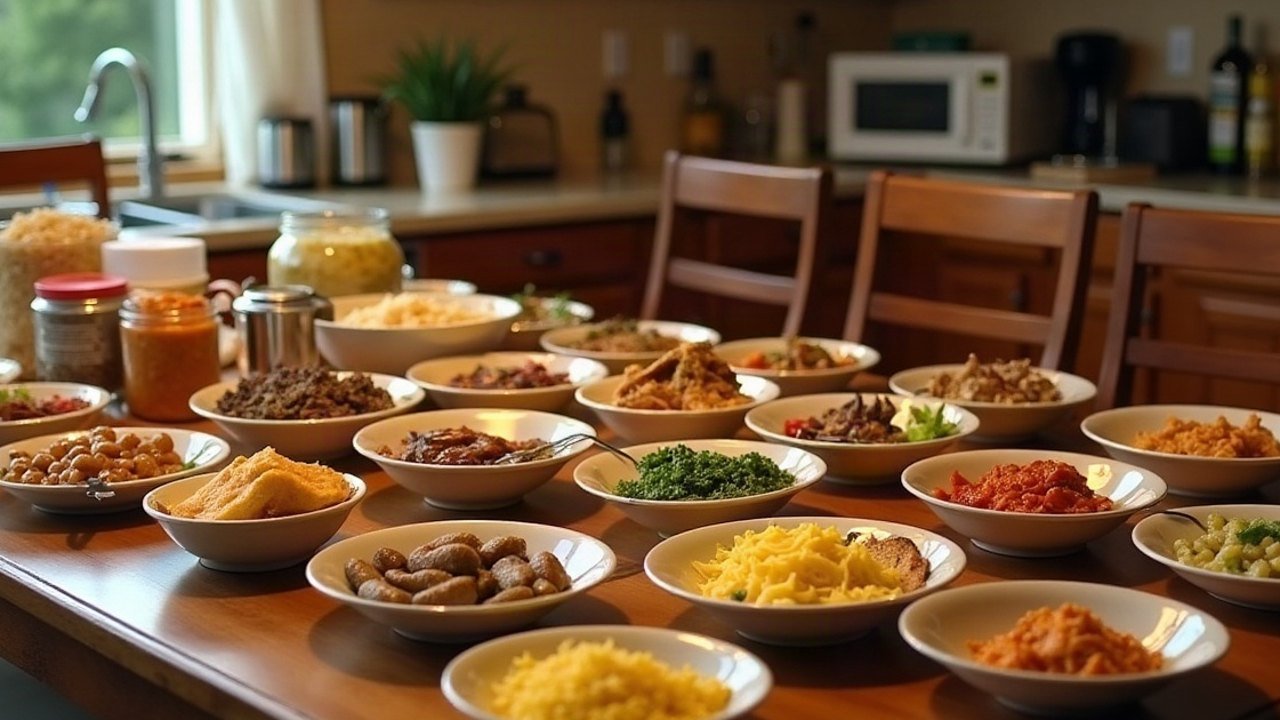
Choose foods that are genuinely ready to eat
“Shelf-stable” means a product is intended to remain safe unopened under specified ambient storage conditions. It does not necessarily mean it can be eaten without preparation. Uncooked dried beans, raw rice and many dried pasta products require cooking; a packet of dried soup typically needs hot water. An emergency menu without reliable heating must account for that.
| Food category | Examples to consider | Check before buying |
|---|---|---|
| Carbohydrate base | Ready-to-eat wraps, crackers, crispbread, cereal, oat bars | Allergens, dates, whether opened packets can be finished |
| Protein | Ready-to-eat tinned beans, chickpeas, lentils, fish, meat alternatives | Cooking instructions, portion size, salt and packaging |
| Vegetables and fruit | Tinned vegetables and fruit, dried fruit, ambient-safe fruit purée | Whether eaten cold, added sugar/salt and required draining |
| Fats and energy | Nut or seed butter, nuts, suitable spreads, ready-to-eat snack mixes | Allergens, packaging and total portions |
| Drinks | Known-safe drinking water, suitable ambient-stable drinks | Individual hydration needs; keep food preparation water separate |
| Special needs | Ready-to-feed infant products, prescribed nutritional products, specialist foods | Clinical requirements and safe handling |
Not every product in a category is safe without cooking. The UK home food fact checker explains that some canned foods intended for heating can be eaten cold, but you must follow the specific manufacturer's instructions.
A three-day, no-cook example menu for one adult
The following is an illustrative menu structure, not a diet prescription. Portions must be checked against each person's actual food and energy needs. Every named food must be a product that is safe to consume without heating, and any opened package requiring refrigeration must be finished or discarded according to the label.
| Day | Breakfast | Lunch | Dinner |
|---|---|---|---|
| 1 | Ready-to-eat cereal with shelf-stable drink; dried or tinned fruit | Crackers, ready-to-eat bean salad and suitable fruit | Ambient-safe tinned fish or pulses with wraps and a ready-to-eat vegetable portion |
| 2 | Oat bars, nut or seed butter if suitable, fruit | Ready-to-eat lentils with crispbread and tinned vegetables | Approved ready-to-eat canned meal or mixed beans, wraps and fruit |
| 3 | Cereal and ambient-safe milk alternative, dried fruit | Crackers with shelf-stable protein and a fruit portion | Chickpeas or other ready-to-eat pulses, crispbread and suitable vegetables |
Water and appropriate snacks are additional, not replacements for meals. Some milk alternatives and drinks are shelf-stable only while unopened; follow instructions after opening. A tinned meal that says “cook thoroughly before eating” is not automatically suitable for this menu.
Translate the menu into a working shopping list
Instead of buying “a few tins”, build quantities from the menu and packaging. For two adults, start with six breakfast portions, six lunches and six dinners, then count the packages needed to deliver those portions. You might choose a mix of individually sealed or suitably sized foods so you don't have perishable leftovers.
| Function | Example shopping calculation for two adults | Important check |
|---|---|---|
| Breakfasts | 6 individually adequate ready-to-eat breakfast portions | Include any needed ambient-stable drink or safe water |
| Lunches | 6 combinations of carbohydrate, protein and fruit/vegetable | Don't count one small tin as two meals without checking |
| Dinners | 6 adequate ready-to-eat main meal combinations | Confirm products do not require heating |
| Snacks | Amount matching actual people and activity | Use familiar foods; account for allergies |
| Drinking water | Plan separately by person and day | Additional water may be needed for hygiene and care |
| Equipment | Manual tin opener and clean eating utensils | Check pull rings and accessibility needs |
Check actual nutritional adequacy, not just the number of items
A cupboard containing only crackers and sweet cereal bars might contain enough packages but not provide satisfying meals or the variety needed over several days. Include a carbohydrate source, protein, fruit or vegetables and suitable fats where practical. The NHS Eatwell Guide describes balance across a day or week rather than requiring every meal to resemble a perfect plate.
Read energy, protein, fibre, salt and any clinically relevant nutrient information on the labels. An adult's food needs vary substantially with age, size, activity and health; don't force everyone into a single calorie target. An emergency is not the moment to switch abruptly to foods that cause serious digestive problems or trigger allergies.
Where possible, try some of the intended combinations during normal life. If no one enjoys the food, cannot open it or finds it insufficient, improve the menu before treating it as a reliable option.
A practical no-fridge packaging rule
Prefer containers you can finish safely after opening. Some tinned pulses or fish can be divided between household members in one meal, but that depends on actual portion needs. If a product says refrigerate after opening and the fridge is unavailable, do not keep leftovers on the worktop for tomorrow.
The UK home food fact checker advises transferring unused food out of an opened conventional can into a suitable container and storing it in the fridge. Without refrigeration, the better decision may be to choose smaller packaging or finish the food promptly as instructed.
A manual tin opener can make an otherwise usable food plan possible. Test it before relying on it. A pull-ring can be difficult for somebody with limited hand strength; consider accessibility rather than assuming every adult can open every product.
Why refrigeration assumptions spoil an otherwise good plan
Some people describe three days of no-cook meals but fill the list with cheese, cooked meats, opened milk and chilled dips. Those products depend on a refrigerator. If the electricity is cut, the Food Standards Scotland power-cut guidance suggests a closed fridge may stay cold for approximately four hours and a full freezer up to 48 hours, but those are estimates influenced by conditions.
Don't rely on a freezer to hold a ready-to-eat food plan for three full days. Treat chilled food as a separate, time-sensitive inventory and follow food-safety instructions. In particular, don't use smell alone to judge whether a perishable product is safe after a prolonged temperature rise.
Our week-long no-power article explains how fridge, freezer and household decisions change as an outage continues.
Don't make a no-cook menu depend on outdoor cooking
A proper no-cook menu should work even when using a safe outdoor stove is impractical. A camping stove or barbecue isn't a substitute for a functioning indoor kitchen. Never use them inside a home, tent, garage or other enclosed area: carbon monoxide and fire hazards can be fatal.
The British Red Cross encourages food that can be eaten cold if needed, rather than making a stove part of every emergency kit. If you also have approved, safely operated outdoor cooking equipment, treat it as a separate convenience—not an assumption underpinning every meal.
Likewise, powdered drinks, dehydrated meals and uncooked grains can create water and heating dependencies. Count those inputs when evaluating whether a product truly solves your intended problem.
Water is part of the meal plan
Even meals that require no cooking must be accompanied by drinking water. The British Red Cross suggests approximately 2.5–3 litres of drinking water per person per day as a planning starting point, and more when cooking or hygiene is included. At an illustrative 3 litres each, two people over three days would need 18 litres for drinking alone.
This is not a fluid prescription and does not cover every person's needs. Children, heat, illness, medications and some medical conditions require individual assessment. Avoid buying dried foods that require substantial rehydration unless you have safe water and the appropriate preparation method.
Use our emergency water quantities guide for personalised arithmetic and our storage guide for safe containers and rotation.
Allergies and specialised diets change the menu
Nut butter may be convenient for some people but dangerous to someone with a nut allergy. Tinned fish is unsuitable for others. Gluten-free, halal, kosher, vegan and prescribed diets can all be accommodated through careful selection, but the ingredients and labelling must be checked, particularly when choosing substitutes at short notice.
Infant formula requires safe preparation appropriate to the product and clinical guidance. A packet of powdered formula is not necessarily a true no-cook solution if the required hot water and hygiene cannot be maintained. If feeding supplies depend on water or electricity, address that requirement specifically.
People with diabetes, kidney disease or other conditions may need tailored advice. Do not follow a generic emergency shopping list at the expense of prescribed nutritional requirements.
Three common planning errors that waste money
Buying branded emergency food that nobody has tried. A special pack may cost more and still require boiling water, equipment or foods a family won't eat. Compare its preparation steps, actual servings and labels with ordinary supermarket alternatives.
Counting packaging instead of portions. Twelve small tins are not necessarily twelve satisfying dinners. Work back from actual meal requirements and the nutrition information.
Ignoring opened food. A large pack may save money per unit in normal life but be a poor choice if refrigeration is unavailable and most of it will be wasted. Smaller sealed portions may make better practical sense.
The British Red Cross's budget planning guide recommends checking existing cupboards and adding useful items gradually, rather than making a sudden expensive purchase.
How to review your food plan every six months
Choose a convenient recurring date to inspect the cupboard. Check package condition and the labelled storage requirements, replace consumed items and review changes in household size or dietary needs. Use everyday groceries through normal rotation rather than leaving them unopened indefinitely.
Don't treat a “best before” date as identical to a “use by” date. The Food Standards Agency distinguishes quality from safety: use-by dates are safety-related, while best-before dates normally relate to quality when the food has been stored correctly.
For the more detailed storage system, read our long-term food rotation and moisture guide.
Practice assembling one complete meal
- Choose one lunch or dinner from your proposed menu.
- Put all necessary ingredients and serving equipment on the table.
- Check every label for cooking, refrigeration and allergen requirements.
- Count how many people the combination actually feeds at appropriate portions.
- Confirm you can open and serve everything without electricity.
- Identify what happens to opened leftovers if no fridge is available.
- Record missing items and replace them with familiar, safer options.
This is a low-cost test that can reveal problems before any disruption. It doesn't require you to simulate a real power cut or switch off essential household equipment.
Frequently asked questions
What food should I keep for 72 hours without electricity?
Use enough familiar shelf-stable foods to cover actual meals for everyone, with ready-to-eat carbohydrates, proteins, fruit or vegetables, snacks, water and an appropriate opener. Check that products don't require cooking or refrigeration.
Can I eat canned food without heating it?
Some commercially canned foods are safe to eat cold, but the decision depends on the product and its instructions. Follow the label rather than assuming every tin is ready to eat.
How many emergency meals does a two-person household need?
For three meals a day over three days, the basic count is eighteen person-meals, before snacks and individual dietary needs. Assess portions and nutrition rather than just counting packages.
Do I need to buy specialist survival meals?
No. Suitable ordinary supermarket foods can provide a practical no-cook menu. Select around real household needs, food safety, storage and budget.