EVACUATION IS A DECISION ABOUT SAFETY, NOT A RULE TO LEAVE EVERY TIME AN ALERT APPEARS.
“If anything happens, we'll get in the car and head to Grandma's.” That's not yet a family evacuation plan. What if the road is flooded, the car is unavailable, Grandma's house is also in the affected area, or a child is at school? What if the warning tells you to remain safely inside rather than travel? A usable plan has conditions for leaving, verified destinations and alternatives when the first route fails.
This guide sets out a practical family evacuation plan for UK households: identify actual hazards, interpret instructions, build two realistic routes, plan accessible transport, account for everyone and decide how to reunite. It is deliberately different from packing family go-bags or producing a one-page household plan.
First decide: is leaving actually the safer action?
Different hazards require different decisions. Floodwater may cut roads; wildfire smoke can make outside conditions dangerous; a fire inside a home demands immediate escape; a purpose-built block of flats may have a building-specific fire strategy. There is no universal “evacuate whenever worried” rule.
| Situation | Immediate basis for action | Dangerous assumption to avoid |
|---|---|---|
| Fire in your own home | Follow fire escape procedure; get out safely and call 999 | That there is time to collect bags or investigate the fire |
| Fire elsewhere in a block of flats | Follow the building's current fire strategy and fire-service instructions; consider smoke, heat and route safety | That every block uses the same “stay put” or simultaneous evacuation rule |
| Flood warning or severe warning | Check location-specific alerts and official instructions; leave if directed and use safe routes | That driving through shallow-looking water is safe |
| Power or water outage | Assess medical, temperature, sanitation and other actual living conditions | That every outage requires immediate evacuation or that staying is always safe |
| Police or emergency-service evacuation instruction | Follow the direction given for the affected area | That your preferred route remains authorised or open |
For England, GOV.UK flood guidance explicitly advises following emergency-service evacuation instructions and not walking, cycling or driving through floodwater. A severe flood warning indicates danger to life. If somebody is in immediate danger, call 999.
Understand the special rules for blocks of flats
Some purpose-built flats use a stay-put fire strategy when the fire is elsewhere because compartmentation is intended to limit spread. Others may require simultaneous evacuation, and the approach may change with building conditions. The London Fire Brigade advises residents to obtain the specific strategy from their landlord or housing provider.
In a fire affecting your own flat, leave quickly if it is safe and call 999 from outside. For a fire elsewhere, follow your building's actual strategy and current fire-service instructions. If you encounter smoke or fire or feel threatened, seek appropriate safety guidance and don't proceed through a dangerous route simply to follow a printed plan.
Government fire safety regulations guidance requires responsible persons to give residents information about the building's evacuation strategy. If you don't know yours, obtain it before there is an incident. People requiring assistance should ask about applicable individual arrangements and accessible escape information.
Write decision triggers before choosing a route
A trigger is observable information that changes what you do, not a speculative timeline. For a flood-prone address it might be a direct instruction from local emergency services or an Environment Agency severe flood warning affecting your property. For another household it might be loss of a critical service that cannot be managed safely with the available support.
Use the following conditional structure.
| Decision state | What it means | Action |
|---|---|---|
| Prepare | A credible alert indicates possible impact, but no immediate departure instruction | Check current information, confirm people, destination and go-bags without taking unnecessary risks |
| Leave when directed or unsafe | Emergency services direct evacuation, or conditions make remaining unsafe and a safe route exists | Use the applicable evacuation procedure and verified route |
| Do not force the route | Flooding, smoke, damaged structures or closures make intended movement hazardous | Stop the unsafe journey, seek current instructions, use appropriate emergency assistance if needed |
| Reassess | Conditions or official instructions change | Update the plan; don't follow an old map as though it overrides live safety information |
This isn't a predictive scoring algorithm; it prevents automatic decisions such as “one alarm means drive to the other side of town.” Hazards can change rapidly, and professional instructions take precedence.
Map Route A, Route B and a no-travel fallback
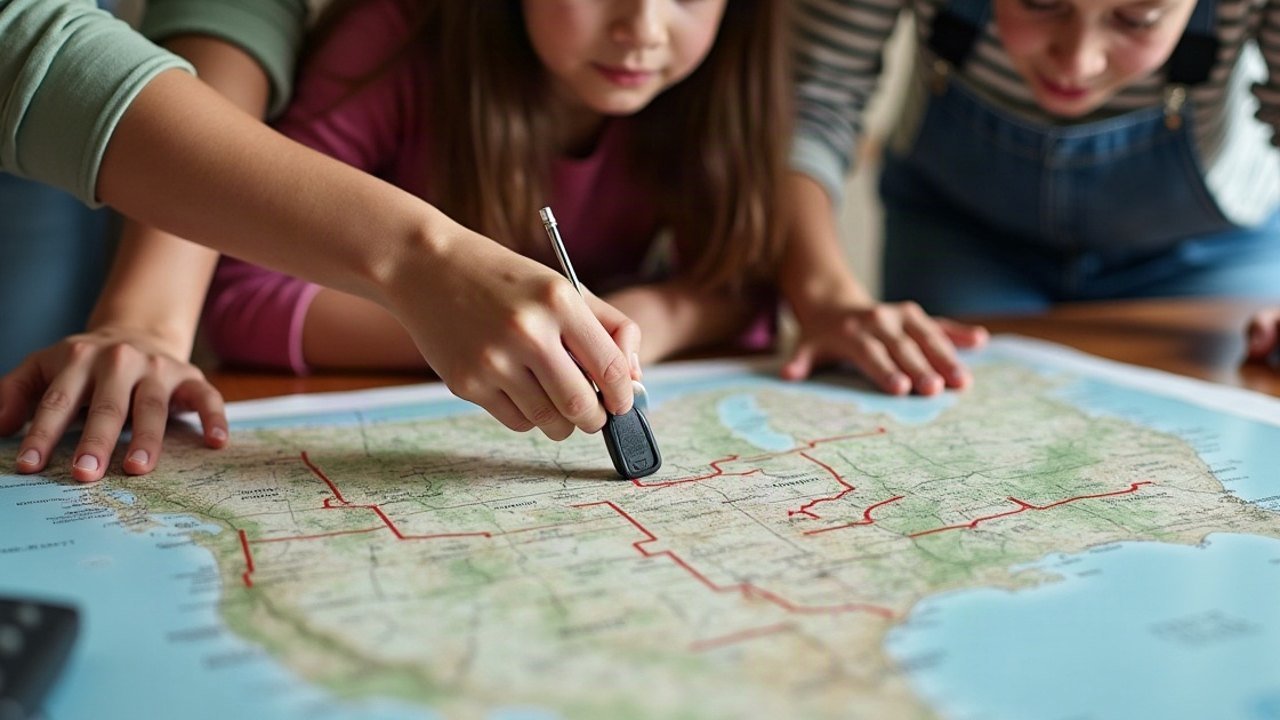
Choose a destination that is genuinely appropriate for your household, then plot a main route and a substantially different alternative where geography permits. Two streets that both cross the same low bridge may look like separate routes while sharing the very point likely to flood.
Check bridges, low-lying roads, tunnels, access restrictions, steep steps, barriers and potential construction works. Use a current paper map as a reference alongside verified live information where available. An offline phone map may work only if the required area was downloaded in advance.
Route A: normal safe road, walking or transport connection to the agreed destination. Route B: a genuinely different feasible route avoiding the same common failure if practical. Fallback: where to remain safely or whom to contact if neither route can be used.
Never attempt a route through floodwater or a smoke-filled stairwell merely because it appears on a prepared map. If trapped or facing immediate danger, call 999 when a service is available and follow professional advice.
Test the destination, not only the directions
“Go to family” sounds convenient until the relative is away, their area has also been evacuated, their home is inaccessible or they cannot accommodate your children or animals. Agree ahead of time whether you can stay there and under what conditions. Identify a second realistic option rather than naming an arbitrary building.
Local authorities may open designated rest centres during some incidents. Their locations, opening times, transport arrangements and provisions can change with the event. Don't assume the nearest sports hall will automatically be an authorised evacuation centre.
Write the destination's phone number, address, accessibility considerations, pet policy and a way to confirm it is operating. For families with complex medical needs, an ordinary rest centre may not provide the equipment or care required; discuss individual contingencies with professionals before an incident.
Public transport, walking and car plans are separate routes
A car route can fail through lack of fuel, flooded roads, traffic restrictions or unavailable drivers. Walking may be difficult with children, mobility needs or hazardous weather. Public transport can be suspended. Give each mode its own realistic feasibility check.
| Transport mode | Pre-departure check | Fallback issue |
|---|---|---|
| Private car | Fuel, correct keys, road conditions, child restraints, available driver | Where can you stop safely if roads close? |
| Walking | Terrain, distance, lighting, shoes, weather, assistance | Can everyone actually travel the intended distance? |
| Bus, train or taxi | Working service, access, payment and safe pickup location | What if the service is cancelled? |
| Assisted or specialist transport | Booking arrangements, accessible vehicle, provider numbers | Who can help if the normal provider is unavailable? |
Carrying a bag is a separate question; our practical bug-out bag guide explains how to test load and mobility. Do not turn an evacuation into a long outdoor walk because a map makes it look shorter than it feels.
Flooding: route selection changes quickly
The Environment Agency's flood warnings guide distinguishes flood alerts, flood warnings and severe flood warnings. A warning affects defined places and conditions: read the actual alert for your address. If a severe warning indicates danger to life, do not wait to see how high the water gets before seeking the safest action.
The personal flood plan includes people, pets, essential items and contact arrangements. In an affected property, turning off utilities may be appropriate only if it is safe; never touch electrical switches while standing in water. If routes are already flooded, do not enter the water to retrieve a vehicle or possessions.
A historic “shortcut” across a ford or river crossing is not a safe route merely because it is usually passable. Choose routes based on current warnings, ground conditions and instructions, not familiarity alone.
Reunification: everyone must know where and when
Families may be at school, work or other locations when an event starts. Use a nominated out-of-area contact to relay verified information if local communications are unreliable. Give responsible adults the agreed meeting place, a safe alternative and what to do when no message gets through.
For children at school or childcare, follow that provider's safeguarding and authorised collection arrangements. Do not tell a child to leave school independently or send an unapproved friend to collect them. Some routes to school may themselves be unsafe or restricted.
Use the printable emergency contact plan to record the relay and ordinary check-in procedure. The evacuation plan adds the hazard-specific destinations and routes. A missed check-in is a prompt to follow the procedure, not evidence that somebody has been injured.
What belongs on the departure checklist?
Only items that affect safe movement and immediate continuity: people accounted for, essential medicines and aids if safe to collect, keys, suitable clothes, necessary transport, protected identity or care information, and a verified destination. A long list of appliances and spare supplies belongs in the home emergency kit rather than the leaving-the-house checklist.
Assign roles as described in the family go-bag guide, but state clearly that an immediate threat overrides packing. A list must not become a reason to re-enter a hazardous building.
Rehearse without creating a false emergency
- Choose a harmless hypothetical scenario: a warning is issued for an area near your home.
- Ask each adult to identify the actual official information channel they would consult.
- Find the current primary destination and contact it only in a routine, consensual check-in.
- Trace two routes on an offline map and mark shared bridges, flood plains, stairs or access barriers.
- Identify how somebody without a car, a child at school and a person with access needs would be accounted for.
- Explain the rule if neither route is safe and where professional help would be sought.
- Update the printed version with the review date.
A map exercise should not include entering dangerous areas, simulating a fire alarm in a shared building or obstructing genuine emergency services. Route testing may be done on safe ordinary journeys.
Returning home requires another decision
After evacuation, don't assume that a quiet street or restored phone signal means the property is safe. Floodwater, electrical faults, contamination, damaged structures or continuing restrictions may remain. Follow emergency-service and relevant utility guidance about re-entry and inspections.
Tell the household relay when you have reached confirmed accommodation. Keep records of official instructions and relevant contact details. Returning can be a separate stage with different risks from leaving; do not use the same checklist mechanically in reverse.
Frequently asked questions
Should families always evacuate when an emergency alert arrives?
No. Read the alert, identify the affected location and follow the applicable safety instructions. Some emergencies require remaining safely indoors; others require immediate evacuation.
What if both evacuation routes are blocked?
Do not attempt hazardous roads, floodwater or smoke-filled routes. Seek current official guidance, move to a safer position as appropriate and contact emergency services if in danger.
Does “stay put” apply to every flat?
No. The building's fire strategy, condition, presence of heat or smoke and fire-service instructions all matter. Obtain the strategy from the landlord or responsible person.
How do I plan evacuation with a child at school?
Record current authorised contacts, follow school safeguarding instructions and coordinate with trusted adults. Do not instruct the child to travel alone in unsafe circumstances.
Research and further reading
- GOV.UK — flooding, official evacuation and avoiding floodwater.
- Environment Agency — interpreting flood alerts and severe warnings.
- London Fire Brigade — building-specific flat evacuation policies.
- GOV.UK — resident fire safety instructions and evacuation strategy.
- Environment Agency — personal and family flood plan.