A MISSED DELIVERY, A PRICE INCREASE AND A NATIONAL SHORTAGE ARE THREE DIFFERENT PROBLEMS.
There is plenty of food in the country, but the item you need hasn't arrived at the shop. Is that a shortage, a transport delay, a warehouse problem or a change in demand? Those situations look similar from an empty shelf and require different responses. A delayed delivery does not mean the whole supply chain has collapsed; repeated regional delays can nevertheless become serious for someone relying on a particular medicine, formula or accessible food.
This guide explains how UK supply-chain disruption reaches households and what to do about it without hoarding. It uses practical substitutes, reorder thresholds, delivery dependencies and communication with suppliers rather than a vague instruction to “stock up”. For building a routine three-day home kit, see the household supplies guide; here the focus is continuity while goods are delayed.
What a supply chain actually consists of
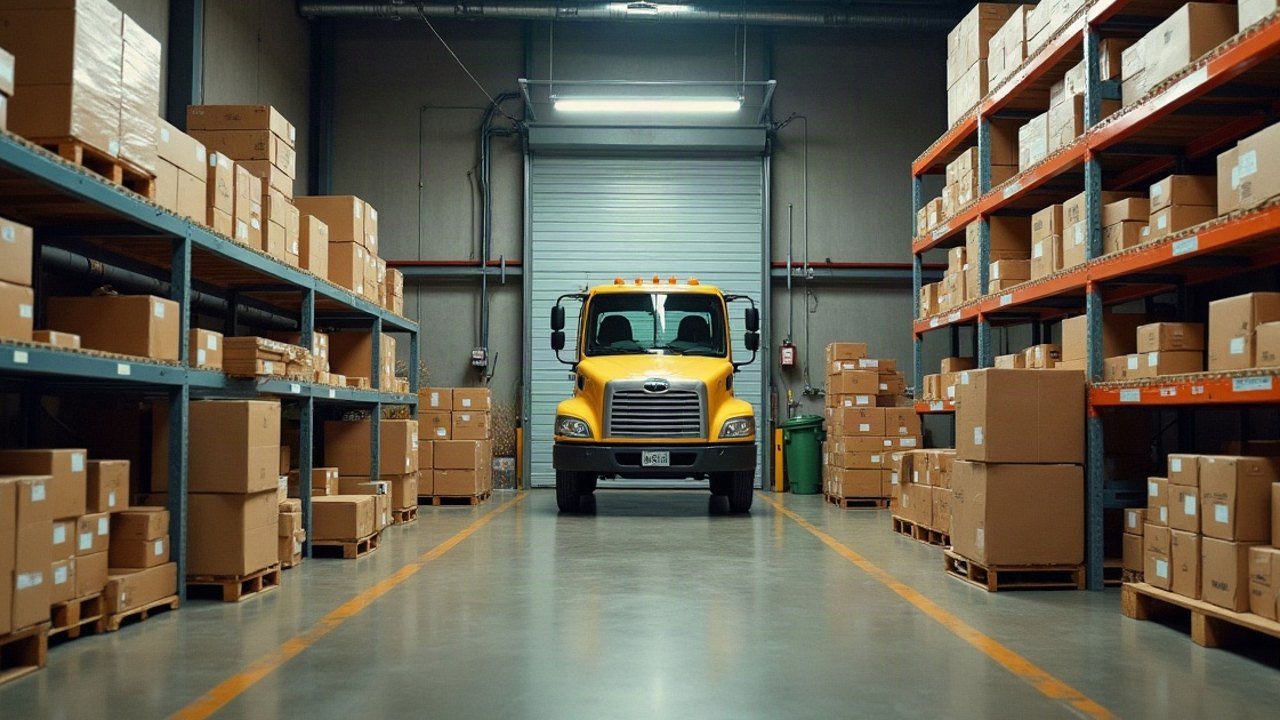
A product's route to your cupboard may involve raw materials, processing, packaging, transport, warehouse capacity, retail ordering and final delivery. Breaking any link can limit what a shop receives even if the product exists elsewhere. Demand spikes can also empty shelves more quickly than stores can replenish them without a production failure.
The National Audit Office's 2026 review of food supply resilience examined how interdependent risks can affect UK supply. It noted that disruptive events can mean higher prices, reduced choice and uneven access before an outright lack of food. It also warned that the system's ability to withstand catastrophic disruption has not been fully tested. Both points matter: ordinary delays are common, but larger vulnerabilities should not be casually dismissed.
| Point of disruption | What a shopper might notice | First sensible response |
|---|---|---|
| Product manufacturing | One brand or size repeatedly unavailable | Check suitable alternatives and manufacturer or retailer notice |
| Packaging supply | Product returns in a different size or label | Check ingredients, serving sizes and safe-use instructions |
| Ports and international freight | Longer lead times for particular imported goods | Distinguish imported specialty goods from locally available substitutes |
| Distribution warehouse | Several stores within one chain have delivery delays | Check a different supplier if the item is essential |
| Road, fuel or last-mile delivery | Local shelves or parcels delayed despite stock elsewhere | Ask about collection options or suitable safe alternatives |
| Payment or ordering IT | Can't complete checkout or retrieve order | Use provider's verified alternative route; avoid phishing links |
| Unusual demand | Rapid sell-outs of a few products after rumours | Buy normal needed quantities; avoid amplifying a rush |
Why “the shelves are empty” is a weak national signal
A photo of one shop at one time lacks the information needed to assess nationwide stocks. A store may be awaiting its ordinary overnight delivery, have misallocated inventory or be experiencing a temporary surge in buying. To establish a larger pattern, look for named suppliers, multiple locations, documented causes and dated information.
Do not spread unverified photos as evidence of an imminent national shortage. If a household needs an essential product, the question is how to obtain it safely today and how long a substitution can reasonably last—not whether a social-media clip confirms a dramatic prediction.
The NAO report describes varied consequences for households, businesses and public services; a retailer's delayed delivery should not be conflated with a complete failure of food production.
Which household goods have the least flexibility?
Some needs can be substituted easily. One type of dry bean may replace another in a recipe. Others cannot be improvised: prescribed medications, medical nutrition, allergy-safe infant formula and specialised equipment require exact compatibility and professional instructions.
List products in three classes: non-substitutable without professional advice, substitutable after checking labels and requirements, and optional or postponable. That is a stronger plan than trying to own six months of every item.
| Example | Class | Appropriate fallback |
|---|---|---|
| Prescription medicine | Clinical advice required | Contact pharmacy, prescriber or NHS service; never alter dose |
| Specialist infant feed | Clinical advice may be required | Care-team-approved alternative and safe preparation method |
| Ordinary shelf-stable meal ingredient | Often substitutable | Different suitable ingredient with comparable nutrition and safe preparation |
| Preferred cleaning brand | Usually flexible | Another appropriate cleaning product according to its instructions |
| New convenience gadget | Postponable | Wait; preserve budget for real essential needs |
If your household depends on a specialty medical product, the lead time matters more than whether general supermarket shelves appear well stocked.
A reorder-point method that avoids both shortages and excess
For regularly used non-medical essentials, estimate normal use and the time it takes to replace an item. A simple rule is: reorder point = normal daily use × expected replacement lead time + a modest safety margin. The margin should reflect genuine local variability, storage and money—not a frightening internet prediction.
Example: a household uses one carton of a suitable shelf-stable drink every two days. A replacement usually takes four days to arrive. That is two cartons of expected consumption during delivery; a margin of two additional cartons would give a reorder point of four. If deliveries are regularly delayed, review the observed lead time rather than automatically buying dozens more.
Do not apply this arithmetic to clinical prescription quantities without professional guidance. Medicines have prescribing, storage and safety constraints; the correct continuity plan is agreed with the care team and pharmacy.
The substitution test: not every “equivalent” is safe
Before replacing food, check allergens, ingredients, age suitability, preparation, energy and protein where those matter. A product labelled “dairy-free” can still contain other allergens; a sealed tin may require full cooking; changing a child's medically advised feed can be unsafe. The substitute must meet the function, not merely resemble the packaging.
For no-cook alternatives, compare our balanced shelf-stable meals. A stable storecupboard can be built around familiar, affordable food that people actually eat, making rotation straightforward. That is more sustainable than emergency meals nobody likes and that expire unnoticed.
Do not extend shelf life by guesswork or keep food in inappropriate temperatures just because supplies are harder to obtain.
Pharmacy delays require a separate plan
Patients should not stockpile or change prescriptions because of general supply-chain reports. Check the normal ordering cycle, correct pharmacy contact details and what to do when an authorised repeat medication is delayed. The NHS guidance on emergency prescriptions outlines what services may be available if someone runs out, but access and clinical suitability can vary.
If a medicine is unavailable, ask the pharmacist or prescriber about an approved alternative or supply route. Some formulations and strengths are not interchangeable, and a delayed product can have important health consequences. The household's job is to know who to contact early and maintain an accurate medication record, not to devise substitutions.
For people using medical equipment or specialist nutrition, speak to the responsible provider about continuity and approved replacement supplies.
Supply-chain shocks often arrive through prices before absence
Transport, manufacturing and energy costs can rise while goods remain available. A household may feel the disruption through a more expensive basket rather than an empty shelf. The NAO notes that food supply disruptions can contribute to inflation and reduced consumer choice, with a disproportionate impact on households already struggling with food costs.
Maintain a small price and quantity record for your essential items, not the entire supermarket. If a budget staple becomes unaffordable, compare suitable alternatives by edible portion and preparation requirements. Do not overbuy perishables to “beat inflation” if they will be wasted or need electricity-dependent storage.
Why panic buying can deepen a temporary gap
If everybody buys much more than their normal share because of a rumour, shops run out faster even when scheduled deliveries are continuing. The problem becomes self-reinforcing: pictures of the resulting empty shelves encourage further unusually high purchases. This does not prove that every shortage is caused by consumer behaviour; transport and production failures are real too.
Buy quantities your household can use and store safely. Protect medically necessary supplies through the appropriate authorised channels. A calm household continuity buffer is different from purchasing far beyond realistic need during a short-lived disruption.
For a budget-first method, use what emergency supplies to buy first. It prioritises gaps rather than chasing whatever product is trending.
What can go wrong when payment or ordering systems fail?
A cyber incident or IT fault might prevent an order reaching a warehouse, disable a store's checkout or obscure delivery status. The item may physically exist but be temporarily inaccessible through that service. This is a supply interruption from a digital dependency, distinct from a production shortage.
Keep provider contacts offline and verify billing issues directly using official routes. If a retailer sends a strange message asking for a new payment, independently check the order rather than entering bank details into an unfamiliar link. See critical infrastructure cyber dependencies for the wider distinction.
A household continuity board with four useful fields
Write only the truly important repeating items. A simple paper sheet or offline note can include:
| Item and required specification | Normal use | Replacement route / lead time | Action if delayed |
|---|---|---|---|
| Known-safe drinking water containers | As needed for the household plan | Local supermarket / known alternatives | Use verified stored supply, check official water notice |
| Normal shelf-stable food | Planned weekly rotation | Regular shop / another suitable supplier | Use appropriate familiar substitutes |
| Medical prescription | As prescribed | Pharmacy / prescriber | Contact care provider early; follow advice |
| Infant or special dietary supplies | Actual feeding routine | Suitable verified retailer / clinical supplier | Use only safe, approved alternatives |
Review this sheet whenever a provider, prescription, allergy or household member changes. It is not a reason to collect private medical records on an openly accessible public page.
Consider transport geography, not just brands
A household relying on a single small rural shop has different options from one with several retailers within walking distance. A road closure can matter enormously to a community even when national stocks remain normal. Consider legitimate delivery alternatives, a trusted neighbour or community support, accessible transport and suitable local suppliers.
Don't assume you can walk miles carrying bulky water or fuel. Route feasibility, mobility needs and weather should be part of the plan. For someone isolated, knowing the normal provider's delivery process may be more useful than owning extra storage bins.
A twenty-minute supply-chain rehearsal
- Pick two ordinary essentials and one item that must not be substituted casually.
- For each, record normal use, safe storage, supplier and approximate replacement time.
- Imagine the first supplier has no delivery for seven days. Identify a suitable alternative or who should advise you.
- Check whether that option depends on the same delivery route or retailer account.
- Estimate a responsible buffer without exceeding space or budget.
- Check one no-cook meal made from household food, including opener and safe serving method.
- Record any serious clinical supply issue to discuss with an appropriate professional.
The exercise is complete when the fallback is realistic, not when the cupboard is full. Do not create shortages by buying large amounts to test a hypothetical event.
When the disruption is prolonged or widespread
A severe event may exceed ordinary household buffers. The NAO's findings do not guarantee national capacity under every catastrophic scenario; they make the case for realistic risk planning. At household level, continue checking current information, protecting necessary care and using available legitimate support rather than assuming old prices, deliveries or routes still apply.
Community networks and local services may become important where deliveries or mobility are constrained. Keep relevant numbers on paper. If an authority issues rationing, collection, food-safety or access instructions during an actual incident, those current rules take precedence over a generic shopping guide.
Frequently asked questions
Does an empty shelf mean national supply-chain collapse?
No. It may reflect local delivery, ordering or demand conditions. Check reliable, dated information about the actual products and region before drawing wider conclusions.
What should I do if an essential medicine is unavailable?
Contact the pharmacy, prescriber or appropriate NHS service. Do not change dose, formulation or substitute products without professional advice.
How much extra food should I keep?
Use a quantity your household can afford, safely store and rotate, based on actual use and replacement lead times. There is no single suitable stockpile for everyone.
Can cyberattacks cause food delivery delays?
Yes, digital ordering, warehouse and payment systems are dependencies. A service outage can interrupt access to goods even when their physical production has not stopped.