EMP RISK IS REAL, BUT ALL-ELECTRONICS-DIE STORIES ARE NOT ENGINEERING EVIDENCE.
Would a nuclear electromagnetic pulse (EMP) destroy every phone, stop every car and leave an entire country without electricity for years? Those claims appear frequently in survival marketing, but they are not established outcomes. EMP is a genuine physical phenomenon with credible risks to electronics and electricity systems. The extent of damage depends on the type and intensity of event, the equipment, connected conductors, protection and the wider network's resilience.
This is an evidence-led EMP preparedness guide. It separates what laboratory and engineering studies demonstrate from dramatic predictions, explains why the electric grid and electronic devices have different vulnerabilities, and develops a sensible household continuity plan without promising a commercial Faraday bag can protect your life.
What is an electromagnetic pulse?
An electromagnetic pulse is a burst of electromagnetic energy that can induce voltages and currents in susceptible equipment and wiring. A nuclear detonation at high altitude can produce a high-altitude electromagnetic pulse (HEMP) affecting a broad geographic area under particular conditions. Other electromagnetic hazards include local non-nuclear devices and geomagnetic disturbances associated with solar activity; these don't all have the same waveforms, range or effects.
US Radiation Emergency Medical Management (REMM) explains that the nuclear EMP occurs essentially at the time of detonation, while subsequent infrastructure consequences may continue. EMP is not the same as radioactive fallout, and a pulse isn't a cloud of radiation lingering in the street.
E1, E2 and E3 are not interchangeable
| Component | Broad engineering concern | Why it matters |
|---|---|---|
| E1: very rapid initial pulse | Sensitive electronic components and surges coupled into cables | Some equipment could malfunction or suffer damage, especially through connected conductors |
| E2: intermediate effect | Some similarities to lightning-related electrical stress | Actual impact depends on existing protection and system characteristics |
| E3: slower geomagnetic-like effect | Currents induced in long power transmission conductors | Can affect grid voltage stability and some high-voltage equipment |
The US Congressional Research Service's technical review describes these components and notes substantial disagreement about the scale of potential impacts. A generic “EMP-proof” label usually doesn't say which component, test level, cable arrangement or equipment condition it addresses.
What field and laboratory evidence says about the grid
The Electric Power Research Institute (EPRI) studied high-altitude EMP effects on US bulk power transmission systems. Its 2019 findings, reported by the American Public Power Association, found credible possibilities of regional service interruption and damage to certain control electronics but did not support the claim that the entire contiguous US grid would necessarily suffer a years-long blackout from the studied scenarios.
That does not prove severe infrastructure failures cannot happen. The study had a defined scope, assumptions and equipment coverage. It is evidence against treating every sensational national-collapse forecast as certain—not a universal guarantee of grid resilience.
EPRI explains in its own technical journal that the 2019 work assessed transmission and substation assets and left questions about other infrastructure systems. Different countries, grid designs and attack circumstances can produce different results.
Why an undamaged phone might still be useless
A mobile phone does not operate independently of all other infrastructure. It depends on network towers, switching equipment, power and sometimes internet-connected systems. A handset that powers on may be unable to connect if the network is down. Conversely, a local electricity outage doesn't automatically mean every mobile network has failed.
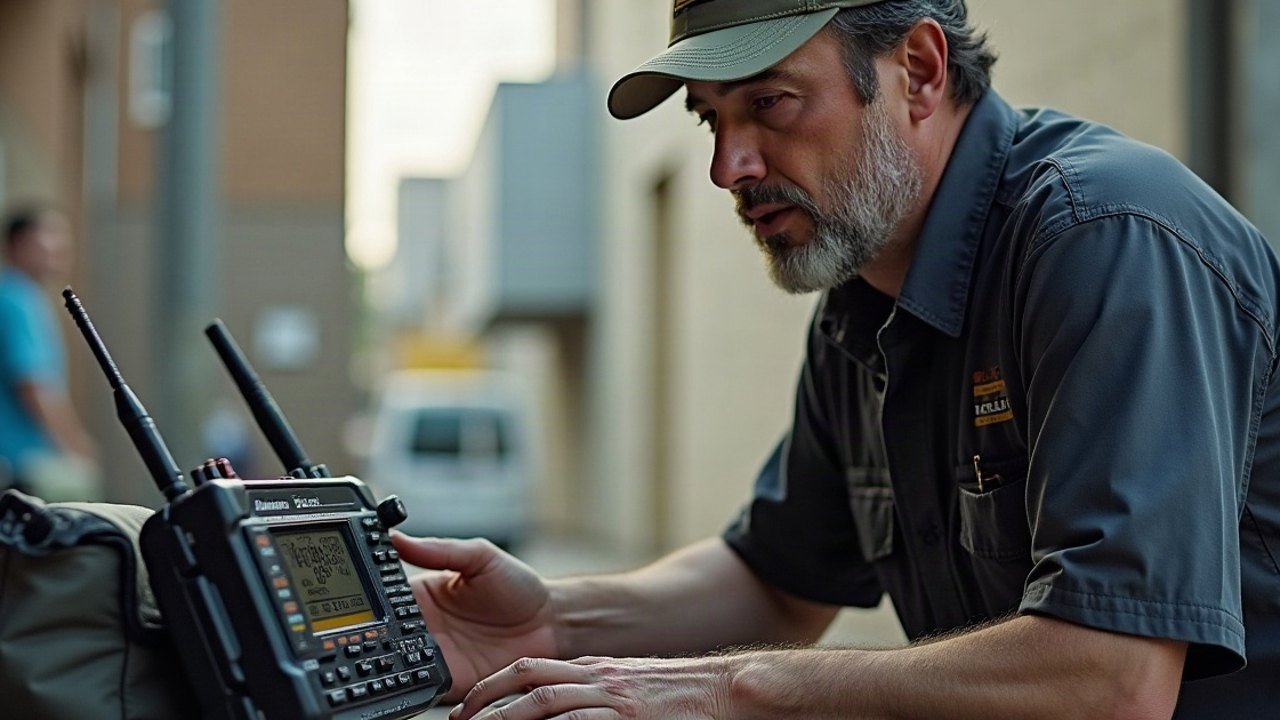
REMM notes that small portable radios and phones not connected to mains wiring may be less affected in some EMP conditions, but warns that the communications infrastructure they require can be damaged. It is therefore wrong to state that all handheld electronics will be permanently destroyed, just as it's wrong to promise that any one phone will certainly survive.
Our offline communications guide explains real alternatives and the need to test them with their intended recipient.
What about cars and modern vehicles?
Vehicles contain electronics, but different designs, wiring, shielding and exposure conditions matter. A generalised statement that every modern engine will stop instantly is not established by the research. Even a working car can be unusable if traffic control, fuel pumps, roads, communications or safe movement fail.
Do not spend thousands of pounds converting or buying a vehicle based solely on an EMP anecdote. A more useful plan identifies whether essential trips depend on one driver, one fuel source or one location and what legitimate alternatives exist during an ordinary service outage.
Can a Faraday bag protect devices?
A properly engineered and tested conductive enclosure can reduce some electromagnetic coupling under stated test conditions. But a consumer product's effectiveness depends on construction, continuity of the conductive layer, seams, closures, frequency range, test method and whether cables penetrate the enclosure.
Putting a radio in an unverified pouch is not proof it would survive every conceivable HEMP environment. Wrapping an entire house in aluminium foil or storing sensitive medical equipment in a metal box without clinical approval can create hazards without reliable benefit.
If a product claims a certified level of protection, ask for independent test data covering the relevant pulse components and actual configuration. A failed phone-signal test is not a full high-altitude nuclear EMP test.
EMP versus cyberattack versus an ordinary blackout
| What you observe | Possible causes | What can actually be concluded |
|---|---|---|
| Home electricity goes off | Local grid fault, weather, equipment failure, wider incident | The power is out; the cause requires provider information |
| Several phones lose mobile service | Network fault, congestion, power failure, maintenance | Connectivity failed; it doesn't prove an EMP |
| Card payments stop | Terminals, payment network, banking service, communications | An affected payment function, not disappearance of money |
| Vehicles stop in a particular area | Road closure, fuel, mechanical faults, safety instructions | Transport is disrupted; no specific electromagnetic cause is established |
A dramatic headline should not determine household actions before the actual service provider, credible authorities or other verified sources identify what happened. The critical infrastructure cyberattack article addresses the different failure mechanisms associated with cyber incidents.
The household risk is loss of functions, whatever caused it
Water pumps, cold storage, healthcare, shops and communications can depend on electricity. A household can prepare modestly for temporary loss of those functions without predicting whether the cause will be EMP, cyber intrusion, flood or a local grid fault.
Start with a working torch, a tested independent broadcast receiver, safe drinking water, appropriate no-cook food, essential medicine continuity and offline contact details. If somebody relies on powered medical equipment, obtain an approved contingency from clinical or equipment professionals. An ordinary power bank may not be suitable.
See the three-day household reserve and emergency radio choices for practical tests. No short-term reserve proves a long disruption could be managed indefinitely.
Which evidence should change a buying decision?
Before buying EMP-specific protection, answer four questions: what device is essential; which environment is genuinely being considered; what independent performance testing exists; and what happens if the surrounding infrastructure fails even while the device survives?
For example, a protected spare telephone has limited emergency value if all nearby networks are down. A working offline radio with usable batteries might provide a separate information route where broadcast transmission remains available. Neither purchase is a universal solution.
A critical medical device requires the manufacturer's and clinician's advice; improvised electrical shielding or extra batteries may violate required operation and safety rules.
Don't forget the physical dangers of a nuclear incident
In some nuclear scenarios, EMP may accompany a detonation that also creates blast, fire and radiation hazards depending on its location and altitude. Protecting a camera or laptop is irrelevant if people fail to follow immediate safety warnings. REMM distinguishes low-altitude source-region EMP and high-altitude effects; their physical surroundings and associated hazards differ.
For direct blast and fallout, follow hazard-specific instructions in the immediate nuclear attack guide and the fallout response guide. An EMP pouch is not protection from ionising radiation or flying debris.
A low-cost resilience exercise
- List essential services that need electricity: water, heat, medicine, communication and payment.
- Identify the most serious dependency in your actual household.
- Find provider contacts and current outage information sources.
- Test a battery torch, ordinary charging cables and a known broadcast station.
- Find a paper contact and safe drinking-water reserve without a router.
- Review whether an assumed backup shares the same dependency as the primary route.
- Write an escalation plan for any critical care issue using qualified advice.
Do not test by disabling equipment or attempting to generate an electromagnetic pulse. The exercise is about everyday continuity, not recreating a dangerous event.
What science hasn't established
Experimental work and engineering models support the possibility of damage and disruption, but an exact prediction for every phone, car, power transformer and country in an unspecified attack is not credible. The effect depends on the pulse, geometry, shielding, electrical connections, network topology and protective measures.
The Congressional Research Service explicitly notes unresolved scientific and policy uncertainty. Anyone selling a certain “all electronics die” scenario or a universal consumer-level cure is going beyond demonstrated evidence.
Why grid recovery is difficult to forecast
Electric utilities operate interconnected equipment: generation, substations, transformers, protection relays and communications. Damage to a small sensitive control system can interrupt a service even when the largest transformer survives; conversely, local protections and alternative routes may limit the outage. Restoration may require safety inspections, replacement parts and coordination between operators.
Industry tests such as EPRI's are valuable because they examine identifiable components under specified conditions rather than imagining that every machine behaves the same. But a transmission-grid study does not automatically describe all retail networks, medical devices and household vehicles. Avoid stretching a narrow finding into a universal prediction.
Would an EMP-proof household be independent of the grid?
Protecting one radio or laptop doesn't generate clean water, repair a pump, deliver prescriptions or restore fuel supplies. Even a device that survives a pulse may depend on functioning infrastructure outside its enclosure. Consider a household with a perfectly intact phone but no mobile tower power, no safe water and no approved plan for a medical device: its critical needs are still unresolved.
The sensible preparation is therefore layered continuity, not a single magical container. Check independent information, essential care, safe supplies and a realistic support route. Where specialised EMP hardening is genuinely required, it belongs with appropriately qualified engineering, independent testing and documented equipment specifications.
Frequently asked questions
Would an EMP destroy every electronic device?
Not necessarily. Effects vary by pulse conditions, equipment, electrical connections and protection. All-device destruction is not a proven universal outcome.
Could an EMP disrupt the electricity grid?
Yes. Engineering studies identify credible equipment and regional outage risks under some scenarios. They do not justify asserting that nationwide multiyear collapse is inevitable.
Will a Faraday bag guarantee my phone works afterwards?
No. A bag's protection requires relevant verified tests, and an intact phone still needs functioning telecommunications infrastructure.
What's the most useful EMP preparation for an ordinary household?
Plan for essential utility and communication disruption, with safe water, working lighting, independent information and approved medical contingency arrangements.