LOSING INTERNET DOES NOT NECESSARILY MEAN LOSING EVERY WAY TO COMMUNICATE.
The Wi-Fi has stopped working, WhatsApp will not send, and a family member is travelling home. How do you contact them—and when should you stop staring at your phone and use another method? Losing an internet connection does not necessarily mean all communication has failed. Ordinary telephone calls, SMS, neighbouring networks, landlines, broadcast radio and simple prearranged check-ins rely on different infrastructure, although some can fail together.
This article explains how to communicate when the internet is down, with a household contact ladder, a paper message plan and practical actions for local or wider disruptions.
The Ofcom guidance updated in October 2026 explains mobile emergency roaming and the limitations of digital landlines in power cuts. The British Red Cross recommends writing important numbers on paper, keeping phones charged and having a battery or wind-up radio. Those are separate, complementary options rather than three versions of the same internet service.
Internet down does not automatically mean phone networks are down
Start by identifying what has actually stopped. A failed Wi-Fi router can leave mobile data working. A provider-wide broadband outage may affect your home internet while ordinary cellular calls still work. An app or cloud service can be unavailable even while both networks are functioning. A local power cut may affect your router, phone charging, mobile masts and other equipment in different ways.
| What fails | What may still work | What to check |
|---|---|---|
| Home Wi-Fi | Mobile voice/SMS and mobile data | Router power, provider outage information and mobile signal |
| One messaging app | Other apps, SMS, voice calls | Whether it is the app rather than the whole network |
| Mobile data | Some cellular voice/SMS, Wi-Fi calling if broadband works | Operator-specific coverage and congestion |
| Digital home phone during a power cut | Mobile phone or approved phone-backup arrangement | Provider's backup options and external network |
| Multiple local networks | Radio broadcasts, physical messages or prearranged meetings where safe | Whether any independent channel is actually operating |
Don't turn off protective equipment, experiment with damaged plugs or walk into hazardous weather just to discover which service is down. Identify a safe and appropriate alternative method instead.
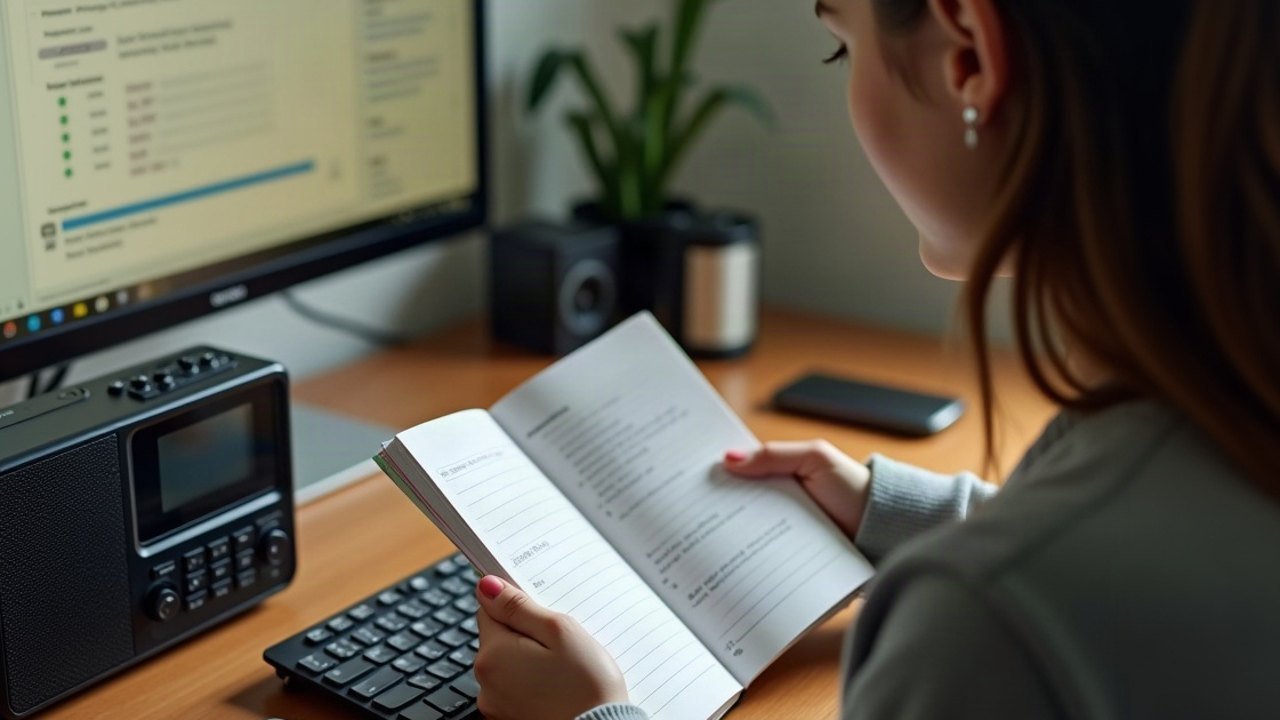
A five-step household communication ladder
A communication ladder is a predetermined order of contact attempts, not a promise that every rung will work. Design yours around actual coverage, provider services and household needs.
- Normal internet methods: a familiar messaging service or email when broadband or mobile data still work.
- Ordinary mobile services: direct voice call or a brief SMS if the carrier's relevant service operates. Avoid repeated identical calls during congestion.
- Independent household phone or provider backup: use only if its power, access and provider arrangements have been verified.
- Agreed human relay: a trusted out-of-area relative, neighbour or support contact who can pass on a concise message when they have connectivity.
- Prearranged physical check-in: a safe meeting location or paper note only when travel and access are appropriate; don't create a second emergency trying to fulfil a timetable.
A battery radio can support the ladder by providing information, but it normally cannot send your personal message. Likewise, a pair of walkie-talkies can communicate over a limited local area but cannot replace the national mobile network. These limitations matter when choosing equipment.
Build a contact sheet that remains useful offline
Write down the telephone numbers for immediate family, a trusted nearby person, an out-of-area contact, essential carers and relevant utility or building services. Add addresses, relevant medical or accessibility needs where appropriate, and emergency numbers. Keep the sheet accessible to responsible household members, protected from casual disclosure.
Include each person's preferred fallback route. A landline number may be useless if the house has switched to a digital voice service without backup. A mobile number is less helpful if the person routinely works in an area with no signal. Check these facts with the people involved rather than completing a fictional template.
Example contact line: “Dad — mobile number — neighbour Mary can relay if Dad is unreachable — expected check-in by 7pm if safe.” The goal is clarity, not sharing sensitive information unnecessarily.
Set one agreed check-in rule, not ten competing plans
Choose a simple routine for periods when normal messaging stops. For instance, adults who are apart might try one SMS after arriving safely, wait for delivery if the network is congested, and use an agreed trusted contact if neither can reach the other. If a person cannot safely travel, the plan should explicitly allow them to stay put.
Make it clear that an unanswered message does not prove someone is in danger. Phones run out of battery; mobile cells can be congested; the recipient may have no coverage. Repeatedly leaving a safe location to search for somebody can worsen an already difficult situation.
For children or people needing care, write a separate safeguarding plan appropriate to their age and circumstances. A prearranged responsible adult, rather than a vague instruction to “meet at the park”, may be the safe fallback.
What do SMS and voice calls do when data is unavailable?
Ordinary SMS and cellular voice may function when a particular data service does not, because network services can be affected differently. But they still depend on functioning mobile infrastructure and can experience delay or failure in congestion. Do not assume a text has been received merely because it appears in your phone's sent folder.
A short message conveys useful information with less ambiguity: “I'm safe at home. No internet. Phone has 35% battery. Next check-in 8pm. No reply needed unless plans change.” Change the details to facts, never inventions.
Where messages are delayed, send fewer, more informative attempts rather than flooding a contact with dozens of identical texts. Record when and by which method you last received confirmation, so the household doesn't mistake an old response for a current one.
Emergency calls: what 999 and 112 can and cannot do
In the UK, 999 and 112 are recognised emergency numbers. According to the government's 27 October 2026 parliamentary answer, a compatible mobile emergency call can attempt to use another available mobile network if your own operator has no usable coverage. That can improve the chance of reaching emergency services.
But if no mobile network is reachable, the phone cannot conjure a terrestrial connection. Emergency roaming does not guarantee a completed call in every valley, building or widespread outage. Wi-Fi calling may help where a working broadband connection, compatible service and phone configuration are available; it will not work if the broadband and Wi-Fi are also down.
Use 999/112 for real emergencies, not to test whether the network is operating. A failed ordinary call is not a reason to place a test call to emergency services. The government's emergency-number guidance explains their proper purpose.
Digital landlines are a hidden power dependency
Many modern home-phone services use a powered router or digital terminal. If household electricity goes off, the handset may stop working even though the old-style phone socket looks familiar. Ofcom says that users who depend on their landline for emergency calls and lack a working mobile alternative must be offered an appropriate free backup solution by their provider.
Ofcom's current guidance describes backup for at least one hour, with some provider arrangements lasting longer. That does not mean a household gets free multi-day power in all circumstances. The specific equipment, transfer, external provider network and individual requirements need checking.
If you or someone you care for depends on a digital landline, ask the provider for a demonstration of what happens when mains electricity fails. Don't wait for an outage to discover that the “backup” only powers part of the system.
Power budgets for phones and routers
During an outage, preserving a charged phone can become more important than maintaining continuous internet access. Reduce unnecessary screen activity, avoid excessive refreshes and use a compatible charged power bank if you have one. A router can be powered from an approved backup source only if its required voltage and the wider provider network remain compatible.
For example, a router drawing 12W continuously would consume about 96Wh over eight hours before external power-conversion losses. Running a laptop or several devices in parallel increases demand. Battery capacity and actual output power are different limits.
Our emergency battery runtime calculator can help model non-critical loads. Don't use a generic energy estimate as the sole plan for medically essential communication or care devices.
Paper notes and an out-of-area relay can be surprisingly useful
If local communications are unreliable, a trusted person outside the affected area may be able to receive occasional messages and pass them to relatives. Agree beforehand who may share what personal information, how to confirm a message is genuine, and when a lack of response should trigger concern.
Paper can also serve as a local message log. At home, write the time someone left, their safe destination, the last reliable communication and the next intended contact. A note on a private household whiteboard may work better than separate, uncoordinated conversations across several apps.
Do not post personal medical details, children's locations or home vacancy information on a public social-media page or a visible front-door notice. A communication plan should maintain privacy as well as usefulness.
What can a battery radio tell you?
Broadcast radio is useful for receiving general news and potentially local emergency updates without an internet connection. It is a one-way information source; you cannot ask the station to contact your family or send a rescue message just by tuning in.
The UK power-cut guidance recommends writing down local and national radio frequencies and keeping a battery or wind-up set. Our emergency radio guide explains FM, DAB, batteries and a simple reception test.
Keep the radio's information separate from rumours and personal messages. A broadcaster might report an area-wide power fault without knowing whether a particular individual has arrived safely.
Can two-way radios help nearby people?
They can, when both parties have compatible, charged radios, are within real range and have agreed a channel or calling procedure. In the UK, compliant PMR446 handhelds can be used licence-free within their technical limits, but buildings, hills and dense woodland can dramatically reduce useful range.
A two-way radio can't contact somebody who doesn't have a working compatible radio. It also cannot automatically reach 999. Treat it as a supplementary local link, not a substitute for emergency calls. See the UK two-way radio guide for Ofcom rules, realistic coverage and legal limits.
What about satellite messaging?
Some modern devices can communicate through satellite services in supported locations, under specified network, subscription and hardware requirements. Capabilities vary by model, provider, country and environment. A phone with a marketing claim about “satellite SOS” is not automatically a general-purpose satellite telephone.
The government's September 2026 answer on telecom resilience acknowledged emerging direct-to-device satellite services as another potential communication route. That's an option to investigate for a particular device, not assurance that any ordinary phone can always send a message during a total terrestrial outage.
Check the manufacturer's supported region, registration, required setup and what message types actually work. Do not test an emergency distress function by activating a real alarm.
Offline maps and GPS: useful but easy to confuse
A phone's satellite positioning receiver may still be able to estimate location without mobile internet, while map tiles, routing or place details may require previously downloaded data. A blue dot on an unloaded map is not a complete navigation system.
Download an appropriate offline map before travelling, verify that it actually opens without connectivity and retain a paper backup when the journey warrants it. Follow safer local travel information rather than assuming a saved map reflects current floods, road closures or damaged bridges.
The UK telecom resilience guidance specifically mentions offline navigation and preparing information sources beyond a single connected app.
Three communication scenarios you can rehearse safely
Scenario A: only home broadband fails. Check provider notices and whether mobile data works. Use voice or SMS for urgent family updates, and postpone large online tasks. You may not need a radio or travel at all.
Scenario B: a regional power cut affects broadband and some mobile cells. Preserve batteries; try a legitimate working phone route; use a radio for verified general updates; follow the agreed trusted-contact arrangement. Avoid dangerous journeys made solely to find reception.
Scenario C: a messaging platform is compromised or displays false information while electricity and networks work. Confirm messages with voice calls or a second trusted route. The issue may be authenticity, not loss of connectivity. Our false-alert verification guide covers that distinction.
None of these scenarios proves a particular cause, and there is no reason to practise by turning off essential network or medical equipment.
Twenty-minute household communication drill
- Write down the important numbers and addresses that would be needed if your smartphone were inaccessible.
- Agree an out-of-area contact and a simple check-in routine.
- Identify the actual power and network dependency of the household landline.
- Check whether the phone can make ordinary calls when Wi-Fi is off, without contacting emergency services.
- Find local radio stations and write their frequencies on paper.
- If using walkie-talkies, test them legally over the intended local route and record observed range.
- Check that any intended offline map is genuinely available offline.
- Update the plan when phone providers, care needs or household members change.
Record the results in one place that responsible people can find. An ordinary one-page plan is often more useful than a sophisticated communications gadget nobody knows how to operate.
Frequently asked questions
Can I text someone if the internet is down?
Sometimes. Ordinary SMS may work without mobile data or home broadband, provided the required cellular network service is operating. Delivery may still be delayed or fail.
Will 999 work if my mobile provider has no signal?
A compatible emergency call may use another available UK mobile network. It cannot work through terrestrial mobile coverage if no usable network exists at the location.
Does a digital landline work in a power cut?
It may stop unless an appropriate power backup and working provider network are available. Customers who depend on landlines for emergency access should discuss suitable backup support with their provider.
Is a battery radio a replacement for mobile communication?
No. A broadcast receiver supplies information but does not send private messages. It complements voice calls, SMS, contacts, and other verified methods.
Research and further reading
- Ofcom — severe-weather connectivity, landline backup and emergency calling, October 2026.
- UK Parliament — 27 October 2026 answer on 999 roaming and areas without coverage.
- British Red Cross — offline contact sheet, phone charging and radio.
- UK power-cut advice — local station frequencies and communications.