FALLOUT PROTECTION IS ABOUT TIME, DISTANCE, SHIELDING AND CURRENT INSTRUCTIONS.
If radioactive fallout is settling outside, going somewhere else may expose you to more radiation than remaining in a suitable building. But sheltering in a badly damaged, burning or collapsing structure can also be unsafe. Understanding nuclear fallout begins with three separate questions: where the radioactive material is, how much shielding the building provides and what current emergency instructions say for your location.
This is an evidence-based civilian response sequence for nuclear fallout. It describes how to get inside, reduce contamination, choose the most protective practicable area, preserve information and decide when moving may become appropriate. It is not a guarantee of surviving a nuclear explosion. Direct blast, heat, building collapse, burns and fallout are different hazards with different limits of protection.
First distinguish a nuclear blast from radioactive fallout
A nuclear detonation can create intense light, heat, pressure and immediate radiation near the explosion. Radioactive fallout consists of particles that may descend after the event, sometimes beyond the immediate damaged area. Depending on the type of detonation and atmospheric conditions, deposition can occur at different times and locations; you cannot safely infer an exact arrival time from a social-media diagram.
The US Centers for Disease Control and Prevention differentiates actions for the immediate blast and later fallout. The International Commission on Radiological Protection (ICRP) advises entering a suitable building quickly and putting as much material as practical between you and radioactive material outside.
Do not look towards an intense flash. If a blast is occurring, seek immediate physical protection from heat, flying glass and debris as circumstances allow. When safe to move after the blast, locate the nearest suitable substantial building rather than setting off on a long drive.
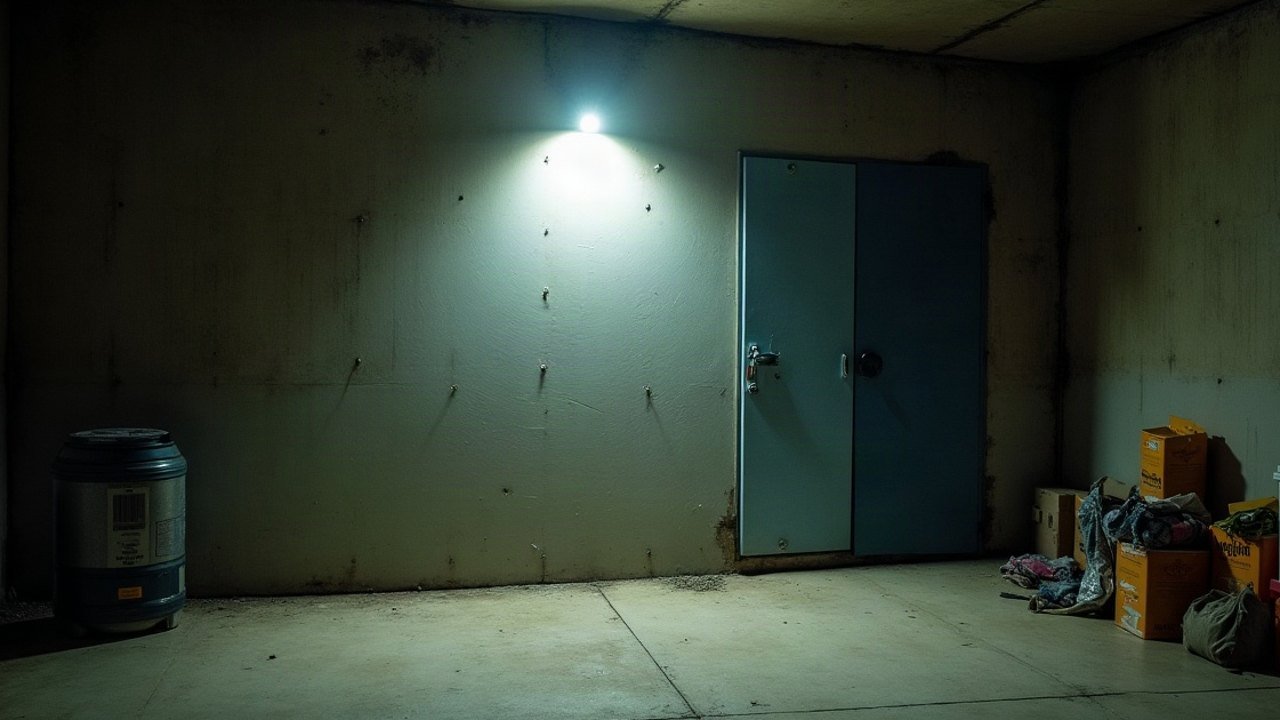
Sequence 1: get inside the nearest suitable building
The UK's radiation-emergency guidance uses the principle go in, stay in, tune in. Substantial brick, stone and concrete buildings can provide greater protection than light structures, and being indoors is generally better than remaining outside in fallout.
A car provides poor shielding from external gamma radiation; it should not be your default shelter if a substantial building is reachable safely. Do not spend time driving home if doing so means prolonged travel through affected outdoors. If your current building is unsafe because of fire, collapse or gas, immediate structural hazards require a different action.
Once indoors, shut external doors and windows and follow incident-specific instructions about bringing outdoor air into the building. Avoid disabling safety-critical ventilation, such as systems needed to prevent dangerous fumes.
Sequence 2: move towards the interior or a suitable basement
Radiation emitted by fallout on rooftops, ground and outside surfaces can penetrate indoors. Building material and distance reduce exposure. A suitable basement or central location within a large substantial building may provide better shielding than a room beside exterior windows or immediately beneath the roof.
However, a basement that is flooded, structurally unsound, poorly ventilated or inaccessible to a dependent person may not be safe. Do not enter underground tunnels, privately owned bunkers or derelict structures simply because they are underground.
US Radiation Emergency Medical Management (REMM) provides illustrative building protection factors, showing that a room's position and construction matter far more than an arbitrary label such as “nuclear-proof”. For interpreting those factors, see the shelter assessment guide.
Sequence 3: reduce external contamination if you were outside
If public-health instructions indicate that you may have radioactive material on your clothes and skin, remove outer clothing carefully, avoiding shaking or brushing particles into the shelter. The UK's 2024 self-decontamination guidance says removing outer layers can remove around 90% of deposited contamination under relevant conditions.
Place removed clothes in a closable bag and keep it away from people and the clean shelter area. Wash exposed skin and hair gently with soap and water if available. Avoid harsh scrubbing that might damage skin, and do not use hair conditioner, which can make some particles adhere more strongly. Use clean replacement clothing.
If no shower is available, wipe exposed hands, face, ears and other affected areas with a damp cloth as advised. This is removal of contamination on the body, not treatment for radiation already absorbed or a way to eliminate external radiation coming through walls.
Sequence 4: remain sheltered and keep checking official updates
Fallout radiation levels can decrease considerably with time, particularly in the early period after a detonation. The ICRP advises remaining in a protective location for the initial 12–24 hours unless fire, collapse, serious injury or authoritative instructions require otherwise. The CDC advises at least 24 hours of sheltering in many radiation scenarios while responders assess conditions.
Those are general planning references, not an automatic all-clear after 24 hours. Some locations may need longer protective measures or a directed evacuation. Radiation levels depend on where material is deposited, and official monitoring and current safety information are needed for route decisions.
Use a working phone, battery radio or another trusted channel to check named public-health and emergency-service sources. If household members are at school, hospital or work, do not go outside to collect them against a shelter instruction. Facilities may have their own protective arrangements.
A practical fallout timeline
| When | Primary action | Why it matters |
|---|---|---|
| During immediate blast danger | Protect yourself from flash, heat, shockwave, fragments and falling debris | Those direct effects are not prevented by a small radio or first-aid kit |
| As soon as safe to move | Enter a suitable nearby substantial building | Reduce time exposed in the open |
| On entering shelter | Move to a more protected position; close openings as advised; decontaminate if needed | Reduce external exposure and avoid bringing particles into the shelter |
| Initial shelter period | Maintain essential care, minimise unnecessary movement, monitor official updates | Early fallout may be particularly hazardous; safety conditions evolve |
| When advised to move | Use authorised current routes and instructions | Routes can pass through more contaminated areas even when destinations seem closer |
Why shielding matters more than an improvised dust mask
External gamma radiation can pass through ordinary clothes and lightweight masks. A suitable filtering face covering may reduce the inhalation of some airborne particles during necessary outdoor movement, but cannot stop gamma rays emitted by fallout on the ground or roof. The effective protections are staying within a safer building location, reducing exposure time, maintaining distance and following measured conditions.
A foil blanket, lead-lined wallet or Faraday pouch does not make a room into a radiation shelter. A household should not spend heavily on unverified “radiation-proof” gadgets while ignoring its safe building location and essential medical needs.
Food and water during fallout: what is safe to use?
Sealed drinks, packaged food and medicine that were protected indoors before fallout are generally preferable to exposed items. Food or water left outdoors, unprotected produce and surface water may need restriction and testing. A clear-looking river is not evidence that it is free of radioactive contaminants.
The UK radiation guidance notes that protective measures may include food and water restrictions. The CDC distinguishes potable water advice from the use of water for washing contamination from skin. Those are different safety questions.
Boiling does not remove radioactive material. Nor does a generic camping filter prove water safe from dissolved radionuclides or chemicals. Follow local testing and public-health directions rather than improvising treatment from appearance or taste.
Potassium iodide: a narrow tool, not fallout protection
Potassium iodide (KI) can reduce thyroid uptake of radioactive iodine if it is taken at the right time and under suitable public-health advice. It does not protect against blast, external gamma radiation or the many other radioactive substances present after a nuclear detonation.
The CDC's 2025 guidance specifically warns against leaving shelter to obtain KI during dangerous fallout exposure and advises taking it only when directed by responsible authorities or clinicians. It can cause harm when used incorrectly.
Do not treat iodised table salt, supplements or antiseptic iodine as substitutes. For an actual incident, follow the local public-health instructions issued for the material and exposure pathway identified.
What if a dependent person needs medicine or urgent care?
A shelter that makes essential medical treatment impossible may require specialist assistance. Keep necessary prescriptions, provider contacts and approved equipment continuity arrangements accessible before an event. Do not switch off life-sustaining ventilation or medical electrical systems as part of a supposed fallout procedure.
If serious injury, fire, dangerous fumes or structural damage makes remaining unsafe, seek appropriate emergency assistance through whatever legitimate channels are available. The generic instruction to shelter does not require someone to remain inside a building that presents an immediate competing threat.
The UK guidance includes special consideration for medication, people in care and directed evacuation.
Can you safely go outside after the first day?
Do not decide solely by a clock. Radiation may have fallen substantially yet remain hazardous in particular locations. A route may cross a plume, damaged industrial site or debris field. The ICRP's civilian guidance discourages self-evacuation before hazardous areas and safer routes have been established, and recommends following updated professional advice.
Where an unavoidable life-sustaining movement is necessary and no instructions can be obtained, risk must be assessed against immediate dangers; minimise time exposed and use the most substantial safe shelter available. This is not a reason to tour the neighbourhood with a consumer radiation detector or search for a distant bunker.
Five common mistakes during a fallout emergency
- Driving home from a safe building: the journey could increase exposure without offering a better shelter.
- Going to collect children against current shelter advice: the trip can endanger both adults and children.
- Assuming a mask protects against external gamma radiation: it cannot replace shielding and time indoors.
- Taking iodine tablets without appropriate direction: they do not protect against most fallout hazards.
- Assuming the first 24-hour interval is an all-clear: local monitoring and updated instructions matter.
The useful action is not panic or certainty. It is to reduce exposure using the building already available, attend to essential care and follow measured information when it arrives.
Frequently asked questions
How long should I shelter after nuclear fallout?
Radiation protection authorities commonly recommend staying inside for the initial 12–24 hours or at least 24 hours, but the safe duration depends on actual conditions and official instructions. It is not automatically safe to leave when a timer expires.
Will a normal house offer any protection?
Yes, being indoors generally reduces exposure compared with outdoors. Substantial interior areas and suitable basements may provide more protection, depending on construction and competing hazards.
Does washing remove radiation exposure?
Washing can remove radioactive particles deposited on skin and hair. It cannot reverse radiation dose already received or block radiation emitted from outside.
Should I evacuate immediately after a nuclear explosion?
Not solely because an explosion occurred. Seek appropriate immediate shelter and follow current authorised advice; travelling through fallout can be more dangerous unless another immediate hazard makes the building unsafe.