A SHORTAGE CAN START ON A FARM, IN A WAREHOUSE, ON A ROAD OR IN A HOUSEHOLD BUDGET.
The supermarket is open, but the vegetable shelves are half empty and one brand of oil has doubled in price. Has the country's food supply failed—or is the shop experiencing a short delivery problem? Those are very different events. A food shortage can begin at farms, processors, transport networks, warehouses, payment systems or the household's ability to afford what is available. Understanding which link has failed is more useful than treating every empty shelf as the same emergency.
This article explores how a food supply shortage could affect UK households, using documented supply-chain dependencies, observed disruptions and practical decisions for families. If you're concerned about what could happen when normal systems become unreliable, the first step is to separate the mechanism from the headline.
Defra's UK Food Security Report 2024, Theme 3 documents supply-chain dependencies on energy, transport, water, labour, digital systems and business resilience. The 2025 Food Security Digest records the separate challenge of food affordability. That evidence provides a better foundation than unverified claims about an impending 'empty supermarket' event.
Five ways a food shortage can arise
A useful analysis begins by asking where the disruption occurred. A failed harvest is not the same as a blocked lorry route; a functioning shop with broken card terminals is not the same as a shortage of food. These differences affect how long disruption may last and what alternatives households can use.
| Failure point | Example | What a household may notice |
|---|---|---|
| Production | Severe weather, crop disease or agricultural input shortage | Less of a particular fresh product, seasonal changes or higher prices |
| Processing and storage | Energy failure, refrigeration fault or factory cyber incident | Reduced availability of specific processed goods |
| Transport and distribution | Flooded road, driver disruption or warehouse closure | Local or temporary empty shelves despite food being available elsewhere |
| Retail and payment | Shop closure, electricity failure or network outage | Food present but difficult to buy or collect |
| Household access | Price rises, loss of income, disability or unavailable transport | Food exists in shops but a particular household cannot obtain suitable meals |
More than one link may be affected at once. Defra describes food as part of an interconnected system whose resilience depends on alternatives, diversity and the ability to adjust to shocks. The presence of vulnerabilities does not by itself mean a nationwide shortage is underway.
Why empty supermarket shelves are not enough evidence
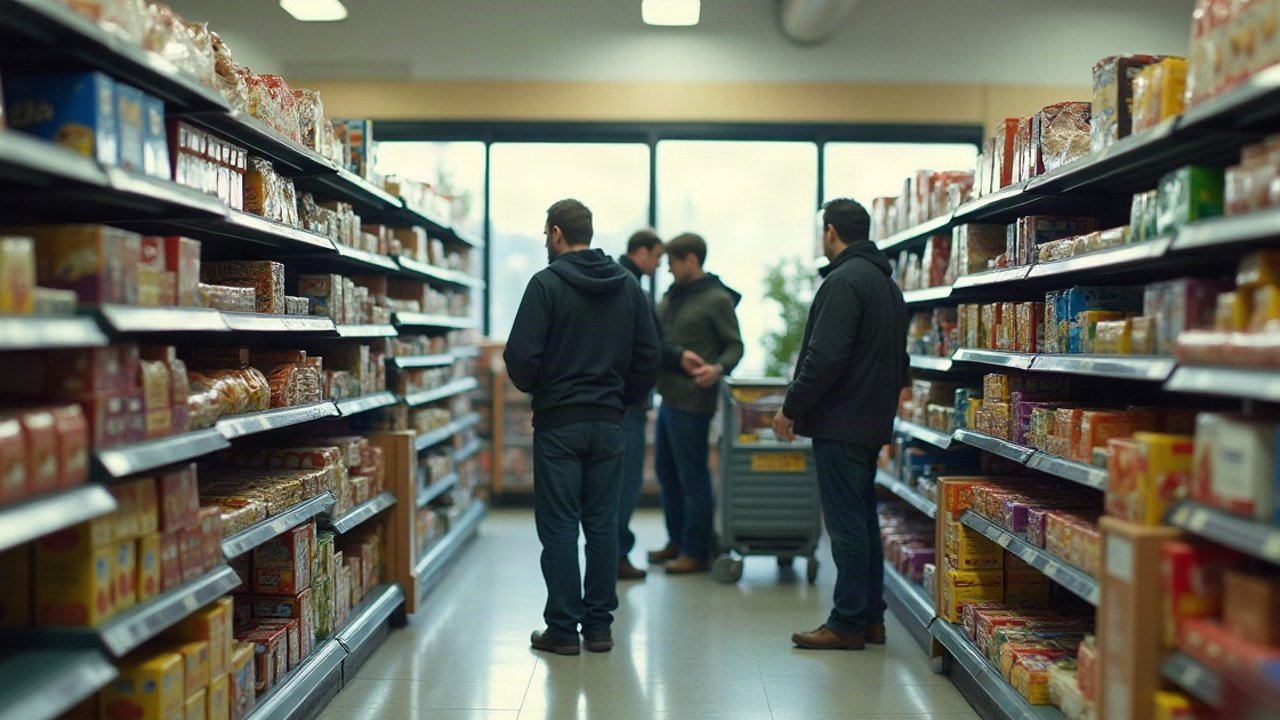
An empty shelf might result from a delayed delivery, a promotion that sold quickly, a local staffing issue or genuine regional scarcity. A photograph rarely tells you which occurred. Check the image's date and location, whether other nearby shops are affected and whether the retailer or supplier has issued a verified statement.
If one supermarket lacks tomatoes but another has them, the most immediate problem may be local allocation or distribution. If several retailers announce problems with a specific crop, the evidence points towards a wider product shortage. If shops have stock but tills are offline, the problem is transaction capability. Keep those claims separate.
Our fake emergency-alert verification guide explains how to cross-check screenshots and automated summaries. The same discipline prevents a decades-old photograph of empty shelves becoming a supposedly current prediction of collapse.
What just-in-time deliveries mean in practice
Modern retail supply chains often avoid holding enormous inventories at every point. Frequent deliveries and centralised distribution can reduce storage costs and food waste, especially for perishables. But the system is sensitive to interruptions in road freight, power and logistics data.
Defra's Theme 3 analysis describes how just-in-time food inventory depends on regular movement of goods. It documents transport as a significant dependency and discusses disruption from severe weather and geopolitical events. That doesn't mean every shop has an identical number of days' stock. Retailer practice, product type and alternative routes vary.
A household should therefore avoid treating rumours such as 'every supermarket has exactly three days of food' as universal facts. Ask instead which products are perishable, how the local area receives goods and whether the disruption has affected distribution routes.
Weather, fuel, electricity and water can affect food together
Food production uses energy, water and agricultural inputs; processing and refrigeration use power; transport depends on roads, people and fuel; shops require operational buildings and sometimes digital payment networks. Several failures can coincide without the underlying cause being the same.
For example, flooding might close a road to a regional warehouse and also affect an electrical substation. A food shop may still have packaged goods but cannot operate its refrigeration or lighting. A crop shortfall in another country might instead appear mainly as a higher price or substitution with other produce rather than a dark shop.
See our electricity-grid household dependency map for how infrastructure disruptions affect other services. Don't infer a national food shortage merely because multiple local dependencies are disrupted by the same storm.
What the actual UK food-security record shows
Defra's 2024 report examined developments following the pandemic, energy-price shocks, geopolitical disruption and extreme weather. It records effects on the availability of particular goods and on prices; it does not describe those episodes as a complete disappearance of the country's food supply.
One documented case involved reduced availability of some fresh produce in spring 2023, when adverse weather, higher growing costs and import pressures coincided. Products such as tomatoes, peppers and salad vegetables were affected in some places. That case illustrates a real supply-chain constraint while also showing why it is misleading to generalise one missing category to all food.
The report's introduction also notes that diversified production and trade can help food systems adjust to individual shocks. Resilience is a property to investigate, not a guarantee that every future shock will be harmless.
Access and affordability can fail before food availability does
A household may struggle to buy sufficient food even when shelves are fully stocked. Rising prices, loss of income, transport difficulties or dietary restrictions can create food insecurity without a physical absence of groceries in the country.
The 2025 UK Food Security Digest reported concern about food prices and the share of household budgets devoted to essentials. It found that financial pressure can change what people buy even when the supply chain continues functioning.
This distinction matters for any survival site: the relevant question is whether a person can obtain suitable food, not just whether food technically exists somewhere. Advice to buy hundreds of pounds of extra supplies is not appropriate for someone whose immediate meals are already financially constrained.
How disruptions can change across four stages
| Stage | Possible signs | Practical question |
|---|---|---|
| Early disruption | Late delivery or one missing product category | Is this local, short-term and verified? |
| Broader effect | Several retailers limit a named product or announce route problems | Which foods and services are actually affected? |
| Household strain | Normal shopping, transport or affordability becomes difficult | Which meals and people need attention now? |
| Prolonged difficulty | Persistent service interruptions or inaccessible suitable food | What alternative supply or assistance is reliably available? |
This is an analytical framework, not a forecast that an event must progress through every stage. A disruption can resolve quickly, remain local, worsen, or shift from one cause to another. Reassess what is known rather than waiting for a headline to assign a stage.
What happens to perishable food first?
Fresh vegetables, chilled meat and dairy products can be vulnerable to delays, temperature changes and refrigeration faults. Shelf-stable products have different storage dependencies, but they still rely on transport, packaging and retail access.
A prolonged electricity outage may make existing chilled household food unsafe before a shop can resupply it. Follow the Food Standards Agency's food safety guidance and the actual refrigerator/freezer temperatures instead of assuming that food looks fine because it smells normal.
For meals that remain usable without refrigeration or cooking, our balanced shelf-stable meal guide explains how to assess actual portions and nutrition. That is a separate skill from analysing why a shortage occurred.
What would a cyber incident change?
Food businesses depend on logistics software, refrigeration monitoring, stock systems, payment processing and sometimes automated manufacturing. A cyberattack could disrupt a particular company or service even while farms and food production continue. Its scale would depend on the affected business and whether workarounds exist.
The UK food-security resilience report includes business cyber risk among its indicators. An AI-assisted cyber incident is one possible contributor to a future disruption, but a shop's unavailable tills do not prove an AI attack, let alone an autonomous takeover.
For staying organised when banking, email or digital services fail, read our household cyber-disruption guide. Separating food availability from payment and digital access prevents mistaken conclusions.
How to make a useful household contingency without panic buying
Count real meals for the people in your home and review existing familiar shelf-stable supplies. Consider what can be eaten safely if electricity or water is interrupted. Note medication-related nutrition, allergies and infant feeding needs. Then identify how to obtain food if you cannot shop in person.
The British Red Cross advises using ordinary familiar food and gradually adding missing items instead of making expensive or panicked purchases. The purpose is to preserve options while avoiding waste, shortages or hardship caused by the preparation itself.
Use our low-waste food-shopping method for purchase decisions and our seven-day menu framework if you want to examine a longer scenario. Both focus on what people can actually eat, not a sensational quantity of unopened packets.
What if normal shops remain closed for several days?
A prolonged local closure is an access problem that needs practical decisions. Identify whether alternative shops, authorised distribution arrangements, family support or community assistance are available. If transport is also disrupted, travel conditions may determine whether collecting food is safe.
Households with children, disability-related needs or medically necessary nutrition may need individual help. Information about support should come from actual responsible organisations and local verified announcements. A community group may be helpful, but check that it exists and that any advertised delivery or collection arrangements are genuine.
Do not assume the food at a closed shop is available for unauthorised collection. A disruption does not remove ordinary food safety, property or public-health requirements.
How to identify substitution options before buying extras
If a particular ingredient becomes scarce, consider its role in a meal. A normal meal might need a source of protein rather than one exact brand of tinned fish; a starch-based side might be replaced by a suitable cooked grain pouch or crispbread. But substitutes must be safe, affordable and compatible with dietary restrictions.
Write down three familiar protein sources, three carbohydrate bases and several fruit or vegetable options already used in the household. This is a flexibility exercise, not advice to purchase all of them in bulk. For someone with allergies or a medical diet, substitutions require more care.
A diversified menu is more adaptable than an inventory where every dinner depends on a single item. That is an everyday household benefit whether or not a major disruption occurs.
Three hypothetical shortages and the correct interpretation
Scenario A: one store has empty milk shelves following a delivery failure. Check another verified source if milk is essential. A local logistics problem is not evidence that national dairy production has ended.
Scenario B: several retailers restrict a vegetable after extreme weather. A sector-wide crop or import issue may genuinely reduce availability. Adjust meals using suitable alternatives and monitor credible information without overgeneralising to all food.
Scenario C: shops have food but contactless payments are unavailable. The immediate constraint is the ability to trade. The question may be whether the retailer accepts another authorised payment method, not how to produce food from scratch.
These are invented teaching scenarios, not accounts of current shortages. They illustrate how a household's response can differ even if a photograph of each incident looks similarly dramatic.
A five-step food supply check
- Identify exactly what is missing or inaccessible and where.
- Check reliable retailer, producer or transport information, including its date.
- Distinguish local shortage, higher prices, closed shops and payment failure.
- Review essential household meals and medical dietary needs before any purchase.
- Choose a proportionate action: substitute, seek an alternative source, use existing stock or obtain assistance.
A few minutes of verification can prevent unnecessary costs and misdirected worry. Where there is a genuine shortage, accurate information also makes it easier to help vulnerable neighbours without contributing to panic buying.
Frequently asked questions
Would a food supply shortage mean every supermarket runs out?
No. Disruptions can be local, product-specific, financial, logistical or national in scope. Their effect depends on cause, duration and alternative supply routes. Empty shelves at one store do not establish a countrywide failure.
Why do supermarkets sometimes have empty shelves when food still exists?
Delivery timing, central warehouses, local demand, staffing, transport and payment systems can all affect what reaches shelves. Supply availability and retail access are different questions.
Could a cyberattack affect food distribution?
Yes, digital systems support manufacturing, stock control, transport and payments. The actual consequences would depend on the affected operations and their alternatives; an isolated failure alone does not prove a cyberattack.
What is the most useful household response?
Verify the specific disruption, protect essential dietary requirements, use safe suitable alternatives and build only a proportionate supply of familiar food. Avoid expensive or unnecessary panic buying.