WHEN WAR BEGINS NEAR HOME, THE FIRST TASK IS TO IDENTIFY THE REAL LOCAL DANGER.
War has begun in your country. There are reports of fighting in one region, phones are filling with evacuation rumours and your family is asking whether to leave tonight. The first important question is not where the nearest border lies. It's which parts of the information concern your actual location, what local authorities and credible responders have instructed, and whether a proposed move would make the household safer or expose it to new dangers.
This guide explains what civilians should do when war breaks out in their own country. It separates immediate local attack response, household coordination, disruption of essential care, verifying a safe destination and humanitarian support. Unlike our World War III first-24-hours guide, this article assumes that armed conflict is already affecting your country and focuses on civilian protection within that environment.
Start by placing yourself in the correct situation
| Your location and conditions | First relevant decision | Unsafe assumption |
|---|---|---|
| Immediate explosions or shelling near your building | Take suitable protective cover and follow current emergency directions | There is time to collect all possessions or start a journey |
| Country involved, but no confirmed threat locally | Verify location-specific information and essential services | Every town has become a battlefield |
| Local authorities issue a shelter warning | Use the appropriate reachable protected area | Driving elsewhere will necessarily be safer |
| Genuine evacuation arrangement is announced | Verify route, destination, inclusion, timing and family/care needs | A circulating screenshot grants safe passage |
| Home remains structurally safe but utilities fail | Assess water, medical needs, heating, sanitation and reliable information | A full food cupboard makes a home habitable indefinitely |
The circumstances change rapidly. Record the time and source of every important instruction; a valid route or notice in the morning may not remain current that evening.
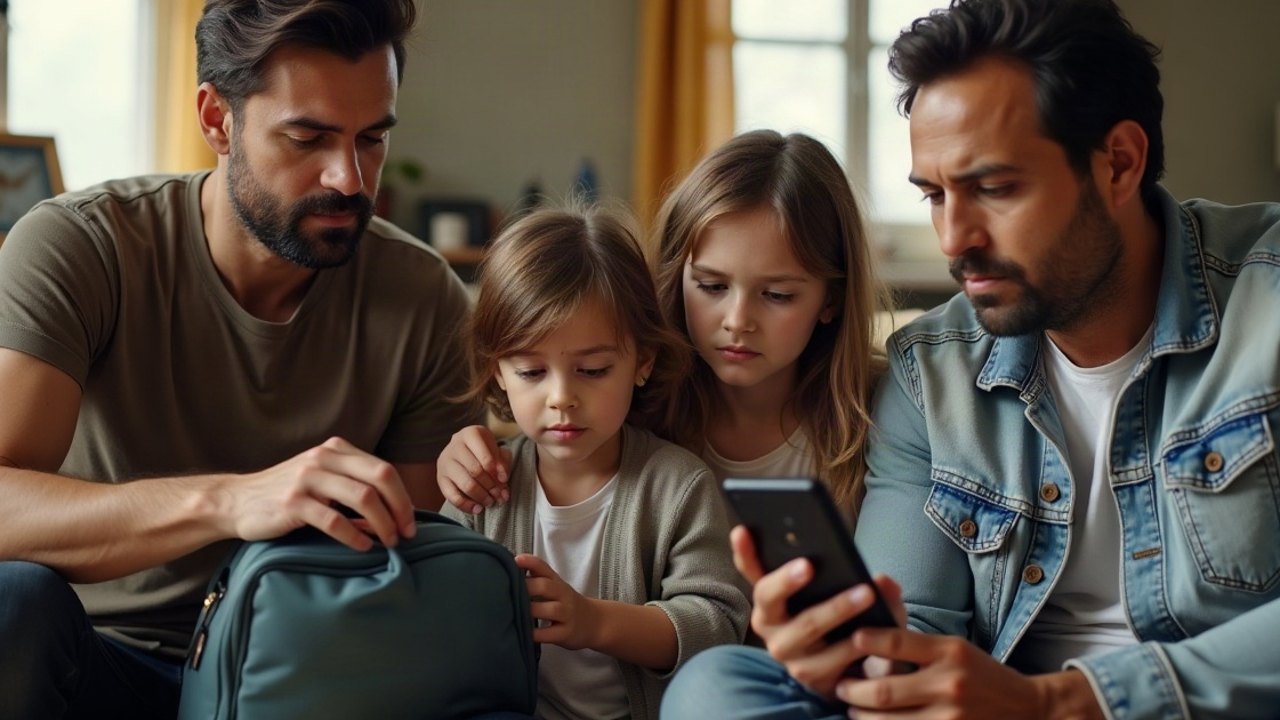
Immediate shelling is not a research exercise
If shelling starts nearby, seek suitable immediate protection. The ICRC's guidance from Lebanon recommends lower or interior shelter, staying away from windows, getting low and protecting the head and ears, and not moving until the immediate attack has ceased.
Fire, collapsing structures, smoke and other hazards can change where it is safe to remain. Never approach a strike site to take pictures or retrieve belongings. A nearby object may be unexploded ordnance even if it resembles scrap metal.
For the actual indoor sequence see missile and rocket attack safety priorities. No ordinary room or basement is guaranteed protection against a direct attack.
Keep three information questions separate
What is confirmed? A verified notice identifies a specific location, issuing authority and action. What is likely but not confirmed? A report may indicate a problem but lack an affected-area boundary. What is rumour? An anonymous clip, undated warning or claim that a border has closed may be entirely wrong.
Use named local emergency responders, credible public broadcasters, verified humanitarian organisations and current transport authorities. When internet services stop, a working broadcast receiver and paper contacts offer alternative channels. Avoid fake evacuation payment links and strangers requesting passports or bank details through messaging apps.
The ICRC's Ukraine guidance recommends listening for actual local administration announcements about humanitarian passages. This is more reliable than assuming an informal map is current.
Account for people before choosing a destination
Know who is at home, at work, in school or receiving care. Record last confirmed locations and an agreed trusted contact, preferably outside the immediate danger area. Don't interpret silence from a mobile phone as proof of injury; networks may be unavailable or people may be sheltering.
A school or hospital may be following its own protective plan. Travelling through active attacks to collect somebody can make matters worse. Follow the institution's safeguarding and access procedures.
Use the family check-in worksheet and the dedicated civilian evacuation plan to organise roles and reunion without disclosing private information publicly.
Check whether essential services actually work
Electricity, water, heating, sanitation, pharmacies and transport are interdependent. During the 2025–26 winter in Ukraine, WHO documented energy attacks that interrupted heating and water, with major consequences for health and housing. Such disruption can affect people far from a strike.
Keep a short actual-status record: provider, last verified notice, available service and what would make remaining unsafe. For example, loss of water for several hours is different from an officially declared contamination problem. A power cut is different when somebody requires continuous medical equipment.
For household supply arithmetic see our three-day home kit. It is a starter reserve, not a promise that services recover in 72 hours.
Medication, injuries and clinical continuity
Some civilians depend on medication, specialist feeding, dialysis, oxygen or powered devices. Know the current treatment plan, provider contact and authorised alternative arrangements. Do not ration prescribed medicines or substitute drugs based on social media.
The WHO's verification of attacks on Ukraine's healthcare shows why ambulance and hospital availability cannot be assumed during conflict. Ask for current local medical service information and use the correct emergency number for the country.
For serious injury, seek trained emergency assistance as safely as possible. Avoid unnecessary movement through dangerous areas to reach a facility that may be closed or overwhelmed.
Decide whether remaining is currently safer
A household should not automatically evacuate because war has begun elsewhere. If the building is safe, care needs can be met and no local directive requires leaving, remaining and monitoring may be appropriate. If direct attacks, structural damage, healthcare failure or actual evacuation orders change the conditions, reassess promptly.
Don't insist on staying because the family prepared supplies. Conversely, don't depart because a social post declares all cities unsafe. Our shelter-or-evacuate comparison gives the decision structure; actual local instructions take precedence.
The dangers of an improvised journey
Travelling can expose civilians to active fighting, damaged bridges, armed checkpoints, dangerous remnants and loss of access to medicine. A rural destination may lack water, care or accommodation. A road visible on a digital map may be closed or unsafe.
The UNHCR's humanitarian evacuation guidance calls civilian relocation a high-risk operation that requires informed consent, coordinated routes, safe destinations and special arrangements for vulnerable people. An announced route is not inherently safe unless relevant parties and conditions support it.
Verify the identity of an organiser, where the journey actually ends, whether accessible transport and needed clinical care are available, and how the family will remain together. Do not pay an unknown account for a supposed place on a humanitarian convoy.
Documents, legal status and crossing borders
Keep passports, residence papers, birth records, medical summaries and authorised copies accessible but secure. Requirements for travel or protection vary by country and can change rapidly. Official immigration and humanitarian sources are necessary; a web article cannot guarantee entry.
For children, family relationship documents and a responsible adult's contact details can assist legitimate reunification and safeguarding. Don't publish names or identification images publicly. The ICRC's help information emphasises securing copies of important documents before a possible movement where safe.
Do not handle debris or unexploded weapons
Explosive remnants are a persistent threat after active shelling. Metallic debris, unusual containers and damaged munitions can injure long after a strike. Do not touch, move, open, drag or collect them. Leave the area safely and report through the appropriate local channel if possible.
This principle matters during routine walking and especially for children. Avoid play areas or fields reported to be contaminated with mines or munitions. Follow credible mine-action warnings rather than assuming an apparently quiet route is clear.
Humanitarian support is a real system, not a rumour
Organisations such as the ICRC, UNHCR and national Red Cross/Red Crescent societies may provide different services in particular conflicts. Their ability to operate depends on security, authorisation, capacity and the population served. Ask a verified organisation what services are currently offered at your location.
UNHCR notes that formal evacuations should preserve family unity and consider disability, age, medical requirements and the receiving community's capacity. Not every person qualifies for the same service, and a humanitarian corridor cannot be guaranteed by a stranger online.
A useful first-day action record
| Time | Confirmed fact | Next safe decision |
|---|---|---|
| 08:00 | Official local warning: shelter in affected district | Use the authorised safe area; do not begin unnecessary travel |
| 10:00 | Water provider reports a specific service interruption | Use safe reserve and verify any quality instruction |
| 12:00 | School confirms supervised sheltering | Follow school contact process rather than travelling into danger |
| 15:00 | Verified change in local evacuation instructions | Check route, destination, care and transport before action |
These are hypothetical examples, not real-time event information. The value is a dated record rather than competing rumours or guesses.
Practice the decisions before the crisis
- Identify the local authority, emergency number and reliable warning channel.
- Record where family members normally are and how they receive status updates.
- Know the appropriate interior shelter and conditions that make it unsafe.
- Review medication, mobility, water and heat dependencies.
- Identify a verified destination and a safe method of travel if needed.
- Keep protected offline documents and appropriate child/care information.
- Write a date for the next review as conditions change.
Never rehearse by entering armed areas, obstructing exits or creating false emergency calls.
What if an evacuation order conflicts with the apparent road conditions?
An instruction may be correct for your district but your usual route may be blocked by rubble, fighting or a closed bridge. Do not interpret a general instruction to leave as a licence to cross a dangerous route. Seek current route details from the responsible authority or humanitarian organiser and explain the obstacle and any mobility or medical needs.
Some groups may be directed to a particular assembly point or transport service rather than an ordinary road. For others, an emergency-service rescue or temporary safe shelter may be more appropriate than an exposed walk. Keep the household together where possible and update the trusted relay when a genuine change is confirmed.
How to record a changing incident without spreading rumours
Use a short paper timeline with the columns: time, source, location affected, confirmed instruction and next review. If a relative sends an alarming message, copy its time and location but don't promote it into an official instruction until independently verified. This prevents an older screenshot from displacing a newer safer route.
In a stressful event, two adults can compare what they heard and reach different conclusions. A dated record helps them identify whether the disagreement is about current facts or an assumption. Protect private locations and identity details when sharing information with people outside the household.
Frequently asked questions
Should I leave home immediately if war breaks out in my country?
Not automatically. Follow actual local instructions, immediate dangers, safe-route information, destination availability and household care needs.
How do I know whether an evacuation route is real?
Verify it through appropriate local authorities or credible humanitarian organisers, including timing, safety arrangements and destination.
What if relatives stop replying?
A missed response does not prove injury. Networks and movement may be disrupted; use an agreed relay and legitimate tracing services where appropriate.
What is the most important thing during active shelling?
Take suitable immediate protection away from windows according to current local guidance, rather than attempting an exposed journey or watching the attack.