SURVIVAL DURING WAR DEPENDS ON SHELTER, ESSENTIAL SERVICES, PEOPLE AND SAFE DECISIONS.
What actually keeps a civilian safer during a war: a huge survival bag, the ability to reach protective shelter, or knowing when and where it is safe to move? The answer changes with the threat, but experience from real conflicts points to something a generic equipment list misses: survival depends on decisions, functioning services, safe places, other people and access to reliable information.
This guide explains civilian survival during armed conflict through six practical problems: immediate protection, shelter over time, healthcare, family separation, safe movement, and recovery. It draws on humanitarian field experience rather than treating war as a wilderness camping exercise. For a conventional supplies inventory, see the civilian wartime emergency kit.
What real civilian experience tells us
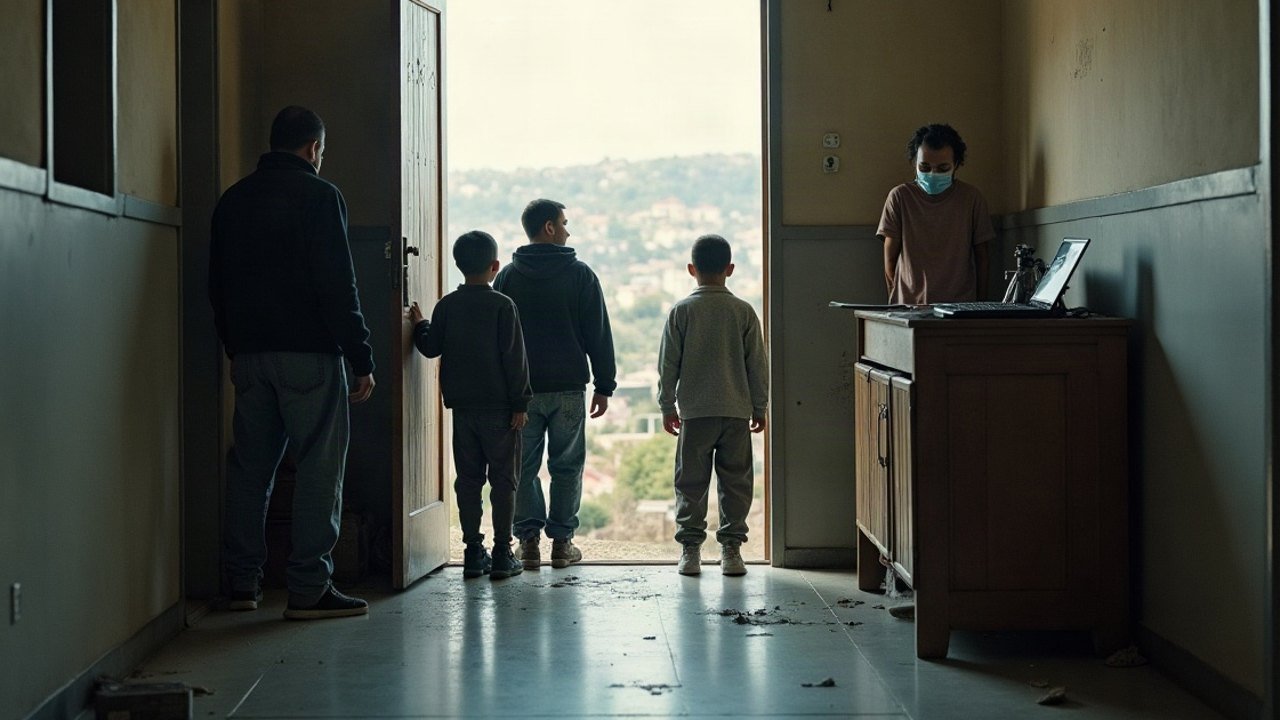
During the fighting in Donetsk, the International Committee of the Red Cross (ICRC) described residents sheltering in basements for prolonged periods with damaged windows, disrupted electricity and running water, and dangerous trips to collect aid. The problems were interconnected: a damaged building lost warmth, poor mobility reduced access to supplies, and people could not safely travel simply because they were hungry.
A more recent WHO update from May 2026 documented over 3,000 verified attacks on healthcare in Ukraine since the full-scale invasion. This is not a claim about what would happen in every future war. It demonstrates that medical continuity and transport cannot be treated as guaranteed, even when a person is not directly injured by a weapon.
Six priorities, in the order the situation demands
| Problem | What the civilian must establish | Common failure |
|---|---|---|
| Immediate attack | Appropriate reachable cover and current local instructions | Standing near windows or moving outdoors unnecessarily |
| Remaining sheltered | Safe air, water, temperature, sanitation and essential treatment | Assuming a basement remains habitable indefinitely |
| Injury and illness | Emergency route, trained help and clinical continuity | Expecting ordinary pharmacy and ambulance access |
| Family separation | Trusted relay, institutions' procedures and identifiable destination | Unplanned journeys to collect people during attacks |
| Movement | Verified route, destination, permissions and alternatives | Following an unverified “safe corridor” post |
| Recovery | Documents, housing, safe return and income/support arrangements | Treating escape as the end of the emergency |
This order isn't a clock. A person under fire must seek immediate cover, whereas a household away from fighting can review services, contacts and supplies calmly.
During shelling, a window is a significant hazard
The ICRC's civilian guidance for shelling in Lebanon recommends seeking lower ground and staying away from windows, lying down, protecting the head and ears, and waiting until shooting stops before moving to safer shelter. Its practical instructional video points to basements, safe rooms or interior spaces with substantial walls where reachable.
No indoor position is guaranteed protection from a direct strike or collapsing building. Fire, smoke and structural damage can make a chosen room unsuitable. Do not deliberately approach military sites, suspicious debris or fallen munitions. The practical principle is to reduce exposure immediately and then reassess what is still structurally safe.
A shelter must also support life
In a real prolonged conflict, civilians may stay inside for extended periods because movement is dangerous. A room offering better protection from fragments may be cold, damp or inaccessible for a person with disabilities. Equipment and supplies must be located where they can be retrieved without stepping back outside.
Check drinking water, safe no-cook food, sanitation, lighting, air quality, medicine and the ability to receive updated instructions. Avoid unventilated fuel-burning heaters or generators in an enclosed shelter. Our 72-hour household kit helps calculate a starter reserve, but an emergency can exceed that time and supplies cannot make a collapsing building safe.
The ICRC's account of Ukrainian winter repairs illustrates how damaged windows and roofs can make otherwise surviving homes too cold to occupy. Keeping people warm is a building problem as well as an equipment problem.
Understand the medical dependency before it becomes urgent
List all care that cannot safely be delayed: required medicines, clinically prescribed nutrition, dialysis, mobility support and powered medical devices. Obtain continuity arrangements from qualified providers. A generic first-aid pouch won't replace a clinical procedure or a compatible power source.
WHO reported in its 2026 Ukraine health risk assessment that power interruptions can affect cold chains, water treatment and functioning medical equipment. Household planning should therefore include provider contacts and acceptable alternatives—not guesses about rationing medicine.
Communication matters even when networks work intermittently
Agree a trusted relay outside the immediate danger area, a simple message format, and what to do if no reply arrives. Include school, care provider and authorised collection procedures. A missing message may reflect lost battery, congestion or restricted movement, not proof of harm.
Send useful information: confirmed location, safety, next action and the time it was last verified. Keep contact numbers on paper because a smartphone can be intact while its cloud-based contact list is unavailable. The family check-in worksheet provides a reusable record without requiring an account.
Moving can create more risk than remaining
A plan to “head to the countryside” is not sufficient. An actual relocation requires a usable destination, safe passage, transport, documentation, family arrangements and appropriate care. Routes can cross damaged bridges, active fighting, checkpoints or explosive remnants.
The UNHCR's humanitarian evacuation guidance calls evacuations exceptional, high-risk operations needing informed decisions, coordination and specific provision for children, disability and medical needs. In the Ukraine conflict, the ICRC described facilitated civilian passages arranged through dialogue with the parties—not simply an arbitrary route marked online.
If a route or destination cannot be verified, do not claim it is safe. Our civilian wartime evacuation planning guide develops the actual decisions, documents and fallback process.
Documents protect access to help and recovery
Identity, birth and family records, prescriptions, accessible care instructions and property/insurance references can matter after relocation. Store originals securely and keep protected copies accessible offline. Do not expose complete passwords or personal records in an unattended bag.
If a family becomes separated in conflict or migration, the British Red Cross international family tracing service provides specialised support in eligible situations. It is not an instant tracking service and cannot guarantee reunion.
The civilian character of movement matters
International humanitarian law distinguishes civilians from combatants, and humanitarian evacuation operations seek to preserve that distinction. The ICRC's explanation of the rules of war stresses protections for civilians and civilian objects and the severe harm associated with explosive weapons in populated areas.
Avoid involving yourself in military activity, approaching active military locations or following advice to carry weapons as a routine civilian precaution. Legal protections are important but cannot guarantee that all parties comply or that every road remains safe.
A household decision drill using real constraints
- Write the current location of each dependent person and where authoritative local instructions come from.
- Identify an ordinary accessible safe interior space and its competing hazards: fire, flood, smoke, damaged walls and ventilation.
- Choose one critical care dependency and record the approved support or provider contact.
- Find the written family relay, school procedures and necessary documents without internet.
- Identify a possible destination, then list the conditions required before it can genuinely be called usable.
- Ask what changes if the driver, electricity or phone network is unavailable.
- Assign the most consequential missing action and a review date.
Conduct this as a calm planning exercise. Never simulate shelling, enter abandoned structures or cut power to essential equipment.
After the fighting: avoid assuming the street is safe
Damage to buildings, gas lines, electricity and drinking water may remain after an attack. Unexploded ordnance and unstable debris present serious risks. Don't approach unfamiliar metallic objects or attempt to clear suspected munitions; report them using the relevant local channel when safe.
Returning home requires current permission and conditions, not simply a lull in the noise. Consider whether the property is habitable, whether necessary healthcare is reachable and whether someone has confirmed that the route and building are appropriate to enter.
Worked case: two people sheltered, one needs to travel for treatment
Imagine a family with an older relative whose treatment requires a specialist appointment. Nearby shelling has made the usual road dangerous. Their pantry is reasonably stocked, but the person needing treatment cannot simply wait indefinitely. The family's first task is to contact an actual care provider or legitimate humanitarian health service to understand what is operating, whether transport assistance is available and what safe alternatives exist. They should not replace essential treatment with improvisation or set off on an unknown route based on hearsay.
One adult keeps the prescription and care summary secure; another monitors verified local warnings and checks the actual transport plan. A family member who remains at school or work follows the institution's own safeguarding arrangements. This example illustrates why medical continuity and movement cannot be handled as separate checklists: a decision about travel is only useful if the necessary destination service is genuinely accessible.
Worked case: a sound building loses heating in winter
A household remains physically away from direct attacks but loses heating and electricity after infrastructure damage. The interior shelter is still structurally sound, yet indoor temperatures are falling. The residents put on suitable warm clothing, use safe bedding, conserve device power, verify the outage and identify people vulnerable to cold. They do not bring a charcoal barbecue or petrol generator indoors to solve the heating problem.
One adult checks whether the utility operator or local services have confirmed a support or accommodation arrangement. If living conditions or medical needs become unsafe, staying inside is no longer automatically the right choice. An available safe host with warmth and required care may become more useful than several more days of stored tins. This is consistent with the ICRC's documented winter-repair work in Ukraine.
A skill that can be practised before anything happens
Ask a second responsible adult to find the protected medical contact, safe interior area and out-of-area relay without using your phone. If one function cannot be found or explained, correct that specific dependency. The exercise takes minutes and costs little. Repeat it when the family, medication, housing or school arrangements change. Do not treat completion of a checklist as proof that circumstances in an actual conflict will remain predictable.
Frequently asked questions
What matters more than a wartime survival bag?
Reliable warning information, a usable shelter, medical continuity, family coordination and safe movement decisions can matter more than additional gadgets.
Is a basement always the safest place during shelling?
Substantial lower or interior shelter can offer protection in some situations, but structural damage, fire, flooding, ventilation and accessibility may make an individual basement unsafe.
Should civilians evacuate as soon as war begins?
Not solely because of a headline. Actual local danger, authoritative instructions, destination and safe route information should determine action.
Can a household prepare for every wartime event?
No. It can identify critical dependencies, establish plans for foreseeable disruption and adapt decisions as confirmed conditions change.
Research and further reading
- ICRC — civilians enduring shelling and service interruptions in Donetsk.
- ICRC — instructional sheltering guidance during shelling.
- WHO — verified effects of attacks on healthcare, May 2026.
- UNHCR — humanitarian evacuations and their operational risks.
- British Red Cross — family tracing after conflict.