SAFE DRINKING WATER REQUIRES MORE THAN CLARITY, COLOUR OR A SINGLE NUMBER.
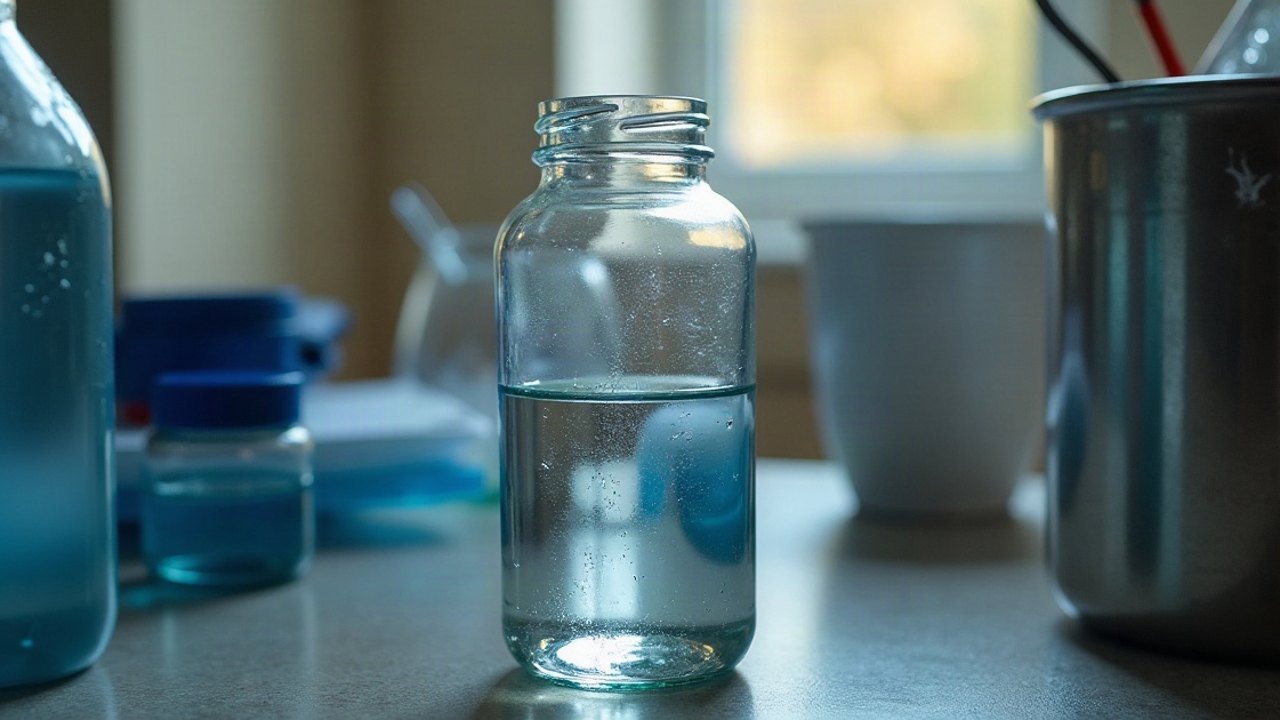
A glass of water is perfectly clear, has no smell, and reads 80 ppm on a handheld meter. Is it safe to drink? Those observations do not establish potability. The water may still contain pathogens, harmful chemicals or contaminants outside the meter's capability. Conversely, water that looks temporarily cloudy after a water-main repair may contain harmless trapped air rather than a dangerous pollutant. Appearance alone is a poor safety test in either direction.
This guide explains what makes water potable during a utility disruption, how professional water-quality evidence differs from consumer gadgets, and what an ordinary household can verify without pretending to operate a laboratory. It also explains the limits of filter claims, home test strips and visual checks.
The Drinking Water Inspectorate (DWI) defines wholesome drinking water in law through standards for organisms, chemicals, metals and consumer acceptability. The World Health Organization's updated June 2026 drinking-water guidelines describe a broader “catchment to consumer” system of risk management, treatment, monitoring and independent surveillance. Neither framework reduces safety to the colour or taste of a sample.
Potable means suitable for drinking, not simply clear
In ordinary usage, potable means water suitable to drink. In professional practice, establishing that suitability involves identifying hazards, controlling them and monitoring a variety of microbiological, chemical and physical parameters. Water that has had sediment removed is not necessarily disinfected, and water that has been disinfected is not necessarily free from toxic chemicals.
For a public water supply, the supplier's treatment and monitoring system provides much more evidence than a household visual inspection. During a disruption, that evidence may change: a burst main, low pressure, damaged pipe or contamination incident can lead to additional restrictions while the utility investigates.
What matters to the household is the status of the source and the current instructions, not whether a glass looks appealing. See our UK water-service interruption guide for finding the correct supplier and reading its notice.
Four kinds of water-quality evidence
| Evidence category | Examples | Why it matters |
|---|---|---|
| Microbiological | E. coli, enterococci and other indicators or pathogens | Assesses contamination and potential infection risk |
| Chemical | Nitrates, pesticides, metals and specific industrial pollutants | Some harmful compounds cannot be removed by ordinary boiling |
| Physical and aesthetic | Turbidity, colour, odour, taste and conductivity | Can reveal changes or indicate a problem but cannot prove all hazards absent |
| Operational and source history | Treatment performance, supply pressure, main repairs, verified incidents | Explains whether protective barriers may have been affected |
The DWI publishes UK drinking-water parameters and their points of compliance. WHO's 2026 guidelines treat water safety as a preventive system that considers multiple hazards and requires appropriate independent surveillance.
Microbes: why a household cannot see the most important risk
Waterborne pathogens can be present in water that looks and smells normal. Bacteria, viruses and protozoan parasites are too small to assess by eye. Some microbial standards use indicator organisms such as Escherichia coli and enterococci to assess possible faecal contamination. A test for an indicator gives a particular kind of evidence; it is not necessarily a direct test for every pathogen.
The DWI's England and Wales standard for E. coli at consumers' taps is 0 organisms per 100 millilitres. That precise standard requires appropriate sampling and laboratory methods. Looking at a glass or using a standard dissolved-solids meter cannot establish whether the criterion is met.
The DWI's private-water sampling guidance illustrates how regulated monitoring covers both microbiological and other parameters. Testing frequency and interpretation depend on the type of supply and its risk assessment.
Chemicals: the hazards that boiling does not resolve
Chemical contaminants can include lead, copper, nitrates, certain pesticides, solvents or fuel-related substances. The risk depends on the actual contaminant and concentration, duration of exposure and person affected. A generic water-purification tablet is not designed to remove dissolved industrial chemicals. Ordinary boiling may leave these compounds behind or concentrate them.
The CDC expressly warns that boiling and disinfection cannot make water containing harmful chemicals, toxins or radioactive material safe. Some specialist treatment systems remove specific chemicals, but their tested reduction claims and operating limits matter.
When a contamination notice identifies a chemical hazard, do not substitute a camping filter for the supplier's restrictions. Use an approved safe alternative source until the competent authority has provided updated instructions.
What does a TDS meter actually measure?
A total dissolved solids (TDS) meter usually estimates dissolved mineral content from electrical conductivity. It is useful in some contexts for tracking changes in a system, but its displayed value cannot identify which individual dissolved substances are present or whether water contains harmful bacteria, viruses, fuel or pesticides.
For example, a reading of 80 parts per million could arise from a particular mix of ordinary dissolved minerals. It does not certify that E. coli is absent. A different reading might reflect salts rather than pathogens. A numerical display can look authoritative while answering a much narrower question.
The DWI lists conductivity alongside microbiological indicators as separate monitoring parameters in its private supply monitoring requirements. That separation is a clear reason not to treat conductivity as a comprehensive drinking-water test.
Can a home test strip tell you whether water is potable?
Test strips may help screen for a specific analyte within their validated range—such as chlorine residual, pH or a named chemical. But a strip that tests one or several parameters does not prove the absence of all others. Accuracy can depend on storage, expiration, water temperature, lighting, colour interpretation and adherence to the instructions.
Some home kits include a microbial test, but results require correct sample handling, incubation and interpretation. A negative result for one sampled organism is not the same as a professional determination of all hazards across a network. Do not declare a supplier's official restriction cancelled because a strip changed colour or a home test looked reassuring.
If a water-quality problem is suspected, contact the water supplier or the appropriate authority for verified advice and, where necessary, qualified testing. For private wells or springs, a competent laboratory and suitable source-specific sampling plan may be required.
Cloudy water, brown water and unusual colours after repair work
Not all changes in appearance carry the same implication. After a water main is repaired, small air bubbles can make water look white or cloudy. According to the DWI, the cloudiness may clear from the bottom of a glass upwards as the bubbles escape. If cloudiness persists or comes with unusual odour or taste, the supplier should be consulted.
Brown, orange or black water can result from disturbed iron or manganese deposits in the network after changes in pressure or flow. However, the DWI says not to assume a sudden discolouration is safe to drink before seeking supplier advice. Some other bright colours can indicate plumbing or backflow problems.
The useful distinction is between a plausible explanation and verified safety. An explanation for colour does not itself cancel a public-health notice.
Why test sampling and chain of custody matter
Professional analysis depends on more than the laboratory machine. The sample must come from an identified location, be collected with suitable technique, stored and transported correctly, and tested for the relevant hazards. A sample from an isolated kitchen tap might not describe a contamination problem affecting a larger part of the system.
The DWI's laboratory guidance discusses accredited analysis and appropriate methods for regulated private-water samples. Those requirements are a reminder that a badly collected sample can generate an answer that appears precise but is not reliable for the decision.
Record any official sampling request and follow the laboratory's instructions. Do not use an ordinary household bottle to collect a microbial sample if the testing provider specifies a sterile container or preservation method.
How a boil-water notice differs from a do-not-use notice
Under a boil-water notice, the supplier suspects or has found a risk from microorganisms and gives instructions for boiling water for designated uses. The DWI's notice guide addresses drinking, tooth brushing, food preparation and other uses. Water may still be permitted for some washing or sanitation activities, subject to the exact notice.
A do-not-use notice can reflect a different or more serious potential contamination. There is no general rule that “boiling a little longer” makes it acceptable. Read the official restriction in full; the permitted uses may differ by hazard and location.
Do not interpret clear water or a working filter as permission to ignore an active notice. A notice is withdrawn by the responsible organisation, not by a home test kit.
What does independent verification look like for a filter?
When evaluating a filter or treatment unit, distinguish a manufacturer's broad marketing statement from a specific independent test claim. Certification schemes such as NSF/ANSI 42 or 53 address particular types of contaminant reduction. A filter approved for taste and odour is not automatically approved for microorganisms, lead or every pesticide.
The NSF standards guide explains the scope of those certifications and the importance of particular contaminant claims. Check the exact model and cartridge, not merely a brand name.
For microbial pore sizes and the limits of microfilters, see what emergency water filters actually remove. For chemical treatment, compare filters and purification tablets.
WHO's 2026 guidance: manage risk from source to tap
WHO's 17 June 2026 update to its drinking-water guidelines stresses source protection, assessment of hazards, preventive treatment barriers, operational monitoring and independent surveillance. This matters because water can be contaminated before treatment, inside the supply network or after it is stored in an unsafe household container.
There is no single colour change or one-point measurement that proves every step of that chain is safe. Multiple layers of evidence and control are used precisely because the possible failure points differ.
At the household level, the lesson is practical: choose a verified supply, understand official notices, keep clean containers and avoid assuming a home device answers questions outside its tested function.
A five-part household potability decision
| Question | Strong evidence | Weak evidence |
|---|---|---|
| Is the source recognised as safe? | Verified supplier notice, intact commercial drinking-water packaging | Someone online says the stream is clean |
| Is there an active restriction? | Current water-company or public-health notice with exact wording | An old screenshot or neighbour's unverified comment |
| Which hazard is involved? | Identified pathogen or chemical risk from competent assessment | “It looks bad” or “it looks fine” |
| What does treatment actually address? | Validated product-specific performance claim and correct instructions | A filter's colour, cost or generic marketing label |
| Is the result kept clean? | Clean sealed container, proper handling and traceable origin | Water poured back into an unwashed collection bottle |
This matrix is a decision aid, not a substitute for laboratory sampling. If evidence is missing at a critical step—particularly a credible chemical contamination concern—the prudent action is to obtain known-safe water rather than declare the sample potable.
Three examples of false reassurance
Example A: “The water looks crystal clear.” Water may still contain infectious microorganisms or dissolved pollutants. Clarity measures a visible property, not full chemical or microbiological safety.
Example B: “My TDS meter reads low.” A low conductivity-derived number does not establish that pathogen or specific chemical limits are met. It only describes one property of the sampled water.
Example C: “I used a purifier.” A product may reduce some hazards when used correctly. The word “purifier” alone does not tell you whether the source contained an untreated hazard or whether the equipment was intact.
These are common errors in reasoning, not proof that all emergency water is dangerous. Keeping categories separate makes decisions clearer in either direction.
What a household should record during a disruption
- The source of water, including which tap, bottle or authorised distribution point it came from.
- The time and wording of the latest verified supplier or public-health notice.
- Any visible change in colour, smell, pressure or sediment, without treating the observation as a diagnosis.
- Any product used for treatment and its exact verified claims and instructions.
- Who requires special water quality or safe preparation, such as infants or people with medical needs.
- Where a known-safe alternative supply can be obtained if uncertainty remains.
Store the record in a simple note that another adult in the household can understand. It helps avoid accidental mixing of raw and treated water and unnecessary reliance on a single gadget.
Frequently asked questions
Can clear water still be unsafe to drink?
Yes. Pathogens and dissolved chemicals may be present without visible colour, sediment or odour. Clear appearance is not proof of potability.
Does a TDS meter show whether water is safe?
No. It estimates dissolved substances from conductivity; it does not identify harmful microbes or establish that all chemical safety limits are met.
Can a home test kit override a boil-water notice?
No. Follow the responsible supplier or public-health authority's instructions until the notice is withdrawn. A consumer kit typically tests only selected parameters.
Who can confirm a UK tap-water quality issue?
The relevant water supplier is the first point of contact for a mains-water concern. Professional testing, regulatory investigation or local authority involvement may be appropriate depending on the incident and whether the supply is public or private.