FIRST CHOOSE THE SOURCE. THEN CHOOSE A TREATMENT THAT ADDRESSES THE HAZARD.
Your tap is dry and a nearby stream is still flowing. Is it safe to collect a few bottles, pass the water through a cloth, boil it and drink it? Sometimes physical treatment can reduce microbial risk, but the first task is not boiling or filtering. It is deciding whether that water source is an appropriate candidate for treatment at all. A stream below a chemical spill, flooded industrial area or sewage discharge is a different proposition from a relatively protected natural source.
This is a field-to-container workflow for making emergency water safer when normal supply is unavailable. It does not claim to make every source potable.
The Wilderness Medical Society's 2024 clinical practice guideline, written by experienced wilderness medicine specialists Howard Backer, Robert Derlet and Vincent Hill, describes source selection, clarification, heat, filtration and disinfection as distinct operations. The CDC's outdoor water-treatment guidance likewise prefers boiling for microbial hazards, or appropriately filtering then disinfecting where boiling is not practical. Neither approach makes known chemical pollution disappear.
Step 1: identify the actual disruption before looking for natural water
An empty tap may reflect a burst water main, planned works, a private pump failure or an issue confined to your property's plumbing. It does not necessarily mean that the local water network has become contaminated or that you need to find water outdoors. Check the water company's outage information, neighbours in an appropriate way and any messages from your building manager if relevant.
In England and Wales, water companies have arrangements for communicating about supply interruptions and alternative supplies. Ofwat explains the replacement-water expectations. A verified tanker, bottled-water distribution point or another known-safe supply may be much more useful than an experimental household treatment chain.
For the service and communication decisions, see what to do when household water stops. This article starts where an appropriate alternative water source and treatment method must be evaluated.
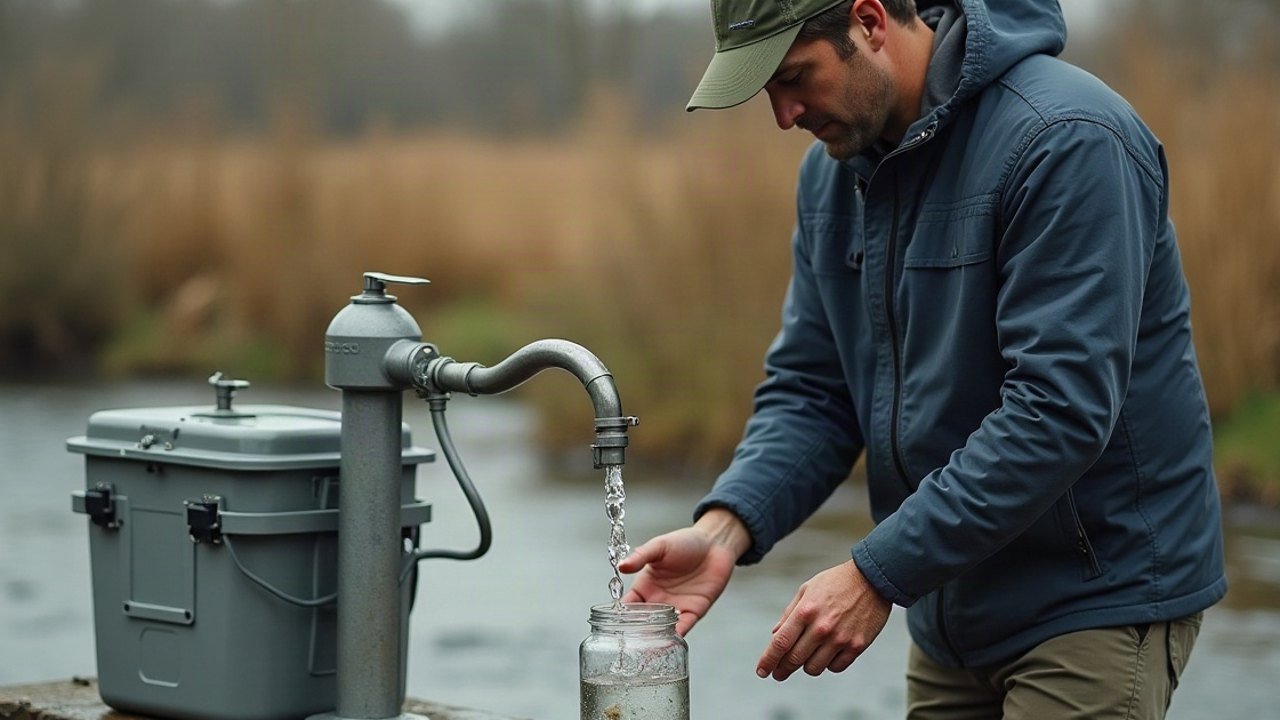
Step 2: rule out sources you should not attempt to treat
Before collecting water, look at the surroundings and any official warnings. Is there floodwater carrying oil, waste or chemicals? A nearby workshop, fuel tank, pesticide run-off, mining activity or industrial discharge? A blue-green algal scum? A notice that says not to use the source? If any of those concerns apply, do not assume household boiling, tablets or backpacking filters will resolve them.
Known or suspected chemical contamination is a stopping point for generic field treatment. The CDC states that water contaminated with harmful chemicals, toxins or radioactive materials cannot reliably be made safe by boiling or disinfecting. Clear appearance or an absence of smell does not rule these hazards out.
A roadside puddle or water collected from a flooded building should not be treated as equivalent to a clear upland stream. If a trustworthy alternate source exists, use it. The goal is to reduce health risk, not prove that a homemade process can tackle the most hazardous source available.
Step 3: examine watershed and sanitation clues
Even natural water that appears clear may contain microorganisms from people, wildlife or livestock. Think about what is upstream, where animals graze, whether there are campsites, sewage systems or agricultural fields nearby, and whether recent rainfall has washed material into the watercourse. Those observations help identify concerns; they do not provide a laboratory safety certificate.
The Wilderness Medical Society's guideline recommends treatment of water in wilderness areas where agricultural use, animals or human activity can affect water quality. It also notes that field treatment choices depend on practical constraints and likely pathogens. Avoid relying on folk ideas such as “fast-moving water must be safe”. Flow speed alone cannot tell you whether viruses, parasites or chemicals are present.
For water intended for drinking, do not choose water just because it is conveniently close to a road, drain or industrial premises. If the source's risks cannot reasonably be evaluated, find a different supply instead of proceeding through a treatment recipe with an unknown endpoint.
Step 4: set up a clean side and a raw-water side
Before collecting anything, separate your equipment. Keep the container used for untreated source water distinct from the clean vessel intended for treated drinking water. A dirty lid, wet hand or transfer hose can reintroduce organisms after treatment. If several people are involved, make it clear which containers have completed the process.
Mark a raw-water vessel as not safe to drink. Use clean hands and clean receiving containers. Do not place the mouth of a treated bottle on the same surface as the underside of a collection bucket. This separation may sound unglamorous, but it addresses a common failure point that no advertising claim about filter pore size can solve.
The CDC's protected water-storage guidance emphasises clean containers and preventing recontamination. The same principle applies outdoors and at the kitchen sink.
Step 5: reduce sediment without mistaking it for disinfection
Water carrying visible suspended soil may clog a filter or interfere with chemical disinfectants. Allowing particles to settle, or carefully pouring through a clean cloth or other suitable prefilter, may improve clarity. This process is called clarification, and it is different from making water safe to drink.
The Wilderness Medical Society's practical field summary notes that clarification can help later treatment and reduce clogging. But it explicitly requires another suitable treatment step for microbiological safety. A coffee filter might make water look clearer while letting viruses and bacteria pass.
Avoid pouring the settled sludge back into the clarified portion. Reconsider the source entirely if sediment is oily, unusually coloured or associated with a suspected chemical event. No amount of cloth straining establishes that fuel, pesticides or metals have been removed.
Step 6: choose one validated microbial treatment strategy
| Situation | Potential microbial treatment | Constraint that matters |
|---|---|---|
| Suitable source; safe heating equipment available | Boiling following applicable public-health guidance | Does not remove chemical contamination; scald and fuel safety still apply |
| Suitable source; no practical means of boiling | Appropriate filter followed by approved disinfection where required | Filter must meet relevant microbial claims; disinfectant time and dose are product-specific |
| Clear water and validated UV equipment | Use the approved UV system under its instructions | Battery, lamp function, clarity and exposure requirements matter |
| Suspected industrial, fuel or other chemical contamination | Do not use generic field treatment as the solution | Use a known-safe alternate supply and follow qualified advice |
This is not a recipe that turns every stream into drinking water. The CDC recommends boiling to inactivate common microbial pathogens and describes filtering followed by disinfection as an alternative for suitable water. The correct choice changes with the source and the available validated equipment.
Boiling: a clear microbial endpoint, with important limits
For water that is suitable for microbial treatment, a rolling boil is a straightforward endpoint. The CDC's general travelling and camping guidance advises a rolling boil for one minute, or three minutes above 6,500 feet. UK-specific water-company boil notices should be followed as issued; the Drinking Water Inspectorate advises bringing water to a boil and allowing it to cool naturally.
Boiling deals with microbes; it does not make petrol or pesticides evaporate away safely, and it does not remove dissolved salts or metals. It may also concentrate certain dissolved substances as water evaporates. Never improvise heating with a barbecue, camping stove or generator indoors or in an enclosed place where carbon monoxide may accumulate.
Allow boiled water to cool safely in a clean covered container before use. Avoid decanting it into a vessel that has held untreated water without cleaning it first.
Filters: match pore and tested claims to the actual hazards
When using a portable filter, check whether its claim covers parasites, bacteria and viruses separately. Most ordinary microfilters can help remove many parasites and bacteria but cannot be assumed to reliably remove viruses. The CDC Yellow Book discusses these distinctions and the value of combining filtration with suitable disinfection in some settings.
Check the filter's integrity and maintenance instructions. If it has frozen while wet, developed a crack or become very difficult to use, it may not be dependable. Don't increase pressure beyond the manufacturer's limits. See our filter-performance guide for detailed explanations of pore ratings and certification claims.
A physical filter can also leave dissolved contaminants behind. An ordinary filter may remove sediment while making the result look deceptively attractive; visual clarity is never a replacement for a verified source and treatment specification.
Disinfection chemicals: the label determines the method
Chlorine, chlorine dioxide and iodine products have different organism-coverage limits and waiting times. Some are unreliable against resistant protozoa such as Cryptosporidium, while specific chlorine dioxide treatments can be effective when their validated instructions are followed. There is no universal “one tablet for half an hour” rule that covers all products and all water conditions.
Read the exact active ingredient, intended water volume, required contact time and instructions for cold or turbid water. If a packet is unlabelled, expired or inappropriate for the suspected microorganisms, do not guess its dose. Iodine also has restrictions for some users; these are explained in our purification-tablet guide.
Do not combine disinfectants or exceed product instructions in the belief that more chemical means greater safety. Where treatment cannot address the expected hazards, the correct response is to change the source or seek competent assistance.
UV, sunlight and improvised methods
Validated UV treatment devices can inactivate microorganisms in appropriately clear water under specified conditions. Their effectiveness depends on dose, optical conditions, functioning lamps and power. A UV device designed for a certain bottle size is not proof that a lamp pointed at a muddy bucket will work.
Some field guidance discusses sunlight disinfection under carefully defined container, weather and exposure conditions, but it is not a reliable universal shortcut in cloudy northern conditions or chemically polluted water. Similarly, charcoal from a campfire, sand or cloth may improve visible clarity without demonstrating microbial safety.
The Wilderness Medical Society reviews field techniques and their evidence limitations. Use validated methods appropriate to the situation, rather than mixing improvised techniques in the hope that the combination must be safe.
Step 7: protect the water after treatment
Once a suitable treatment has been completed under its correct instructions, move the water into a clean, food-safe, protected container. Close it securely. Keep it away from raw-water hoses, caps and hands. If you cannot confirm which bottle is untreated, treat it as suspect rather than handing it to someone else.
Record what source was used, which treatment was applied, when it was completed and any uncertainties. This is a useful household record, not a laboratory certificate. The treatment only addresses the hazards covered by the method and the conditions under which it was used.
For longer storage, cleaning, dating and rotation, use our safe water-container guide.
Three worked scenarios to practise the decision
Scenario A: a local mains burst, and your supplier announces a temporary replacement bottled-water collection point. The water network may be interrupted, but a verified safe alternative exists. Confirm location, access and eligibility. There is no need to experiment with a nearby stream just because it is flowing.
Scenario B: a remote trip near livestock grazing with no trusted treated water. Microbial contamination is plausible even if the water looks clear. Identify a suitable source, apply a validated treatment strategy addressing the likely organisms, and protect treated water from recontamination. Follow the actual equipment instructions.
Scenario C: surface water after an industrial flood where fuel sheen is visible. Ordinary boiling, tablets and camping filters are not a dependable solution. Seek alternative safe water and relevant hazard guidance. Do not consume a sample to find out whether it worked.
A one-page field decision record
| Question | Record before treating |
|---|---|
| Why is normal supply unavailable? | Verified outage notice, private-pump problem or unknown |
| What is the source? | Its location and any known upstream activities |
| Could chemical hazards be present? | If yes or unknown with credible warning signs, do not proceed with ordinary field treatment |
| What microbial risks are plausible? | People, livestock, sewage, floodwater or wildlife activity |
| What method is validated for these risks? | Product-specific tested claims and the relevant instructions |
| How will treated water be protected? | Dedicated clean container, lid and clear labelling |
| What is the fallback? | Known-safe water distribution, assistance or another verified supply |
If you can't fill in the source, hazard or treatment questions, don't treat the blanks as permission to drink. The record is designed to expose uncertainty and help you choose a safer alternative.
Frequently asked questions
Can you make stream water safe by filtering it through a cloth?
Cloth can remove some suspended particles, but it is not reliable microbial disinfection. More treatment may be necessary for an appropriate source, and some contaminated sources should be avoided altogether.
Is boiling always enough to purify water?
Boiling is highly effective against common microbial pathogens, but it does not remove fuel, pesticides, many dissolved chemicals or radioactive material.
Do I need to filter water before using chlorine dioxide tablets?
It depends on source clarity and the exact product instructions. Suspended material may interfere with disinfection, and the tablet's validated conditions must be followed.
What should I do when I cannot tell whether a water source is contaminated?
Prefer a verified safe alternative. A clear appearance and a home treatment chain cannot establish that unknown chemical hazards have been removed.