BUY FOR THE GAP YOUR HOUSEHOLD ACTUALLY HAS—NOT FOR A MARKETING LIST.
You have £30 to spend and want some useful protection against an electricity outage. Should you buy a power bank, a lantern, water, an expensive 'emergency radio' or something else entirely? The right answer depends on what you already own and which loss of service would matter most. A household with a medically necessary power supply has different priorities from a student in a flat; a family with small children has different requirements from someone who lives alone.
This guide is a budget-first method for choosing emergency power outage supplies, not a list of fashionable survival equipment. It separates essentials you may already have, low-cost improvements and specialist purchases that need a specific justification. Prices and availability change, so the spending bands are planning examples—not live retail quotations or reasons to spend money unnecessarily.
In October 2026 the British Red Cross updated its emergency-kit advice, emphasising ordinary items such as essential medication, drinking water, torches, phone charging and familiar long-life food. Its advice to adapt supplies to the household provides a stronger starting point than treating a premade kit as mandatory.
Start with what fails in your household
An outage removes mains electricity, but consequences vary. Your home might need power for an entrance gate, boiler controls, a well pump or a digital phone. Someone else's priorities may be a medication refrigerator, home office and ability to contact relatives. Before looking at an online product page, list which four activities would be most difficult if you lost electricity for an evening.
| Question to answer | What a useful answer sounds like | Buying implication |
|---|---|---|
| What light do I already have? | Two reliable torches and accessible batteries | Possibly nothing to buy |
| How would I call for help? | Charged phone, paper numbers and a working alternate contact route | Check charging cables or battery capacity before replacing devices |
| Would heating stop? | Gas boiler uses electric pump and controls | Warm clothing and safe accommodation plan may come before more electronics |
| What food would remain usable? | Everyday tins, crackers and other food not needing refrigeration | Rotate familiar pantry items instead of a dedicated costly 'survival meal kit' |
| Does anyone rely on powered care equipment? | Specific device with documented power requirement | Seek clinical/equipment-supplier advice; do not use generic kit logic |
The result is a list of missing capabilities, not a long inventory of things you might want to own. If you already have adequate light, allocate the next small amount toward a more important gap.
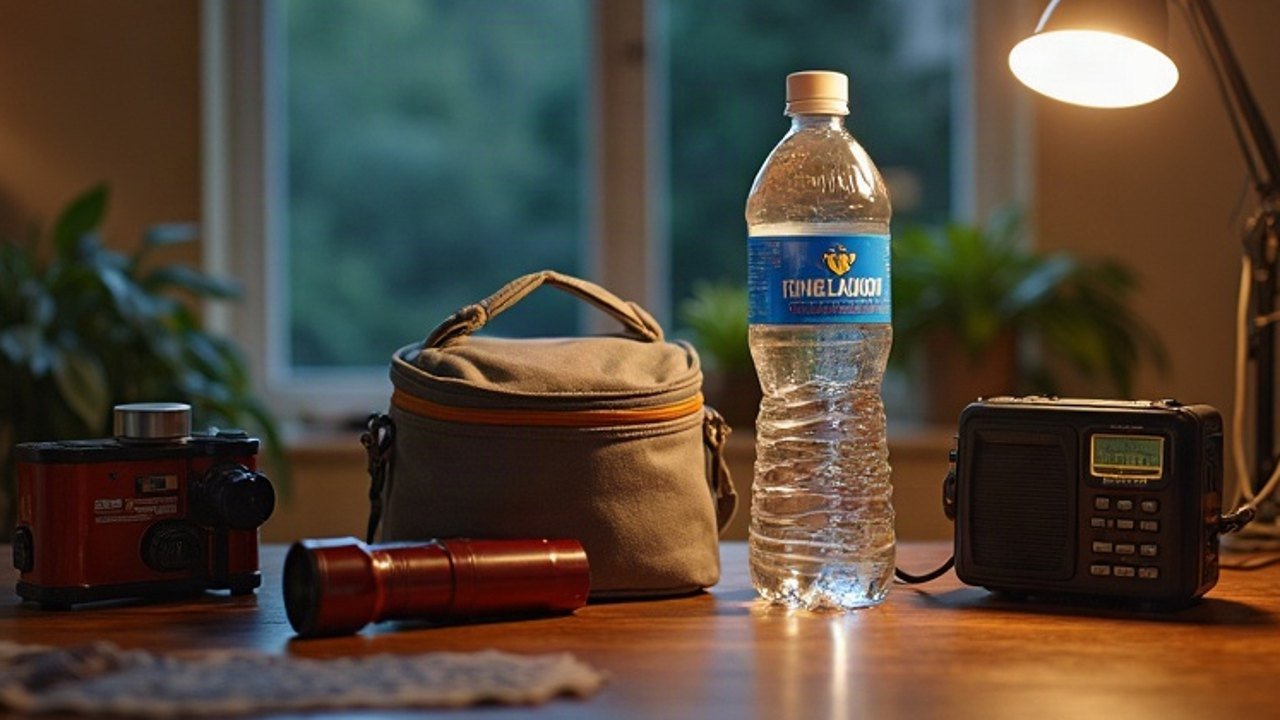
A priority system: essential, useful and specialist
It helps to divide possible purchases into three groups. Essential refers to an actual need in your household, not an item every human must own. Useful describes a convenience or extra option. Specialist means the equipment requires technical evaluation, substantial money or professional advice.
| Level | Examples | Reason to consider |
|---|---|---|
| Essential to your circumstances | Required medicines, safe light, known safe water if supply may fail, contact details | Protects immediate health or access to help |
| Useful extra | Spare batteries, modest power bank, radio, warm bedding, second safe light | Adds resilience if the basic need is covered |
| Specialist/expensive | High-capacity power station, fixed house battery, generator, advanced heating backup | Only worthwhile after measuring loads, risks, safety and alternatives |
Do not buy specialist equipment because a marketing page says a blackout will happen. If you are worried about a scenario, examine the actual capability you need and whether it is the most effective way to obtain it.
Budget band one: spend nothing until you've checked the house
You can improve your options without making a purchase. Put torches where people can find them, charge the power bank you already own, print or write essential phone numbers and find the local electricity network operator's contact. Check whether everyone knows how to leave the property safely in darkness. Review warm layers, spare blankets and the condition of the fridge thermometer if you have one.
Look for duplicate items hidden in drawers. A working rechargeable bicycle light may be useful as a secondary light if used in accordance with its design. A radio you already own may not need replacement. Check batteries for leakage and charge cables for damage; do not rely on worn, frayed or overheating electrical equipment.
The British Red Cross's five-step planning guidance begins with identifying local risks, making a plan and locating information. Those actions are largely free. Your first spending decision should wait until you know what is missing.
Budget band two: a small amount for a single missing capability
If you have roughly £10–£30 available, don't try to purchase every category. Choose the one gap with the greatest consequences. Someone with no torch may choose safe battery lighting and batteries. Someone with good lighting but no charging fallback might consider a correctly rated phone power bank with the right cable. A household without accessible drinking water may choose suitable sealed containers or ordinary bottled water instead.
Check what the product does before buying. A tiny novelty lantern can be less useful than a dependable simple torch. A power bank advertising a large number of milliamp-hours (mAh) may not charge a laptop, because voltage, output watts and connectors matter. A radio with a rechargeable battery still needs a practical charging method.
This spending band is an example of priority allocation, not a market-price promise. If a suitable product costs more, adjust your plan or choose a simpler option rather than stretching your budget to hit an arbitrary item count.
Budget band three: fill the second and third weak points
If you can devote around £30–£100 over time, aim for complementary capabilities rather than buying more of the same. For example, one reliable lantern, an appropriately sized power bank and a battery-powered or wind-up radio may cover different needs: seeing safely, preserving a phone and receiving information when broadband fails.
But this combination is not automatically right for everyone. A household with a digital landline and no mobile coverage may need a provider-approved communication arrangement. A family with an electrical access lift may need building-management advice, not another radio. A cold home may make warm clothes and an alternative place to stay more significant than electronic gadgets.
Consider using your normal supermarket shopping budget to rotate shelf-stable food and water rather than treating all supplies as a one-time purchase. You avoid duplicate items and can check expiry dates during ordinary use.
Budget band four: when power stations or generators enter the picture
A larger battery or generator can cost much more than the basic supplies above and carries additional technical responsibilities. Before spending hundreds or thousands of pounds, measure the power and energy your chosen devices actually require. A high-wattage electric heater can quickly overwhelm a small battery; a refrigerator may need startup surge capability; and medically critical equipment requires a clinically agreed solution.
Read our portable solar generator runtime calculator guide for watt-hour examples and our fixed home battery backup guide for grid isolation, backed-up circuits and installer questions. Those steps matter before choosing a device size.
A generator should never operate indoors, inside a garage or near doors and windows where exhaust can enter. Never connect it through a household socket to backfeed the wiring. A qualified professional must design any installed transfer arrangement. The NHS describes the dangers of carbon monoxide, while Electrical Safety First explains the hazards of overloaded and incorrectly used leads.
Build a water allowance from people, not product bundles
A power cut does not automatically mean the water supply is unsafe or unavailable. However, some buildings depend on electrically powered pumps, and a wider emergency may affect the water network. If you want a fallback, estimate it from household size and relevant needs. The British Red Cross suggests around 2.5–3 litres of drinking water per person per day for an initial three-day household plan.
For a two-person household, the arithmetic for drinking water alone is 2 × 3 litres × 3 days = 18 litres using the upper end of that range. That is not necessarily enough for washing, sanitation, pets or specific medical needs. Containers also take space and are heavy; plan for safe storage rather than stacking unstable bottles overhead.
Use food-safe sealed containers, follow supplier guidance and refresh stored supplies as appropriate. The number is a planning reference from a specific source, not a universal legal requirement or proof that drinking-water service will fail.
What about food: why '72-hour survival meals' can be poor value
A prepacked kit might be convenient, but check the actual number of meals, ingredients, allergens, preparation requirements, water needed and storage life. A kit that needs boiling water is less helpful if you have no safe way to heat it. A household may already own familiar food that can be eaten without cooking.
Plan around normal eating requirements and conditions: children, allergies, cultural choices and pets can make a generic bundle unsuitable. Some tins and packets are safe to eat cold when their labels permit it, but do not assume every dry or preserved food needs no preparation. Include a manual tin opener if needed.
If refrigeration stops, food safety matters. The Food Standards Agency's power-cut guidance explains approximate fridge/freezer cold-holding periods and why temperature checks matter. Do not attempt to save questionable chilled food just because it would be expensive to replace.
Build a simple cost-versus-value score
For each item, ask four questions and score each from 0 to 2: necessity (would a real household need be unmet without it?), independence (does it still work if the mains and internet stop?), ease of use (could someone find and operate it under stress?) and existing alternative (is the same capability already covered?).
Use the last question in reverse: two points if there is no alternative, one if the alternative is weak, zero if it is already covered. A total closer to eight suggests the item addresses a more significant gap than one scoring two. This is an original decision aid, not a validated emergency-risk scoring instrument. Adjust it for personal needs instead of treating it as a purchasing command.
| Candidate | Need | Independent? | Easy? | Gap not covered? | Total example |
|---|---|---|---|---|---|
| First working torch in a home with none | 2 | 2 | 2 | 2 | 8/8 |
| Third decorative lantern where two already work | 0 | 2 | 2 | 0 | 4/8 |
| Large mains-dependent gadget without backup capability | 0 | 0 | 1 | 0 | 1/8 |
The example scores illustrate the method rather than objective product ratings. For one household a specialised accessibility device may be essential and receive a very different score. You should be able to explain every purchase in a sentence: 'This lets us do X when Y is unavailable.'
Three household scenarios with different spending priorities
Scenario A: single adult in a small flat. The building has a working staircase, standard mains water and no medically powered equipment. If the person already owns a torch and power bank, their best next step may be a contact sheet and understanding the building's electric entrance system—not another battery.
Scenario B: family in a cold detached home. The boiler cannot operate without electricity and there are young children. A safe warm place to go, extra suitable bedding and family communication could matter more than a gadget promising to power an electric heater. The question becomes whether an alternative location is confirmed and accessible in winter.
Scenario C: person with powered care equipment. A cheap generic kit cannot replace an approved medical contingency. The first task is to consult the relevant clinical provider, equipment supplier, electricity network operator and care network. In Great Britain, the Priority Services Register may provide eligible customers additional information or support but does not guarantee uninterrupted supply.
Where to save money safely
Compare the functional specifications rather than branding. A new-looking battery can have old cells; a very cheap electrical device may lack appropriate testing or clear manufacturer support. Shop through reputable sellers and retain manuals. Avoid second-hand power equipment of uncertain history where a faulty battery or cable could introduce a fire risk.
Check whether replacement batteries, charging cables or parts are available. A lantern with a common battery format may be easier to maintain than a proprietary device you cannot recharge. If you already own a reliable tool, test and maintain it instead of replacing it to match a branded kit list.
Electrical Safety First recommends reputable retailers, avoiding damaged leads and not daisy-chaining adapters. Spending less is worthwhile only if the item remains safe and usable.
Don't confuse equipment ownership with a working plan
A radio without known local stations, a power bank without the correct cable or a sealed food pack requiring unavailable cooking equipment is less useful than it looks. Use a calm, non-destructive trial: find the torch, charge a phone, listen to a local station and confirm where food and medical contacts are kept.
For the actions to take before electricity fails, see our power outage preparation article. For a detailed household plan after several days without power, see living without electricity for a week. Each covers a different job from this spending-priority guide.
A budget review sheet you can copy
- Write your monthly or one-time amount available without sacrificing current essentials.
- List the three household capabilities most at risk during the scenario you are considering.
- Inventory what you already own and check that it works.
- Score possible purchases against the gap they would actually close.
- Research specifications, safety and maintenance costs before choosing a specialist electrical product.
- Buy nothing if the gap is already covered or a free plan resolves it better.
- Revisit only when circumstances change, such as a new medical need or a move to another property.
This approach respects limited money and space. Having more equipment is not always the same as having a better option when an outage occurs.
Frequently asked questions
What emergency supplies should I buy first for a power cut?
Start with an unmet need: safe light, essential medication continuity, communication or drinking water if supply may be affected. Check what you already have before buying duplicate equipment.
Is a power station worth buying for emergencies?
Only if its usable energy, output rating, safety and price match the specific appliances you want to run. A small power bank and battery lantern may be more appropriate for some homes.
How much drinking water should I keep?
The British Red Cross suggests about 2.5–3 litres of drinking water per person per day for a three-day starting plan. Other household, pet and medical needs may require more, and storage must be safe.
Should I spend a fixed amount on an emergency kit?
No. Use a budget that does not compromise current necessities, identify the risks relevant to your household and prioritise meaningful gaps. There is no universal spending amount.