SURVEILLANCE, IDENTIFICATION AND PREDICTION ARE NOT THE SAME THING.
One camera records a street. Facial-recognition software compares a passer-by with a database. A phone app records a location history. A data broker combines fragments of information into a profile. None of those systems needs to be part of a single AI-controlled network to raise serious privacy questions. What changes when more of this information can be searched, linked and analysed at scale?
For readers concerned about expanding AI surveillance, the useful starting point is to distinguish systems that demonstrably exist from capabilities that are plausible but not established everywhere. This guide explains the technology, the limits of identification, the information you can control and practical steps to reduce unnecessary exposure. It does not assume everybody is being watched by one coordinated AI system, and it does not tell you whether you should feel concerned.
What is AI surveillance?
Surveillance is the observation or collection of information about people or activity. AI can be used to analyse images, recognise faces, classify movement, transcribe audio, search large collections and identify patterns. Some deployments use simple automated rules; others use machine learning. Calling every camera 'AI surveillance' conceals important differences.
| Technology | What it can do | Important limitation |
|---|---|---|
| Ordinary CCTV | Record images from a location | A recording alone does not establish identity |
| Facial verification | Compare a person's face with one claimed identity | Performance depends on image conditions and algorithm |
| Live facial recognition | Compare faces in a camera stream with a watchlist | A match score can be wrong; humans and policy matter |
| Automatic number-plate recognition | Read vehicle plates at observed locations | Vehicle presence does not identify every occupant |
| Location and app tracking | Record or infer movement through devices and services | Precision, coverage and access differ between services |
| AI-assisted analysis | Sort large datasets or flag apparent patterns | Inferences and predictions can be mistaken or unfair |
The UK Information Commissioner's Office (ICO) explains how public-space facial recognition differs from the one-to-one verification used to unlock a phone. That distinction affects how many people are processed and what safeguards matter.
Identification, tracking and prediction are not the same
A system can observe a person without knowing who they are. It can link two observations without reliably establishing a legal identity. It can recognise a face but fail to understand why the person was present. Finally, an algorithm can generate a prediction about behaviour without that prediction being correct.
For example, a shop camera may record somebody entering. A face-matching system may produce a candidate name. A separate purchasing database may contain a matching customer record. But each step introduces assumptions about the images, databases and people involved. Combining uncertain inputs can create a confident-looking profile that still contains errors.
When you read claims about 'AI tracking everyone', ask four separate questions: who collected the data, who can access it, what can be reliably inferred, and what actions are actually taken based on the result? Without those answers, a broad claim is hard to evaluate.
How reliable is facial recognition?
Accuracy is not a single number. Facial recognition may be used to verify that one photo matches a specific person or to search a large database for possible matches. False matches and missed matches vary with the algorithm, the task, the decision threshold and image quality. Deployment conditions, lighting and camera angles are crucial.
The US National Institute of Standards and Technology publishes face recognition technology evaluations and demographic-effect results. Its explanations distinguish false positive matches from false negatives and discuss the role of image quality. Results for a specific tested algorithm and image dataset should not be copied into claims about every real-world camera.
The ICO stresses the need for deployment testing, meaningful human involvement, documenting false matches and considering data-protection impacts. A system saying 'match found' is a lead for review—not independent proof of wrongdoing.
What information about you may already exist?
The most useful privacy exercise is to map categories of information rather than imagine a single secret file. Different services may hold different pieces:
- Your phone: location settings, app permissions, wireless-network connections, photographs and identifiers.
- Online accounts: searches, purchases, account logins, messages, social activity and profile details.
- Public records: selected ownership, business or professional information, depending on local law.
- Physical places: CCTV footage, access-control records, vehicle-plate reads or visitor logs.
- Third parties: advertising, analytics and data-broker datasets that may combine information from several origins.
Collection does not mean every person or organisation can see all those records. Access rules, retention periods and commercial relationships differ. Nevertheless, unnecessary data collection creates potential exposure if services change policies, share information or suffer a breach.
A 20-minute personal privacy exposure audit
You do not need specialised security tools to identify avoidable sharing. Work through five areas on devices you already own:
- Phone location: review which apps have location access, and change 'always allow' to 'while using' or deny it where the feature does not need ongoing tracking.
- Camera and microphone: remove permissions from apps that have no clear reason to use them. Re-enable only when a legitimate feature needs them.
- Account activity: check location history, personalised advertising, device lists and public profile visibility. Make an intentional choice about optional collection.
- Cloud photographs: check what is backed up, who has access to shared albums and whether location metadata is included when photos are shared.
- Old services: review unused accounts, connected apps and stored payment or identity information. Delete unnecessary information where the provider offers reliable controls.
The Electronic Frontier Foundation's Surveillance Self-Defense guides include practical privacy-setting walkthroughs for Android, iPhone and other platforms. Review the instructions for your own current device version rather than relying on an outdated menu screenshot.
Reducing optional tracking does not make a person invisible, and you should not assume that deleting an app removes records already held by other parties. The goal is narrower: make informed choices and remove sharing that provides no meaningful benefit.
What to consider before sharing photographs or video
A photograph can reveal faces, a location, a badge, a car registration or a child's school uniform. A public upload can then be copied and analysed by others, even if the original post is later removed. Before publishing a photo widely, check the background for identifying details, consider the people pictured and use the account's actual audience controls.
Location metadata is another issue. Some platforms remove parts of image metadata, but do not depend on that without checking the specific service. If a location is sensitive, avoid publishing a photo that reveals it visually as well as through metadata. Where practical, share privately with selected people instead of posting to a public audience.
Rights and remedies depend on where you live
Privacy law is jurisdiction-specific. In the UK, the ICO describes how data-protection rules apply to facial recognition, including lawful basis, necessity, proportionality and safeguards for biometric processing. Its August 2025 statement emphasises that facial recognition is covered by data-protection law, including when police use it.
Other countries and regions have different rules governing surveillance, consumer-data access and biometric identification. Search for your local data-protection authority and the specific organisation's privacy notice before relying on a right described for another country. A request to access or erase personal data may be available in some settings, subject to exceptions and legal requirements.
If you believe your information was mishandled, record what you observed, preserve the relevant notice or correspondence and contact the responsible organisation or local regulator through independently verified channels. If you receive a breach notice, our data breach response plan explains the first practical decisions.
What a 'smart city' claim does not establish
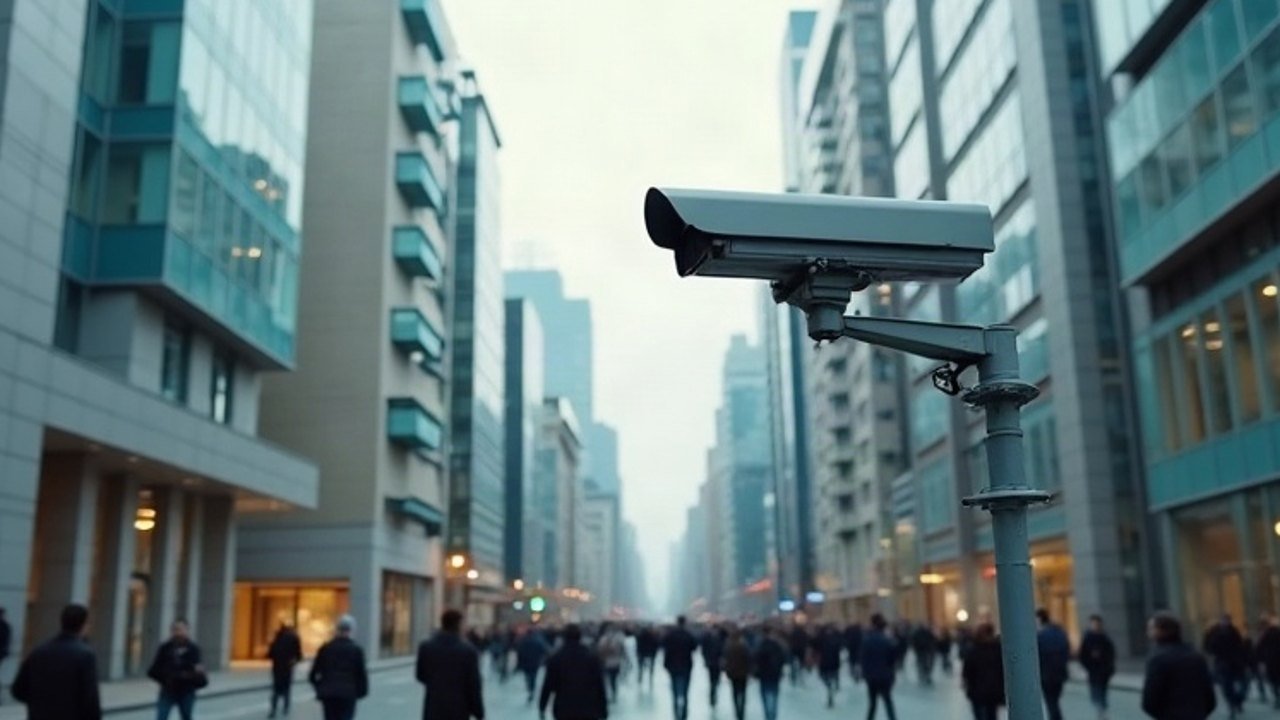
Networked cameras, automated traffic management and cloud services can create privacy risks through ordinary institutional or commercial choices. But an image of a camera-equipped street does not prove a central AI is identifying every passer-by. Nor does a system's present limitation prove all future systems will remain similarly limited.
For a concrete claim, look for procurement documents, technical specifications, public privacy assessments, independent evaluation, legal powers and the operator's documented data-retention policy. Ask whether facial identification is deployed, whether it is limited to a watchlist, and whether a person reviews consequential decisions. This evidence is more useful than an unsupported claim that everything is connected.
What if AI surveillance capabilities expand considerably?
Future combinations of cheaper sensors, improved recognition, data linking and more autonomous decision systems could create new ways to monitor populations. Their exact deployment and capabilities remain uncertain; choices by governments, firms and courts also matter. People concerned about such a direction can track specific policy changes and evaluate privacy exposure in the systems they actually use.
Our wider AI takeover and human-control briefing considers possible larger-scale loss of control. Surveillance technology is one part of that debate, not proof of an inevitable outcome. Privacy choices can be sensible regardless of one's view about future AI.
Develop a simple privacy plan rather than chasing total anonymity
Choose an outcome you can actually influence. For example: 'Only my navigation and delivery apps can use precise location while open', 'Only family can see pictures of my children', or 'I will review connected applications every three months.' Write down each relevant setting and whether changing it would break an important service.
Think in terms of data minimisation, account security and informed consent, not magical products that claim to block all surveillance. A paid privacy tool is no substitute for understanding which services collect the information and why. Some privacy changes reduce convenience; that trade-off is yours to assess.
Frequently asked questions
Can AI identify everyone caught on CCTV?
Some systems can compare faces with specific databases, but a successful identification depends on system design, data access, image quality and error rates. Ordinary CCTV footage does not itself mean every person has been identified.
Can turning off location access stop all tracking?
No. It can reduce access by selected apps, but network operators, services and other systems may have different location information. Review each relevant source rather than assuming one switch controls everything.
Is facial recognition always illegal?
No universal rule applies. Requirements vary by jurisdiction, purpose and deployment. Consult your local privacy regulator and the specific legal context.
What should I do if a service identifies me incorrectly?
Preserve evidence, ask the service for its correction or appeal process and consult applicable data-protection or consumer-rights routes. A recognition result should not be treated as infallible.