THE VOICE SOUNDS LIKE YOUR FAMILY. THE EMERGENCY FEELS REAL. BUT WHO IS ACTUALLY CALLING?
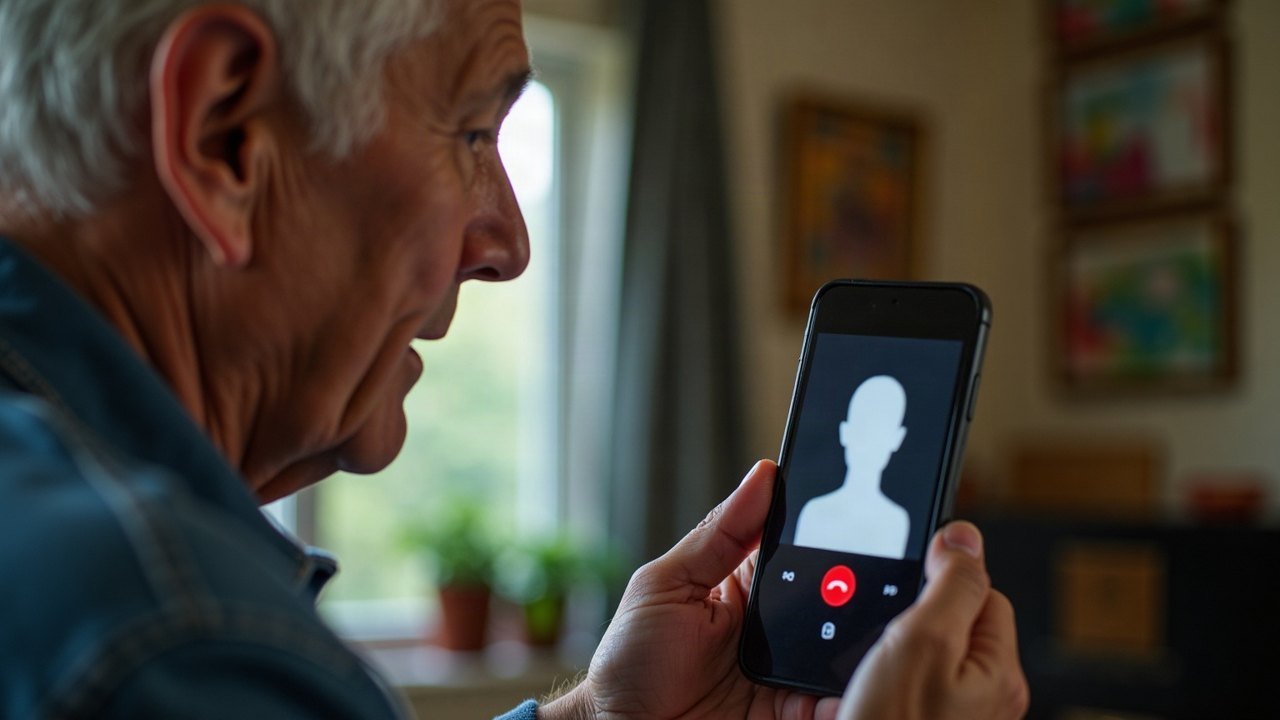
Your phone rings. The voice sounds exactly like your daughter, son or partner. They say something terrible has happened and beg you to send money immediately. You recognise the accent, the pauses and the way they say your name. But none of that proves who is speaking. Modern voice-cloning technology can make a fraudulent call sound disturbingly familiar, and criminals use the fear of a family emergency to push people into decisions they would otherwise question.
This is an existing form of fraud, not a speculative future AI danger. The US Federal Trade Commission has warned specifically about cloned voices in family-emergency scams, and the UK's Report Fraud service explains how AI audio can imitate a trusted person. A 2026 police intelligence assessment also identifies manipulated audio among AI-assisted fraud techniques reported by victims.
The good news is that you do not have to distinguish a real voice from a synthetic one by listening carefully. You need a way to establish the person's identity independently of the incoming call. This field guide explains that procedure, what to do when the person cannot be reached, how to protect vulnerable relatives and what steps to take if money has already been sent.
What is an AI voice-cloning scam?
An AI voice scam uses software to generate speech that resembles a real person. A criminal may imitate a family member, friend, colleague or service representative, then create a situation designed to provoke urgency. The most familiar version is the family-emergency scam: someone is supposedly injured, arrested, stranded abroad or unable to speak freely.
Older scams relied on a convincing story and the victim filling in the gaps. Voice cloning adds apparent personal evidence: the caller sounds like somebody the victim loves. But a familiar voice is no longer a dependable proof of identity. The caller ID can also be spoofed, so the displayed number is not a trustworthy verification method.
The core method is impersonation plus time pressure. Sometimes the request comes directly from the supposed relative; sometimes a second person claims to be a police officer, doctor or legal representative. They may instruct you not to call anyone else, claiming secrecy is essential.
How could criminals get enough audio to imitate somebody?
Publicly shared videos, voice messages, podcasts and social-media clips can provide examples of a person's speech. How much audio an attacker needs varies by technology, quality and desired result. It is misleading to promise that removing one particular video makes someone immune, or that every impersonator has used advanced AI. Some scams combine ordinary recordings, edited clips, human actors and generated speech.
What matters most is the decision that follows. A criminal does not need a perfect replica if they can convince a frightened person to believe an emergency. Poor call quality, background noise and a rushed conversation can disguise imperfections. Equally, a genuine person in distress may sound different, making voice-based detection unreliable in both directions.
That is why the FTC recommends calling the supposed family member using a number you already know, or contacting another relative or friend if they do not answer.
The five-minute verification procedure
When a call demands urgent help, you can take action without either ignoring a genuine emergency or surrendering to an impersonator. The order matters.
| Step | What you do | Why it works |
|---|---|---|
| 1. Stop the payment | Do not transfer money, disclose codes or install software during the incoming call | Prevents the irreversible step while identity remains unknown |
| 2. End the call | Tell the caller you will verify and call back; end the connection | Removes the caller's control of the conversation |
| 3. Dial independently | Use a number already saved or previously verified, not one provided by the caller | Moves identity checking outside the suspicious channel |
| 4. Contact another person | If there is no answer, check with a trusted family member, housemate or known workplace contact | Provides an independent route to establishing the person's whereabouts |
| 5. Verify the alleged incident | Contact a relevant institution through its published number if the story requires it | Checks the claim rather than trusting the voice or caller ID |
If a caller claims there is immediate danger to life, contact the appropriate emergency service through its recognised number. Do not send money or delay a genuine emergency response while attempting a complicated detective exercise.
A realistic example of a cloned-voice emergency call
This is a fictional training scenario, not a report of a particular victim.
A man receives a call apparently from his adult son. The son sounds panicked and says he has been detained after a road accident. A supposed official takes over, explaining that a payment must be made within the hour. The caller knows the son's first name, employer and recent holiday destination.
The father recognises the voice but has a family agreement: unexpected money requests must be checked outside the conversation. He refuses to transfer money, ends the call and rings his son's ordinary number. There is no answer. Instead of treating that as confirmation, he calls his son's partner, who confirms the son is at work. The payment demand is fraudulent.
The crucial defence was not detecting an audio glitch. It was refusing to let a convincing voice override an independent verification process.
What if your loved one genuinely cannot answer?
This is where simple advice such as “just phone them” can fall short. A real emergency may mean a person has lost their phone, is injured or cannot speak. Scammers exploit that uncertainty, but the correct response is to seek other trustworthy evidence, not automatically dismiss the situation.
- Try a second contact method you have used with the person before, such as a different messaging account or their workplace switchboard.
- Contact a known family member, housemate or trusted friend who might confirm their location.
- If someone claims to represent a hospital, police force or other institution, find that institution's official number yourself and ask how to verify the situation.
- In an immediate safety emergency, contact emergency services directly using your local number.
- Do not use the inability to reach someone as the sole reason to send money to an unfamiliar account.
A legitimate incident can be verified through appropriate channels. You do not have to rely on an unknown caller who controls all the information.
Seven warning signs that matter more than the voice
- Urgent payment: the caller demands money immediately, especially by bank transfer, cryptocurrency, gift card or other difficult-to-recover method.
- Secrecy: they insist you must not tell a relative, employer or your bank.
- No independent callback: they will not allow you to end the call and ring a known number.
- A stranger takes control: a supposed official suddenly provides payment instructions without a verifiable institutional route.
- One-time codes: you are told to read out a code sent to your phone, even though that code may authorise account access or payment.
- Unusual account details: funds must go to an unfamiliar personal or business account unrelated to the alleged incident.
- Pressure against checking: the caller claims that verification will harm the person you care about.
One sign does not prove AI cloning was used. Together, these are powerful reasons to disengage and verify. Take Five to Stop Fraud recommends stopping, challenging unexpected requests and protecting yourself by contacting your bank when money is involved.
Should your family use a secret word?
A prearranged family phrase can provide an additional check. The UK's Report Fraud guidance recommends a safe phrase known only to trusted relatives. This is particularly useful for households that have vulnerable members or frequent travel.
But do not treat one word as magical protection. It can be overheard, shared accidentally or disclosed by a compromised family member. A frightened caller might forget it; a criminal who learned it could repeat it. Use it as a secondary signal alongside an independent callback, not as permission to send money without further confirmation.
For a more complete arrangement, see AI Impersonation Scams: A Family Defence Plan. That guide includes contact roles, verification rules and a short rehearsal that family members can practise before a real call arrives.
What about voice notes, WhatsApp calls and video calls?
Voice cloning can also appear in audio messages and real-time internet calls. Video may feel more convincing, but a live-looking image and synchronised speech do not prove identity. Attackers can also use stolen genuine footage or compromise a familiar account.
If a message appears from a real person's existing account, ask whether the request is unusual. Account access can be compromised. Verify sensitive instructions through a different trusted channel. This applies especially to bank transfers, changes of payment details or requests for access codes.
Our deepfake video and image verification guide explains the difference between finding evidence that footage is manipulated and proving that an emergency is real. For a text-based impersonation attempt, see AI Phishing: How to Check an Email or Message.
If you have already sent money
The first priority is speed, not embarrassment or figuring out the technology used. Contact your bank or payment provider immediately using its official app, card number or independently located contact details. Explain that you believe the transfer was induced by impersonation, provide the date, amount and recipient information, and ask what recovery or account-protection steps are available.
In the UK, Report Fraud is the police reporting service for England, Wales and Northern Ireland. It replaced Action Fraud on 4 December 2025. Scotland uses Police Scotland. In the United States, report scams to the FTC and contact the relevant financial provider. Outside these countries, use the correct national fraud and police services.
Keep screenshots, phone numbers, payment records and times. Do not pay a second person who promises to recover stolen money for an upfront fee. That may be another fraud attempt. If any account credentials or one-time codes were shared, secure the affected accounts from a trusted device; our first-hour data-breach and account-response checklist covers the priorities.
Prevent the next call: a two-person drill
Spend five minutes with a family member. Agree on the rule: an unexpected request for money, secrecy, access or codes is never approved solely through the incoming call. Save the contact details you will use for independent verification.
One person then plays the role of a worried caller, without impersonating a genuine emergency service. The other practises three responses: end the call, use a known contact method and verify before acting. Switch roles. Write the rule in plain language where less technically confident family members can find it.
Do not force anyone to memorise a complicated procedure. A simple, rehearsed routine works better than an elaborate plan nobody can follow under pressure.
The bottom line
Cloned-voice emergency scams exploit the strongest part of many families: the instinct to protect somebody they love. The technology can make a false story sound personal and urgent, but it does not remove your ability to verify events independently.
A familiar voice is not proof. A familiar callback number, a second trusted contact and a checked claim are much stronger. Make that process a family habit before the phone rings.
Frequently asked questions
Can AI copy someone's voice from a short recording?
Voice-cloning tools can imitate speech characteristics using recorded examples, although the quality and amount of audio required vary. Even imperfect imitation can be persuasive in a stressful call.
How do I know if a call is a voice-cloning scam?
Do not rely on listening for audio flaws. End the conversation and verify the person's situation using a known number, another trusted contact or the relevant institution's official channel.
Is a family password enough to stop a cloned-voice fraud?
No. A secret phrase may add protection but can be disclosed or forgotten. Use it alongside independent verification, especially before money or account access is involved.
What if the caller ID shows my relative's number?
Caller ID can be spoofed, and a legitimate account can be compromised. Initiate a new call or contact through a separate method you already trust.
Where do I report a fake emergency call in the UK?
Use Report Fraud in England, Wales and Northern Ireland; contact Police Scotland in Scotland. If you have paid money, notify your bank immediately. Use emergency services for an immediate threat to life.
Sources and further reading
- US Federal Trade Commission — Scammers Use AI to Enhance Family Emergency Schemes — verified independent callback advice.
- Report Fraud — Vishing and AI Voice Cloning — UK phone fraud, safe phrases and verification.
- City of London Police — Fraud Intelligence Assessment (2026) — reported emerging AI fraud practices.
- Take Five to Stop Fraud — Protect Yourself — response to pressured payments.
- Report Fraud — Reporting Cybercrime and Fraud — UK reporting arrangements.
Research reviewed 6 November 2026. The example call is fictional; reporting routes depend on your country.