WHAT WOULD YOUR HOUSEHOLD DO IF AN AI-RELATED INCIDENT DISRUPTED THE SERVICES IT DEPENDS ON?
AI is becoming part of the systems that keep modern society operating. Electricity networks, transport planning, telecommunications, water utilities, logistics, health services and financial institutions use software to coordinate complex work. Artificial intelligence can help operators detect faults and improve efficiency. But it can also expand the ways attackers interfere with essential services—and introduce unfamiliar failure modes when automated decisions are trusted too far.
On 3 November 2026, the UK's National Cyber Security Centre (NCSC) published an assessment warning that AI-enabled attackers are likely to target legacy technology and new weaknesses created by AI deployments in critical national infrastructure. The NCSC judged it highly likely that AI-powered malware would be used in a ransomware attack affecting UK critical infrastructure by 2028. This is a serious official threat assessment—not a claim that such an attack has already caused a nationwide collapse.
For households, the most important question is practical: what happens if one essential service fails and takes another with it? Understanding those dependencies helps you decide what to prepare before an AI-related incident, cyberattack or ordinary system fault turns into a personal emergency.
What counts as critical infrastructure?
Critical infrastructure consists of the services and physical systems that underpin daily life and public safety. Definitions vary by country, but typically include energy, water, telecommunications, transport, healthcare, food distribution, financial services and parts of government.
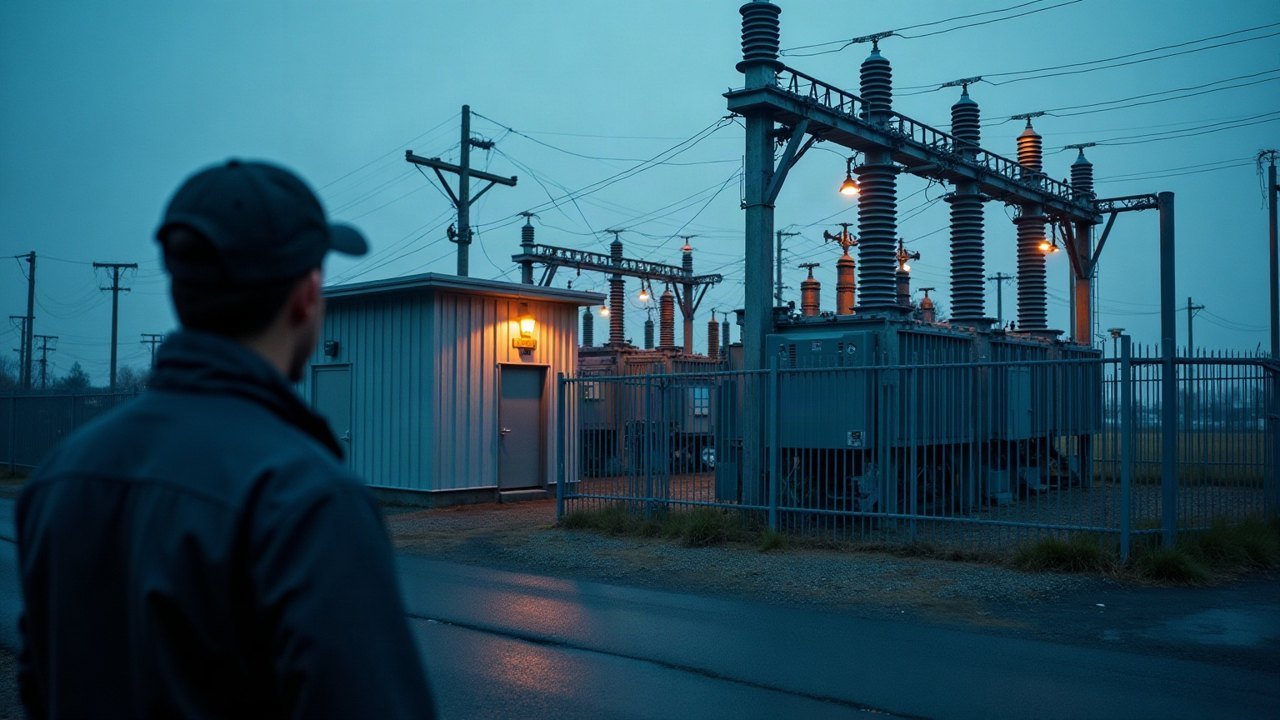
Some infrastructure is visible: substations, reservoirs, railway lines and mobile masts. Other vital elements are less obvious: cloud services, identity systems, industrial control software, telecommunications backhaul, payment networks and a supplier's remote support platform.
The vulnerability is often not a single machine. It is interdependence. Electricity supports communications; communications support emergency services; financial services support fuel purchases; transport and software systems help replenish food and medicines. Disruptions can spread through these links even when the original event is local.
How is AI used in infrastructure today?
AI can assist with demand forecasting, equipment maintenance, anomaly detection, routing and decision support. In many applications it advises human operators rather than directly controlling physical equipment. In other arrangements, automated systems may take bounded actions under defined operating rules. Those roles are not equivalent.
| Sector | Potential AI role | What a failure might disrupt |
|---|---|---|
| Electricity | Forecasting demand and analysing equipment faults | Supply reliability, restoration coordination |
| Water | Monitoring distribution and predicting maintenance | Supply information, service response |
| Telecoms | Network management and fraud detection | Connectivity, routing, customer access |
| Transport | Timetabling and logistics planning | Journeys, freight and deliveries |
| Healthcare | Scheduling, administration and clinical decision support | Access to services and records |
| Payments | Fraud screening and operational support | Transactions, account access, merchant services |
The possibilities in this table are illustrative of where AI can be deployed, not proof that a named provider has delegated control of a specific system. That distinction matters: a dashboard that predicts water demand presents different risks from software that can change industrial settings without human review.
Why the November 2026 NCSC warning matters
The NCSC's new threat assessment examines scenarios through 2028. Its central concern is that AI makes some intrusion techniques faster and more accessible while defenders struggle to update older technology and complex supplier environments.
The assessment identifies three broad possibilities: a baseline of growing AI-enabled cyber capability, a pessimistic trajectory where offensive capabilities proliferate faster than defences, and a more optimistic future where defensive measures catch up. These are scenarios for planning, not predictions that all three will occur.
The accompanying NCSC announcement of 3 November specifically highlights ransomware risk to critical infrastructure. The agency's 2026 incident review adds an important nuance: most successful intrusions it handled still relied on known, preventable weaknesses. AI can increase pressure, but ordinary security controls remain valuable.
Why should a household reader care? Because a cyber incident at a critical provider can affect customers who never use the compromised technology directly. A family could lose connectivity, access to a payment system or a dependable route to essential information even if none of its devices has been hacked.
Five ways an AI-related infrastructure disruption could develop
These are plausible planning scenarios, not accounts of events that have occurred.
1. An AI-assisted attack hits an important supplier
A criminal group uses AI tools to increase the volume and speed of cyber activity. An incident forces a provider to isolate systems while it investigates. Customers experience unavailable portals, delayed services or uncertainty over restoration. The damage may stem from the supplier's protective shutdown as much as from the original intrusion.
2. An automated decision causes an operational error
A system trusted to recommend or execute a change operates on incomplete information. Human supervisors do not recognise the problem quickly enough. The consequences depend on the safeguards, the ability to override decisions and how tightly the automation is connected to physical processes.
3. Communications fail during another emergency
Severe weather disrupts power; a stressed digital network suffers a separate software problem. Mobile coverage degrades, online updates become harder to reach and emergency information is repeated out of context. AI need not cause every part of a cascading event for automated processes to complicate recovery.
4. A trusted digital service becomes unavailable
One cloud, identity or payment provider has a prolonged outage. People cannot sign in to work systems, make some purchases or retrieve their essential documents. The question is whether alternative routes exist—not whether the event makes a dramatic national headline.
5. False information accelerates a manageable disruption
An authentic outage is accompanied by fabricated announcements or misleading video clips. People act on a rumour rather than verified information, potentially worsening transport, payment and supply pressure. Read our crisis misinformation verification guide for a practical process.
How a small failure can affect several household services
Imagine a three-hour electricity interruption across part of a town. The power outage is real, but its cause may be unknown. Home broadband stops. Some mobile networks continue briefly; others may degrade. Shops that rely on card terminals or networked tills cannot process every transaction. A home heating system may stop working even if the fuel supply itself remains available.
The lesson is not that every power cut becomes a catastrophe. It is that many households rely on the same upstream service for multiple daily needs. This is why a single backup—such as a charged phone—cannot replace a full household plan.
| Primary loss | Possible secondary effect | Household fallback |
|---|---|---|
| Electricity | Lighting, heating, internet and some cooking options | Torches, safe warmth, ready-to-eat food |
| Mobile data | Messaging and live updates | Radio, printed contact list, meeting point |
| Card payments | Purchasing essentials becomes difficult | Affordable alternative payment method |
| Cloud account | Important files or sign-ins unavailable | Secure offline copies and recovery routes |
| Water supply | Drinking, cooking and basic hygiene affected | Stored drinking water and local safety instructions |
Check your actual dependencies instead of assuming the same failure chain will happen everywhere. Some shops have offline procedures; some mobile networks maintain service longer than others; some homes have specific medical or mobility needs that must take priority.
How does an AI agent increase critical-system risk?
The technical danger of AI agents is not merely that they can make mistakes. Their interconnectedness and ability to act can make a mistake harder to spot and reverse. In May 2026, CISA and partner security agencies from several countries published guidance about carefully adopting agentic AI in mission-critical environments.
The joint guidance highlights excessive authority, poor identity management, inadequate oversight and unexpected interactions among tools. This is a risk-management problem for operators: limiting what an agent can do, maintaining independent logs and keeping real-world interventions outside the agent's control. It does not mean that every use of AI in a utility is inherently unsafe.
For a reader, the relevance is direct. If an important service depends on automation, it matters whether the provider can fall back to human procedures and recover from a failed software deployment. Your own household plan serves a similar function on a smaller scale.
How to prepare for electricity, water and communications outages
Start with a manageable baseline. The British Red Cross emergency-kit guidance, updated 29 October 2026, recommends preparing for three days of disrupted essentials and allowing approximately 2.5–3 litres of drinking water per person per day. Adjust for local conditions and medical needs.
- Power: keep working torches, charged power banks and appropriate batteries. Avoid candles where safer lighting is available. Never run fuel-burning generators or cooking equipment indoors.
- Water: store safe drinking water for everyone in the home, including dependants, and know where your water supplier publishes local notices.
- Food: retain meals that do not require electricity to heat, plus any necessary infant and pet supplies.
- Communication: print a short list of essential numbers and agree where family members will meet if ordinary messaging fails.
- Medical needs: maintain access to prescribed medicines and arrange a specific backup with a clinician or equipment provider for devices that need power.
- Money: decide on a sensible alternative if a payment terminal or banking application is unavailable. Keep it proportionate to your circumstances.
- Information: identify official service-status channels, a battery or wind-up radio and reputable local reporting.
In Britain, the UK government's power-cut guidance explains that home internet, mobile masts and even water pressure can be affected by electricity outages. It lists 105 for reporting power cuts in England, Scotland and Wales. In other countries, use your local utility and emergency-service arrangements rather than assuming the same number works.
Who needs a different plan?
A generic preparedness checklist can miss the people most exposed to service failure. If somebody depends on powered medical equipment, an accessible lift, refrigerated medication, specialised transport or regular care, that requirement should come before routine comfort items.
Ask providers about available priority-support registers, backup supplies and safe evacuation or relocation options. The British Red Cross power-cut guidance explains additional support arrangements for eligible customers in the UK. Do not rely on a portable power bank or a generic solar kit for life-sustaining equipment without a qualified care plan.
Also plan for pets, children and people who may not receive app alerts. Write down who needs checking on first and who has agreed to help.
A practical infrastructure-dependency exercise
Take a piece of paper and write six headings: power, water, communications, payments, medicines and travel. Under each, answer three questions:
- Which provider or system do we rely on most?
- What stops working if it is unavailable for 24 hours?
- What is our tested alternative, and who knows how to use it?
Circle the three dependencies with no clear fallback. Choose the cheapest practical fix for one of them this week. Next month, revisit the exercise with a 72-hour outage rather than a one-day disruption. This is a safe planning exercise: do not actually switch off essential equipment or services.
For a full response sequence—from first confirmed outage through recovery—see How to Prepare for an AI-Related Infrastructure Crisis. Our broader General Survival section covers common causes of power and supply disruption alongside AI-related concerns.
The bottom line
The threat is not imaginary. The UK's NCSC has issued a fresh warning that AI-enabled cyber activity could increasingly target critical infrastructure, including an assessed likelihood of AI-powered ransomware affecting UK critical services by 2028. The difference between a manageable incident and a household emergency often comes down to how many services depend on the same point of failure.
You cannot control every system your community depends on. You can identify the weak links in your own household and prepare working alternatives before a disruption arrives.
Frequently asked questions
Can AI shut down the electricity grid?
An AI-enabled cyberattack or faulty automation could contribute to infrastructure disruption under some circumstances. That does not mean a chatbot can directly turn off the national grid. Real-world access, protective controls and operator responses matter.
Has an AI caused a nationwide UK blackout?
This article does not claim that. The NCSC's November 2026 warning describes future cyber threat scenarios and assessed risks, not a confirmed nationwide AI-caused blackout.
What is the first service I should prepare to lose?
For many households, electricity is a useful starting point because it affects several other services. Your priority may differ if medical equipment, accessible transport or another essential need is involved.
How much drinking water should I store?
The British Red Cross suggests around 2.5–3 litres per person per day as a UK emergency starting point, with three days of supply. Adjust for your health, climate and household needs.
Does preparing for AI infrastructure failure mean buying expensive equipment?
No. A tested contact plan, water, safe lighting, important documents and a practical alternative payment method often come before any specialist purchase.
Sources and further reading
- UK NCSC — Artificial Intelligence and Cyber Intrusion (3 November 2026) — forward-looking AI-cyber assessment.
- UK NCSC — Annual Review 2026, incident management — observed attacks and infrastructure risks.
- CISA and international partners — Careful Adoption of Agentic AI Services (1 May 2026) — security controls for consequential AI deployments.
- British Red Cross — Prepare an Emergency Kit (29 October 2026) — practical 72-hour supplies.
- UK Government — Power Cuts — cascading effects and official advice.
Research reviewed 6 November 2026. Threat scenarios are distinct from observed incidents. Follow local emergency-service instructions during a real event.